Nate Vince, the locksmith at Yosemite National Park until this month, protested the the termination of his and countless other positions at the park by hanging — upside down — an enormous American flag on El Capitan.
It’s a New Yorker story — rooted in a human life, fueled by the energy of the subject and his outrage, but also aware of the inescapable ironies. By Brad Weiners.
Nate Vince
Before a visit to Yosemite National Park, it never hurts to reacquaint yourself with the hazards that can accompany its wild beauty: rockfalls, the swift currents of the Merced River, an encounter with a bear. (Never throw food at one.) A lesser, more recent concern: getting trapped in a park toilet.
Locks that jam, handles that break off, doors that stick owing to swings in temperature—these lavatory failures afforded the Yosemite Valley’s go-to locksmith, Nate Vince, a measure of job security. Or so he thought. On Valentine’s Day, Vince, a forty-two-year-old welder turned park staffer, was among a thousand National Park Service personnel who were terminated via e-mail, a shock that he shared on Instagram: “The people that fired me don’t know who I am, or what I do.” Vince does a great deal more than free tourists from rest rooms. For four years, he shadowed the previous locksmith, getting to know thousands of keys and locks in the park, from gun safes and an on-site federal courtroom to storage lockers for emergency medical supplies.
His time suddenly his own, Vince got an idea to photobomb the park’s annual “firefall” spectacle as a protest. For two weeks in late February every year, the setting sun lends the snowmelt at Horsetail Falls an orange glow, giving it the appearance of molten metal. This fleeting display draws thousands, a ready audience for what Vince had in mind—unfurling an inverted American flag.
“What’s happening is bigger than me,” Vince said by phone from the Zodiac route on the vertical granite of El Capitan, about two thousand feet above the Valley floor. Yes, he needs a new plan for his life, but he also felt a need to speak for those who now feared for their jobs. “I’d say there’s a mild hysteria right now,” he said, adding that the park rangers “have been told not to talk to the media. Now they’ve got this e-mail saying they have to justify what they did last week or it’ll amount to a silent resignation. The people who love our parks need to know what’s happening to those who care for them.”
Inverted flags, a pre-radio, even pre-Morse-code, sign of nautical distress—a visible SOS—became a popular form of protest during the Vietnam War. Last May, supporters of Donald Trump adopted the gesture when he was convicted of falsifying business records. Vince said that he saw the inverted flag as a free-speech symbol that would “disrupt without violence and draw attention to the fact that public lands in the United States are under attack.”
For the visual to register, though, the flag had to be big. Last year, when four climbers placed a banner (“STOP THE GENOCIDE”) on the monumental rock face of El Capitan, “it ended up being sort of a postage-stamp-sized thing, halfway up there,” Miranda Oakley, a Palestinian American climber who hung it with three friends, recalled. “Once people got binocs or a telephoto lens on it, then they got it.”
Vince obtained a thirty-by-fifty-foot flag from Gavin Carpenter, a Yosemite maintenance mechanic who is an Army veteran. He and Carpenter agreed that they’d observe proper flag etiquette. With mild surprise, Vince noted, “One of our climber friends didn’t know you aren’t supposed to let it touch the ground, or that you’re supposed to take it down when it’s not illuminated.”
He had no trouble finding co-conspirators. Although Yosemite rangers and rock climbers have not always been the best of friends, these days they mostly are. Rangers appreciate the annual cleanups led by climbers, and although some older climbers prefer their status as outlaws, even the cranky big-wall pirates muster for mountain rescues. One climber whom Vince tapped to help flew in from New Mexico.
On February 22nd, a crew of six rose at 4 a.m. and headed up the East Ledges, a trail that rock climbers often use to descend from El Capitan after an ascent of its face. On the summit, they used haul bags (for ropes and other gear) to weight the corners of the giant flag before rappelling over the cliff’s edge to unfurl it just off the stone. Wind and thermals—pockets of warmer air on the rise—nearly caused them to abort. Vince recalled a moment that spooked him: “I’m looking over and I see the flag billow and one of our guys floating up like Mary Poppins.”
Two golden eagles surveyed their stunt, one swooping so close that they all stopped to gape. As the sun began to set, the wind relented, and the flag draped down in full. Then, twenty minutes before last light, the team folded it up. “We’d made our point and didn’t want to interfere with people’s experience of firefall,” Vince said. “We brought it up right before the sun lasered the falls. It really had a ceremonial feel. I’ve been down there with the crowd for firefall, too, and the moment builds and everyone just cheers.”
For the Ojai Quarterly, I have had the privilege of reporting on — and interviewing — notable writers in and around Ojai, California, for the last ten years or so, and so I took the opportunity recently in a column to look back at and remark on their wisdom and wonder.
Ojai and nearby towns are blessed with world-famous fiction writers, such as Jacqueline Winspear and T.C. Boyle, as well as lesser known but truly original thinkers, but I must say, the most trenchant comment from writers in the last ten years or so came I think from Jacqueline Winspear, the writer of the utterly unique and massive Maisie Dobbs series, on the underappreciated power of nostalgia.
“Nostalgia is big,” Winspear said, before a certain candidate ever ran for national office on a platform of a return to the past. “It is an underestimated emotion.”
Perhaps this is a sign of how little faith we have these days in the future: certainly, the Democrats’ slogans speaking of their characteristic optimism — “Happy Days Are Here Again,” from FDR’s time, or “Don’t Stop (Thinking about Tomorrow)” from Clinton’s time — seem fatuous today.
The Partial Nuclear Meltdown That Still Haunts Ventura County
Here’s a new story I wrote for Ojai magazine on — believe it or not — a major nuclear accident, a partial nuclear meltdown, that still contaminates part of Ventura County.
Screenshot
‘Woody Guthrie used to say that some men will rob you with a six-gun, and some with a fountain pen. The killing today at SSFL is done by burying contaminant numbers in a table that you need a magnifying glass to read. And then lying about it.’
— Dan Hirsch
Imagine a vast but unseen menace, an invisible rain of infinitesimal particles — as likely to cause cancer in people as any substance — falling on a mountain ridge in northeast Ventura County, then moving over Simi Valley, Canoga Park, the San Fernando Valley and into Los Angeles.
Imagine companies with government contracts responsible for this rain of ghostly mutagens working with government officials to keep this mortal threat a secret from the public.
Imagine the executives responsible for the unseen downpour not only refusing to reveal it, but when confronted with indisputable films and records of its occurrence, flatly denying it.
This was an era — the 1950s and ’60s — before environmental review. Almost the only notice taken in the newspapers of a massive nuclear and rocketry facility in the mountains over Simi Valley called the Santa Susana Field Lab were the want ads that attracted thousands of workers. Mostly those hired were blue-collar workers paid well to work in aerospace.
But tens of thousands of rocket tests, and decades of nuclear waste in Ventura and Los Angeles counties, left behind radioactive particles, toxic chemicals, and radioactive metal in industrial recycling centers in Ventura, and as well in the waters off Santa Cruz Island. In all these places remain some of the most toxic substances known to humankind, and in some cases, in massive quantities deposited there with little or no public notice or remediation.
Now imagine one University of California nuclear expert, volunteering for years of organizing and investigation, uninterested in personal fame, relying on a tiny circle of fellow activists and the support they inspire from student researchers, stepping forward and breaking that story’s tomb-like silence.
To this day, Dan Hirsch, even in retirement, while living near UC Santa Cruz, remains at the heart of the long battle between the owners of the facility — which permanently closed in 2006 — and the activists demanding a complete cleanup of its toxicity, both radiological and chemical.
This is the story of the Santa Susana Field Lab. It has been a source of fierce contention and countless lawsuits and scientific studies for decades, but might never have come to light if UCLA nuclear policy lecturer Hirsch, working with fellow anti-nuclear activists, student investigators and the press, had not revealed the truth of the partial nuclear meltdown in 1979.
Screenshot
THE MELTDOWN
“This is my first opportunity to tell what happened in 35 years,” said John Pace, who was 20 when he started working as a reactor operator trainee at the console of the Sodium Reactor Experiment (SRE) at the SSFL. “I was not supposed to say a word.”
Pace returned to Southern California from retirement in Idaho in 2014 to speak at an event hosted by Hirsch’s community SSFL Work Group in Simi Valley. After holding a decades-long silence about the accident, as ordered in 1959, Pace was overcome with emotion and apologized to the crowd while telling his story. The crowd included other former SSFL workers, some of whom — like Pace — had had health problems since their work tenure.
Pace told reporters he was sterile for seven years after a few years of work at the SSFL, and later developed lung problems and skin cancer, which he attributed to his time working in the reactor building.
The reactor at which Pace worked in his youth — the SRE — was the largest in Southern California at the time. But at 20,200 kilowatts, it was small by modern standards and primitive in design. The SRE lacked any sort of concrete containment dome, which now is a design standard in reactors, to prevent any release of radioactivity from inside the structure to the atmosphere.
Pace was a trainee reactor operator, but had been on the job only a few months. He admitted to being intimidated by older, more experienced officials at the plant. When he arrived for his shift on July 12, 1959, he was shocked to hear what the reactor officials said.
“There were men all lined up around the console, and they started discussing what happened with the accident,” he said. “As I stood there and listened, they scared me to death with what they were talking about, because a ‘power excursion’ is the worst thing that can happen in a reactor.”
For reasons the operators didn’t understand at the time, the nuclear reaction — and internal temperatures — in the uranium core escalated uncontrollably in a fraction of a second. During this “power excursion” and over the following 13 days, nearly one-third of the radioactive fuel rods melted, and dozens of fuel rods broke inside the reactor chamber.
“I heard about how they had barely shut the reactor down after it had run away on them,” Pace said. “The reactor had an automatic shutdown, but that didn’t work and then they finally did it mechanically, powering the control rods down. All this went on for quite a while, and the storage tanks filled with radiation, and they realized they couldn’t do anything about it. I was there to listen as they said that if we don’t shut this down, it’s going to blow up. And so they had to release the radiation straight out of the reactor into the atmosphere. This has not been talked about, but the winds were blowing in the direction of the San Fernando Valley.”
The reactor officials, puzzled by what went wrong, restarted the reactor two hours later. Some radiation monitors went “off scale,” according to Atomic Energy Commission records, and an on-site health-monitoring official later reported that radiation inside the reactor building had reached 300 times safe levels.
Pace said a fellow employee asked the company’s top executive, Marvin J. Fox, if they could tell their wives about the radiation then “over their heads” in nearby towns such as Chatsworth, Canoga Park and Simi Valley. After a moment’s consultation with aides, Fox came back with a stern warning.
“They said no, you cannot — we don’t want anybody saying a word about it,” the director said. “We’ll report what happened to the public in our own due time.”
The reactor workers were subsequently sworn to silence. Other SSFL workers spoke of being threatened with legal action, and of having dosimeter badges (which measure employees’ work exposure to radiation) confiscated. Because of the threats, which Pace said had a military tone, for decades SSFL workers loyally stayed silent, even at the risk to their own health and their families.
Two hours after the partial nuclear meltdown, officials restarted the badly malfunctioning reactor.
“It was a very foolish thing,” Pace said. “It scared us to death, but for two weeks, every 24 hours, they would shut down the reactor and then restart it until they figured out for sure that the sodium pump was the cause. Every time they shut down the reactor, more radiation was released out into the atmosphere. It could have been toward Simi Valley, or Topanga Canyon. I can’t tell you which way it went.”
For Hirsch, it’s no mystery why the reactor operators ignored safety precautions.
“Is it really hard to understand?” he asks. “No, not at all. They were up on a hill. No one could see them. It was before the days of any regulation. The EPA didn’t exist. And they were nuclear cowboys.”
Weeks after the partial meltdown, Atomics International — on the letterhead of the Atomic Energy Commission in Washington, D.C. — released on a Saturday morning in Canoga Park a brief statement saying that a single “parted fuel element” had been observed at the reactor.
“The fuel element damage is not an indication of unsafe reactor conditions,” according to the statement. “No release of radioactive materials to the plant or its environs occurred and operating personnel were not exposed to harmful conditions.”
No reporter followed up on the press release. Although the Santa Susana Field Lab (and supporting facilities in the San Fernando Valley) employed thousands of workers for decades in dangerous conditions, with injuries and a few deadly accidents, still nothing of the meltdown was reported for 20 years until Hirsch — working with UCLA students in the 1970s — began requesting documents from the Atomic Energy Commission under the Freedom of Information Act (FOIA).
Screenshot
OPPOSING VOICES
Today, Hirsch and his many allies in Ventura County and around the state, most prominently Melissa Bumstead and Jeni Knack, co-founders of the Parents Against SSFL activist group in Simi Valley, believe that unless legal action is soon taken against the powers that be at the site — Boeing and the state Department of Toxic Substances Control — the alleged collusion will succeed, allowing Boeing to avoid the costs of a full-scale cleanup, expected to cost hundreds of millions of dollars, leaving residents below the site in Simi Valley and West Hills at risk.
Without Hirsch’s leadership — detractors and supporters such as Bumstead agree — the fate of the Santa Susana Field Lab over the last 60 years would have played out very differently.
Phil Rutherford, a Boeing consultant and nuclear expert who worked at the SSFL as senior manager of Radiation Safety for 25 years, overseeing 10 employees, argues (1) that no contamination has been found beyond the boundaries of the 2,850-acre site. He said that any cancer among residents in Simi Valley was not caused by the SSFL, and has questioned the need for a “cleanup to background.” Although he makes clear he does not speak now for Boeing — which limits its engagement with the press to corporate statements — in his detailed analysis, he blames Hirsch for prolonging the struggle over the cleanup.
Rutherford commented (2)) last year: “With the exception of Boeing’s successful SB 990 lawsuit against the state, all lawsuits have been initiated by Dan Hirsch and other activist organizations against the California Department of Public Health, DTSC itself, the Department of Energy, and Boeing. Since Dan Hirsch was not a party in the mediation and not a signatory to the [2022] Settlement Agreement, there is no guarantee that future lawsuits will not occur if things do not go as he wants.”
This stance ignores the substantial evidence of elevated rates of cancer found among the people of Simi Valley, among other towns near the SSFL. In 2007, a federally funded study (3) by a University of Michigan epidemiologist found that specific cancer incidence rates were 60% higher for residents living within two miles of the site, compared to five miles away.
Bumstead of Parents Against SSFL said that the state agency refuses to take these numbers into account.
“The DTSC won’t recognize outside reports, even when they’re federally funded, like the 60% higher incidence rate,” Bumstead said. She speaks with a weary familiarity of cancer. Her daughter Grace’s cancer was diagnosed when Grace was 4 years old. The second diagnosis — well after her daughter’s first recovery — came when Bumstead and her husband had for a time hoped to move the family away, out of state, away from the SSFL, only to realize they could not support their sick child without their local families’ help.
In the course of her families’ long trial by sickness, Bumstead said she has met in oncologists’ offices dozens of other local families with kids with cancer. In meetings and demonstrations, she displays a bulletin board with pictures of local children in cancer treatment. It’s one reason she speaks harshly of the DTSC and Boeing and what she calls their attempt “to kick the can down the road for a thousand years.”
Parents Against SSFL Melissa Bumstead’s board of pictures of kids with cancer in her community
In an attempt to resolve the controversy, Gov. Gavin Newsom, Jared Blumenfeld, secretary of the California Environmental Protection Agency, and Meredith Williams, director of the DTSC, announced a new plan, based on a legal settlement reached behind closed doors between Boeing and the DTSC in May 2022, that they say will at last decontaminate the SSFL.
“Santa Susana Field Lab is one of our nation’s most high-profile and contentious toxic cleanup sites,” said Newsom in a press statement. “For decades there have been too many disputes and not enough cleanup. Today’s settlement prioritizes human health and the environment and holds Boeing to account for its cleanup.”
But Hirsch and his long-term allies, including Parents Against SSFL, Physicians for Social Responsibility, and the Natural Resources Defense Council, believe the settlement gives Boeing license to avoid the vast majority of the cleanup — up to 94%. Although the clock is running, the advocates — possibly with the county of Ventura and other local governments — want to sue.
On Jan. 12 of this year, the Ventura County Board of Supervisors announced a “tolling agreement” between Boeing, DTSC, and nearby local governments — the cities of Los Angeles and Simi Valley, as well as Los Angeles and Ventura counties.
The agreement removed the need for the local governments — or other entities — to file suit by Jan. 15, 2024, against Boeing and the DTSC, under the California Environmental Quality Act.
The concern is that the agreement could narrow lawsuits over the cleanup to individual “Cleanup Plans” for smaller portions of the site, 10% or less, which advocates say will greatly limit the extent of the cleanup to measures limited numerically in the Settlement Agreement of 2022.
“Woody Guthrie used to say that some men will rob you with a six-gun, and some with a fountain pen,” Hirsch said. “The killing today at SSFL is done by burying contaminant numbers in a table that you need a magnifying glass to read. And then lying about it.”
Hirsch is a singular figure — a hardworking and largely unpaid Gandhi-inspired idealist. As an undergrad at Harvard in 1970, Hirsch helped lead protests against the Nixon administration’s assault on Cambodia, ultimately closing the campus to allow students to go home to organize against the war. Hirsch returned to his hometown of Los Angeles in 1972 and — after finding work as a lecturer at UCLA in nonviolence and energy policy — launched a campus Committee to Bridge the Gap (CBG) to peacefully end the war in Vietnam.
After the war ended in 1975, Hirsch, with CBG, turned his focus to nuclear weapons and policy, discovering, to his shock, at the UCLA campus near his office a working nuclear reactor emitting radioactive gasses. This stunner motivated students on campus to volunteer to join CBG’s investigatory work. Besides the reactor on campus, they soon found records of an unlicensed and unmarked nuclear waste dump on the grounds of the nearby Veterans Administration.
These nuclear discoveries made headlines, and the CBG was ultimately able to challenge the relicensing of the campus reactor and win its removal. At his modest log cabin home in the redwood forest not far from UC Santa Cruz, where he led a nuclear policy center for decades after his time at UCLA, Hirsch keeps a part of the reactor console given to him as a sort of prize in the end by UCLA officials. It is kept in one of several storage sheds full of decades of files.
BREAKING THE SECRET MELTDOWN STORY
In 1979, just two weeks after a partial meltdown of the Unit 2 reactor at Three Mile Island caused a near panic in Pennsylvania, and about a month after the unwittingly well-timed release of the nuclear-reactor disaster film “The China Syndrome,” Warren Olney on his popular nightly NBC Channel 4 newscast shocked Los Angeles with news of a partial nuclear-reactor meltdown above Simi Valley in 1959.
“In 1979, when we discovered the partial meltdown, I brought the story to Warren and he did a five-part series during ‘sweeps week’ for the ratings,” Hirsch said. “They took out a half-page ad in the LA Times and really promoted the series.”
This brief summation dramatically understates the investigatory work that Hirsch and a mentee, Michael Rose, did in the AEC archives at UCLA, and with FOIA requests to pry documents, images, and even films loose from the nuclear repository in Oak Ridge, Tennessee.
“I think he deserves a lot of credit, and he has been willing to take the heat for it,” Olney said in an interview in the fall. “It’s remarkable. The video images showing the fuel rods broken inside the reactor were just incredible. He always gives credit to a student documentarian he worked with, Michael Rose, for the images, but they were a gold mine. He and his team got these videos from the NRC (Nuclear Regulatory Commission). I’m sure you can never get anything like that anymore.”
Dan Hirsch testifies before the Senate in 1991
Olney adds that despite abundant evidence of a catastrophic meltdown at the SRE — including the fact that it took millions of dollars, the design of a new system of cameras and grappling tools to work inside the reactor chamber, and 14 months of unprecedented work to remove the broken core and repair the malfunctioning cooling system — Atomics International executives said nothing much had gone wrong.
“It did not appear to be a hazard to the public or to our employees, and in retrospect it wasn’t a hazard to the public or our employees, and we put that plant back online,” said Atomics International Assistant General Manager Wayne Myers to Olney in the NBC series.
That statement was as false and misleading as the original press release. This past fall, a nationally recognized expert in nuclear reactors, Arnie Gundersen, who has conducted radiological studies at the SSFL, said that the partial nuclear-reactor meltdown released many more radioactive particles than the much-better-known partial meltdown at a reactor on Three Mile Island in 1979.
“I would say the release [of radioactivity] from Santa Susana was definitely the worst meltdown up until Three Mile Island,” Gundersen said. “And there were actually more radioactive particles, such as cesium and strontium, that got out of Santa Susana than got out of Three Mile Island. Three Mile Island released a lot of noble gasses, such as xenon and krypton, at much higher rates, but the stuff that’s on the ground at Santa Susana, even now, is much worse than the stuff on the ground in and around Three Mile Island.”
For his part — when not organizing around Diablo Canyon and other nuclear facilities in California — Hirsch has devoted 45 years of his life to cleaning up Santa Susana. It’s one of few places in the world to have suffered fallout from a partial nuclear-reactor meltdown, he points out, and it’s also a site where tens of thousands of rocket tests were performed from the 1950s to the 1980s, resulting in the dumping of hundreds of thousands of gallons of carcinogens onto the ridgetop site, including hydrazine, perchlorate, and trichlorethylene.
“On the last day [of the NBC series], Warren got a call from a woman in Newbury Park, who was the mother of a child with childhood leukemia,” Hirsch said. “She said she had found eight other families in the neighborhood with kids with cancer. She asked Warren for help, and he said, ‘I’m a reporter — call Hirsch.’ So she called me to ask for help. And I promised to help her. I never thought it would take so long.”
Screenshot
DID THE STATE MISLEAD VENTURA COUNTY ADVOCATES AND OFFICIALS?
Hirsch and many of his longtime allies believe they have been misled and — in Hirsch’s case — personally betrayed by California officials, including former Cal EPA Secretary Jared Blumenfeld. He’s angry about it.
“We were played,” Hirsch says bitterly.
For decades Hirsch and allies have pushed for a “cleanup to background,” which means removing the radionuclides from the site, removing soil in massive volumes if necessary, and it means removing “Contaminants of Concern” from aquifers and keeping them out of stormwater.
For Hirsch and his many local allies, the painful part is that, first, in 2007, and then again in 2010, they believed they had won that prize — the cleanup to background — in a pair of binding legal agreements, known as the Administrative Orders of Consent (AOC). The cleanup was expected to be complete by 2017.
“There was literally dancing in the streets when we heard that we had gotten an agreement for a full cleanup,” Hirsch said. “We really thought that by 2017, we would be home free. And I can tell you about the depression people who live near the site felt — people who’d seen their kids grow up without a cleanup, and now are seeing their grandchildren grow up without a cleanup.”
Despite Hirsch’s unofficial position, his grasp of the complex radiological issues and the clarity of his presentations have repeatedly put him at the center of SSFL controversy. Often, he has found himself in negotiations over technical cleanup standards with state and federal officials, including more than one Cal EPA secretary, as well as DTSC Director Meredith Williams.
Hirsch said that when Blumenfeld was first appointed head of California’s EPA agency by Gov. Newsom in 2019, he searched out Hirsch regarding the SSFL, worked with him for months, even asking him to prepare “an action memoranda” regarding negotiations. Blumenfeld promised to retain the standardized risk assessment — which controls the extent of the cleanup — and said that he would defend the AOC agreements.
“This is what Jared had promised to me, and had boasted to me,” Hirsch said. “He said he told Boeing, ‘We ain’t going to do it.’ He also told the public and Sen. Padilla and numerous mayors and supervisors that we’re not going to touch the risk assessment, we’re not going to weaken it and, well, that’s exactly what they ended up doing.”
CAL EPA OFFICIAL ALLEGEDLY MISLEADS SIMI VALLEY CLEANUP ADVOCATES
In 2020, after extensive work with Hirsch, Blumenfeld came to Simi Valley to give a talk, (5) in which he specifically thanked Hirsch and Bumstead and then-Ventura County Supervisor Linda Parks, among others, for their work attempting to hold regulators to account.
“What we have in front of us are agreements,” he said, speaking of the 2007 and 2010 legal agreements to clean up the Santa Susana Field Lab lands and water to a pristine state before the rocket tests and nuclear reactor accidents.
“We’re not really here to negotiate, this is not negotiation,” Blumenfeld said. “This is about implementation.”
That was in 2020, and at the time, Blumenfeld’s remarks — fulsome in their praise for Hirsch and other advocates — were warmly applauded by a receptive Simi Valley crowd.
But in 2021, the same DTSC that Blumenfeld chided for dragging its feet on the cleanup went into closed-door negotiations with Boeing, emerging nine months later with a Settlement Agreement in 2022 that Hirsch and Ojai water-quality expert Larry Yee, among others, say means that most of the toxins at Santa Susana will remain.
Yee, who served from 2012 to May 2022 on the Los Angeles Regional Water Quality Control Board, which regulates stormwater and toxic waste runoff from Santa Susana, expressed serious concerns at the time about the closed-door negotiations leading to the 2022 Settlement Agreement between Boeing and the DTSC. As a consequence, Yee said he believes he was forced to resign from the water board on a legal pretext created by Cal EPA officials before a crucial vote by the water board upholding the disputed Settlement Agreement. Like Hirsch, Yee feels personally wronged by Blumenfeld and the Newsom administration, but he calls for a lawsuit for the sake of the people downhill from the SSFL.
He joined with Hirsch and other advocates pressing Ventura County to file suit because, he said, “Without a complete cleanup, people continue to lie in harm’s way.”
“This is a divide-and-conquer strategy by Boeing and the DTSC,” Yee said. “Unlike the AOC agreements, which called for a full cleanup to background, the Settlement Agreement focuses on certain areas within the larger site — no more than 10% of the total.”
Hirsch agrees.
“Jared Blumenfeld made 1,000 pledges and broke every one of them,” Hirsch said. “And he did it on behalf of the polluter. And his actions, if not overturned, will result in a bunch of cancers. The system doesn’t work the way it’s supposed to. The agencies that are supposed to protect us are actually working with the polluters they’re supposed to be regulating.”
Today, local area governments — including Ventura and Los Angeles counties and the city of Simi Valley — are contemplating filing a lawsuit against the decades-long cleanup plan released by the Department of Toxic Substances Control in June 2023.
Ventura County Supervisor Matt LeVere, whose district includes Ojai and Ventura, said the Simi Valley City Council and Board of Supervisors for both Ventura and Los Angeles counties have agreed jointly to hire the Meyers Nave law firm and environmental assessment firm Formation Environmental LLC to look at the DTSC’s environmental review.
“I’m still fully committed to holding Boeing and the Department of Energy accountable,” LaVere said. “If our lawyers and consultants come back and tell us this is not a good agreement, that it’s not a full cleanup, if we think there’s some kind of sweetheart deal, then we will challenge it, because I absolutely believe, and my colleagues also believe, that there needs to be a full and exhaustive cleanup of this site. And if it takes filing a lawsuit to get that, we will.”
Hirsch for his part said he remains committed to the struggle to decontaminate Santa Susana, and is working with allies to file a lawsuit to challenge the Settlement Agreement between DTSC and Boeing, arguing that they are “begging to be sued.”
“The arc of the moral universe curves toward justice,” he said, referencing a famous saying of Martin Luther King Jr., but not accepting its passivity.
“The arc of the moral universe doesn’t curve on its own,” he said. “The arc of the moral universe curves toward justice, but sometimes it curves away. People have to work hard to curve the arc of the moral universe toward justice.”
Here’s an Off the Shelf book feature I wrote for the Ojai Quarterly this winter about a delightful and quite unconventional SoCal birder and writer named Charles Hood, who refuses to play the role of the “High Church” nature writer, but insists nonetheless that we should stop for a minute, and take a look at nature, and ask it a question or two. Turns out we’re all the better for his informality.
The magazine software version of the story, which is called Wild Nature: Waiting All Around Us to be Seen ,asks that you virtually turn the pages. Here for my blogging records and for those who would rather scroll, is an online version of this same exact story, with some of the graphics too copied over.
Screenshot
Author pictures on the back of book covers tend to feature poses of sitting people staring intently into the camera lens, sometimes displaying what appears to be a snooty attitude. Not Charles Hood’s author pictures. Though Hood has published no less than seventeen books over the past thirty years, from birding guides to essays on natural history to poetry and novels, Hood in his recent books looks more like an explorer than a distinguished author and poet.
Here he stands in a Texas river at night in his hiking pants, a flashlight piecing the night, grinning crazily.
author Charles Hood
Here he stands in a frozen white landscape in a bright orange safety parka, smiling cheerfully into an icy Antarctic wind. Here he displays a large spider inside a datura blossom, consuming its unwary prey in search of pollen.
He’s an adventurer in words, not an austere authority, and fittingly his CV reads more like an explorer’s than an English teacher’s. Hood has worked as a bird guide in Africa, a translator in New Guinea on a Fulbright scholarship, and as an artist in residence for the National Science Foundation in Antarctica. He has birded in all of California’s fifty-eight counties, and routinely explores the Mojave around Antelope Valley, where for decades he taught English and creative writing at Antelope Valley College.
Hood has a considerable writerly pedigree. He went to graduate school at UC Irvine in the late 1980’s with many notable writers to be, including future poet laureate Robert Haas and future Pulitzer Prize-winning novelist Michael Chabon. He was taught by the late Nobel Prize Winner Louise Gluck, among other noteworthy poets, and yet — despite publishing more than one book of award-winning poetry, and innovative experiments in writing — his writing life now focuses on the natural world, where his life-long birding practice turns out to have a surprising future.
A 2019 book published with three co-authors and the Natural History Museum of Los Angeles, called “Wild L.A.,” proved to be a hit, and recently went into its fourth printing. Hood said he wrote that book in large part to empower people to get out into nature, people of all sorts, from all places in the city. Not just the privileged folk with expensive birding binoculars. For people without cars, “Wild L.A.” included a field trips possible via public transportation, such as a beach trip to see sea turtles. For single women, the authors thought carefully about where it would be safe to go out, including parking at night, and they worked hard to find walks within twenty minutes of nearly everyone in the city, and tested every one of their field trips thoroughly.”
Screenshot
“People are now afraid of nature, they’re hesitant to go there,” Hood said. “I see a younger generation now finding their community in online games and TikTok and Facebook and such, and I really wonder about that. I don’t think it’s really good for people, personally, and I think people who learn how to read and find wonder in nature are living potentially richer, healthier and more productive lives.”
In that vein, despite the long-winded title, “A Salad Only the Devil Would Eat” reveals itself to be a book of essays in charming but straightforward language that finds surprising beauty and delight in the soírt of “hidden nature, ugly nature, abandoned nature, holy nature” one encounters often in Southern California, and especially in the deceptively empty-looking Mojave.
One of Hood’s favorite nature moments, he says, comes when meeting with the completely unexpected, as when he and his collaborator on “Nocturnalia,” photographer and bat scientist José Gabriel Martínez-Fonseca, come across an eyeless Texas snake at night, a small blind snake that looks like a giant, juicy earthworm.
“The surprise created one of my favorite moments in nature study,” writes Hood. “An instantaneous collision of “Wow, how cool,” followed by “What the heck is it?”
Hood lives in the Antelope Valley, when he’s not traveling, and because most of the book is set in the desert, it features plenty of vacant lots, crows and coyotes, palm trees and concrete. Hood sees it all, clear-eyed and without any sort of “High Church” wilderness rhetoric or gauzy sentimentality. Hood grew up in a working-class Atwater, which is near the L.A. River, and part of greater Los Angeles, and though well-acquainted with the city and its ferocities, he sees as well the generosity of its environment — for people and for wild creatures.
Jawbone Canyon, Mojave desert
In his cheeky essay “Fifty Dreams for Forty Monkeys,” Hood points out that “it may seem impossible, but the birdiest place in all of North America, at least during spring migration, is Los Angeles County. Not Florida, not Alaska, not Monterey. In a single weekend, in a nation-wide competition, Los Angeles County ends up with the most bird species tallied — often exceeding 270. As a site it can cheat in the sense that it has a mountain range and a desert, but it also has something on the order of twenty million people driving sixty million cars or whatever, and so to achieve hundreds of bird species in one weekend, finger snaps for the collective productivity of urban jungles, vacant lots, stony ridges, and muddy culverts.”
In conversation, Hood again and again returns to the idea of reaching out with gifts from the natural world to ordinary people — people who haven’t had the experience of nature, not because they don’t care, but because they’ve never been shown how to find it. That’s why he chose, he said, to teach the night shift at his college, to reach people who didn’t know English growing up, and to teach them to use English professionally for power in their own lives.
“I hope I can be the voice of the disenfranchised,” Hood said. “The reality is that, by conventional standards, I grew up in a very disadvantaged community. There was a lot of food insecurity. There was a lot of abuse. I was sexually abused. At one point I was homeless and living in my car — blah blah blah. The reality is that nobody expected me to go to college in my family. So I want to tell everybody that you get to have a slightly better life. You may not be able to afford a house in Ojai, but you can always go to the park.”
When it comes to Ojai, where Hood had a reading at Bart’s Books in November, he points out that residents now “have experienced both fire and flood. So you’re seeing a system that is out of balance. That phrase now is a cliche, but it’s true. We once had Native American stewardship of the fire ecology in California, and when we did, we didn’t have the fires that we’re having now. That’s just a reality, but it’s also a reality that the land is not “destroyed” by fire. A house may be destroyed, but not the land. That is the narrative we often hear, but all the fire does really is rearrange the pieces of the puzzle on the land.”
Unlike a lot of nature books today, Hood — an enthusiast for all that can be seen around us right here right now — avoids any discussion of possible grim futures.
“As somebody engaged in a public conversation about nature, I really am tired of the entirely negative narrative,” he said. “I gain nothing by using the phrase “climate change” in my books — it will just make people uneasy. Add that to the already existing insecurity about nature and you have fear. And one thing I can promise you, is that nature will be here next year. There will be plenty of nature here long after we’ve moved on to the Happy Hunting grounds.”
Hood brings a playful quality to nearly all his writing. Though he knows well that invasive species are anathema to biologists, he points out that parrots, to cite one example of an invasive species, have escaped and formed colonies in places such as Telegraph Hill in San Francisco, causing no apparent harm. Hood suspects that such “blended ecologies” may be an important part of the future of nature around us, and maybe that might be okay?
In one sentence, along these lines, he will state plainly that it is bad — “very bad” — to release pets into nature. In the next, he will admit to enjoying the thought of a flock of wild monkeys living freely in California.
“I wish that the same careless dolts who let their parrots escape accidentally let their squirrel monkeys escape too. Not hundreds, but enough so that they could have met up, formed a self-sustaining colony. Can you imagine the thrill of it?” he writes. “How utterly supercalifragilisticexpialidocious it would be if you were by Golden Gate Park or the L.A. River, if you were out birding or walking the dog or doing a slow, struggling five-mile run, and suddenly you came across a frisky, scampering troupe of thirty or forty squirrel monkeys, feral and happy and chittering excitedly as they raided an abandoned orange tree.”
Hood in his exuberance might overlook the flaws in a possible California future with wild monkeys, but nonetheless he’s going to enjoy the vision, no matter what people say.
“Somebody’s gonna complain,” he said. “But I don’t care.”
This year I stumbled upon a spectacularly good story about the often-overlooked song that concludes the White Album, a record that John Lennon thought included some of his best work with the Beatles. That song is “Good Night.”
You may recall the lush orchestration, the soothing, and Ringo — not John — singing with a gentle urgency, like father to son.
dreams — sweet dreams — for me dreams — sweet dreams — for you
Writer Rob Sheffield, who has written more than one book about the Beatles, opens his lovely story on this song from a few years ago in Rolling Stone this way.
Sheffield argues that Lennon wrote the song for his five-year-old song Julian, struggling with his parents divorce. (He notes that Paul too tried to reach out to Julian in song, with “Hey Jude.”) But John never considered singing it himself, because at that time he didn’t want to be known for tenderness — he still thought of himself as a rocker. Sheffield thinks he couldn’t have sung it “sincerely.”
But as he said the revelation about the song is that besides the George Martin studio version, there’s a version of the Beatles performing it together, harmonizing behind Ringo’s lead, and although it’s still a little raw, a little ragged, more of a run-through than a finished production, it’s wonderfully warm, connected. Entrancing.
And, since it’s 2023, it’s readily available through YouTube. Worth a listen, from the man whose 83rd birthday it would have been today, December 8th, 2023.
Sourced from Parents Against SSFLBarrels of chemicals would be put in burn pits at Santa Susana Field Lab and shot at in order to ignite.
From the Ojai Valley News/VCSun
At an online Nov. 9 meeting with nearly 60 community members, Jamie Slaughter, a public participation specialist for the state Department of Toxic Substances Control, announced plans for soil removal, cleanup and further testing at the former 6-acre burn pit site within the Santa Susana Field Lab site in eastern Ventura County overlooking Simi Hills.
Last year, DTSC regulators announced an “Imminent and Substantial Endangerment” finding regarding dangerous chemical and radioactive contamination at the site.
The “endangerment” finding focused on the nearly 6-acre area within the much-larger SSFL site — a former “burn pit” used for decades to dispose of toxic chemicals, in part by firing shotguns at 55-gallon drums. Thousands of toxicological tests over recent years have shown the site is contaminated.
Sourced from report submitted by BoeingMap showing the locations in a burn pit at Santa Susana Field Lab in Simi Valley where radionuclide was detected in the soil Aug. 18, 2022.
Slaughter said that because of the “imminent and substantial endangerment order,” a public input period was not required, but said the agency nonetheless would answer questions and take input at the meeting and until Nov. 15 at the DTSC website.
Plants and small burrowing animals living in the vicinity of the former burn pit were endangered by the contamination, said Patrick Movlay, the senior scientist overseeing the cleanup and work plans for the DTSC. He said, “The DTSC has determined that there’s an imminent and substantial endangerment to ecological receptors like plants and animals.”
Movlay added that the cleanup “action is necessary to prevent or mitigate an emergency involving clear and imminent danger to ecological receptors.”
The online Nov. 9 DTSC hearing on the work plan focused on the endangerment finding and the removal work plan, which calls for an expedited removal of 15,000 cubic yards of contaminated soil, which will require trucking an estimated 1,000 loads of soil and debris to remote landfills over the next few years.
Sourced from report submitted by BoeingMap showing boundaries of the Santa Susana Field Lab site in the hills above Simi Valley.
Operations at the Field Lab began in 1948 and employed thousands of employees over its five-decade history, which included tens of thousands of rocket tests and 10 separate experimental nuclear reactors. The contamination at the 2,850-acre site includes radionuclides from a partial meltdown of the core of the Sodium Reactor Experiment, a meltdown that in July of 1959 released a large amount of fall-out radiation on the site and over the nearby San Fernando Valley.
Public questions at the online hearing focused primarily on the finding of an imminent and substantial endangerment for plants and animals at the burn-pit site, but not on the health of people living in Simi Valley and West Hills and other nearby communities.
Melissa Bumstead, who co-founded a “Parents Against SSFL” advocacy group calling for a “cleanup to background” levels of the entire site, asked why “human health is not being taken into consideration for this emergency cleanup.”
“I’m a parent living near the Santa Susana Field lab and my daughter is a two-time cancer survivor,” she said. “She’s one of 80 children in the local community that has been diagnosed with cancer. I don’t see any reason why the DTSC should be ignoring human health with this cleanup, and why the cleanup levels are not to human health standards or even really to ecological standards — why the levels still allow observable harm to wildlife.”
In response, senior scientist Movlay said that monitoring of air and groundwater for contaminants at the former burn-pit site would continue on a quarterly basis.
“This particular endangerment order was based on the ecological receptors and the radionuclides in the shallow zone,” he said. “By no means are we overlooking human health. Next year, we are expecting a corrective measures study that will include all risk-based cleanup goals based on risks to human health.”
This question was asked in slightly different ways by other members of the public at the hearing. Slaughter, the DTSC official chairing the meeting, said in response that the agency is working “on an ongoing human health risk assessment.”
“We really would like to have a very comprehensive and informed study on what it is we need to clean up, what are the contaminants, and what is the impact to groundwater, and what levels should we adhere to, to protect human health,” she said. “We are expecting this corrective measures study to come in next year.”
Other questions focused on the hearing itself. The work plan detailed in the 1,312-page Environmental Impact Report followed an agreement to resolve years of legal conflict between Boeing and the state. This concluded with a Settlement Agreement signed in May of last year between Boeing and the DTSC.
Advocates of a full “cleanup to background” argue that settlement sets the terms for the long-delayed cleanup, and the public hearings mean little, because the deal sets the legal parameters for action regardless of public input.
“The grossly weak plan that we are here to comment on is actually the embodiment of an agreement that Boeing and the DTSC signed more than a year ago after secret negotiations,” said Dan Hirsch of the Committee to Bridge the Gap, a group that has been calling for a “cleanup to background” at the SSFL for many years.
“The DTSC will not and cannot take any of the public comments into consideration now, because it already gave the store away a year ago in a backroom deal with Boeing,” he said.
The DTSC and Boeing agreed in 2022 to a “risk-based standard” for cleanup of toxins and radionuclides on the SSFL site. Independent experts — such as the Inspector General for NASA, in a 2019 report — say the cleanup for the Boeing part of the site will be far less extensive and far less expensive than the cleanup for the NASA part of the site, which is expected to take until 2045.
In response to a question from a Simi Valley grandparent concerned about contaminated groundwater coming into the community, Movlay said that he lived nearby in Canoga Park and he and his family drink the tap water.
“The wells that produce our water are heavily tested and the reports are out there for the public to view,” he said. “I have no qualms about drinking tap water.”
This answer was challenged by Jeni Knack, a Simi Valley parent and a co-founder of the Parents Against SSFL advocacy group. She pointed out that Movlay and his family live in Canoga Park, not Simi Valley, and that Simi Valley residents have reason to be concerned about their drinking water.
“Thirty percent of Simi Valley residents use a private water distributor that draws in part on two wells in Simi Valley that the EPA has stated could be contaminated with SSFL groundwater,” she said. “I think it was irresponsible of you to assure this person that her water was safe, because yes, while it is true that the private water distributor does have to submit quarterly testing of their contaminants, we don’t know when, if they’re testing the water, when they’re using 3% of that potentially contaminated water, or 67%. Your water might be safe in Canoga Park, but we still have potential risks here in Simi Valley.”
Knack added that she would be happy to send the senior scientist Movlay more information on the question. (Online correction Nov. 20 – This last sentence has been corrected to accurately state that Knack offered to provide more information.)
Here’s this quarter’s book feature for Ojai Quarterly, an allusive interview with the delightful-if-doomy T.C. Boyle. (Think that’s part of Boyle’s brilliance: he embeds an awareness of the end of his characters’ lives into the storytelling — so often we see characters up against their uniquely-driven fates. Worse, they know it — which makes us aware of our end, too.)
Boyle’s latest, “Blue Skies,” his nineteenth novel, charges headlong into our future and our perilously rapidly warming climate, which increasingly looks like our earthly fate. I am reminded of what Thoreau said about the arrival of the train to his town of Concord, which he recounted from his little house on Walden Pond.
“To do things “railroad fashion” is now the byword; and it is worth the while to be warned so often and so sincerely by any power to get off its track. There is no stopping to read the riot act, no firing over the heads of the mob, in this case. We have constructed a fate, an Atropos, that never turns aside.” (“Sounds,” Walden)
Thoreau saw further than he knew: that train was built by coal power, and coal was the first of the fossil fuels destined to change our climate. In “Blue Skies,” the change is underway, it’s the characters who have to struggle to realize it.
OJai Quarterly Fall Issue T.C. Boyle “Blue Skies” story beginning on p50
Because I think it’s a little easier to read in copy form, here is the traditional version of the story, with an aside and an image or two. Thanks for reading…
Nature’s Revenge: the Wildness of T.C. Boyle
T.C. Boyle’s latest novel, Blue Skies, released this July, opens with a young woman named Cat, just arrived in Florida, and dreaming — we soon learn — of becoming an Instagram influencer. On a walk near the beach, she sees a sleek black snake in a tank in the window of a store.
Mesmerized, she imagines how it might look on her. Boyle writes:
They were like jewelry, living jewelry, and she could see herself wearing one wrapped around her shoulders to Bobo’s or the Cornerstone and sitting at a sidewalk table while people strolled by and pretended not to notice. It would make a statement, that was for sure.
Cat turns into the reptile store, called Herps, and soon finds herself chatting with the amateur herpetologist and owner, who quickly agrees to sell her the little black Burmese python she likes the look of, and for only $300. He does warn her — as does a trusted friend at her favorite bar — that Burmese pythons grow quite large, as long as nineteen feet. They can be dangerous. She pays no attention. She’s confident that her fiance Todd — who doesn’t want to hear any talk of babies — will go along with her when she shows it off to him at home. How could he refuse her?
And so the Chekhovian gun is taken down from the wall and placed on the table and the story begins. The Burmese Python — soon to be known as Willie — goes on to quietly play his biological role to perfection, ruthlessly claiming its rightful place in Boyle’s pantheon of creatures, wild or confined, which quite often turn a Hobbesian red in tooth and claw.
T..C. Boyle, woodcut by Gernot
“Do you like it in your stories when nature turns on mankind?” I asked Boyle in an interview. “It’s been suggested by reviewers that that’s what “Blue Skies” is about — the revenge of nature.”
“I avoid interpretive questions because my answer, taken as definitive, will destroy readers’ own interpretations,” Boyle answered. “That said, I do like this line of thought. If you go back to the novel to which this is the companion piece, 2000’s A Friend of the Earth, you will see that a certain rock star living on a ranch in Santa Ynez meets a grisly (and grimly hilarious) fate beneath the claws and incisors of one of his pet lions.”
It’s true, and it’s a fact that T.C. — aka Tom — Boyle has been fascinated with animal-human drama from the start of his career. (His first published story in the 1970’s was a comic reimagining of the Lassie myth, called Heart of a Champion.) And although he doesn’t always side with humanity, his stories consistently surprise. Again and again his stories pit animals against humans, and again and again they overturn the expectations of the humans who think they have the creatures controlled, extirpated, or even just plain understood.
Sometimes the animal surprise turns out to be a good one. Predictability is anathema for Boyle.
In Hopes Rise, a story published in 1991, a middle-aged man is in love with a herpetologist preoccupied with the fate of the earth. He’s desperate for a little affection from her, but because she’s obsessed with the end of nature, she’s uninterested. He goes with her to a scientific convention focused on snakes and frogs. A lecturer warns of an amphibian apocalypse. For years this lecturer has been searching for a certain California toad. It’s gone extinct, he says, and the speaker knows just what that means.
“…everywhere you look the frogs and toads are disappearing, extinction like a plague, the planet a poorer and shabbier place. And what is it? What have we done? Acid rain? The ozone layer? Some poison we haven’t yet named? Ladies and gentlemen, it’s the frogs today and tomorrow the biologists…before we know it the malls will stand empty, the freeways deserted, the creeks and ponds and marshes forever silent. We’re committing suicide! We’re doomed, can’t you see that?”
Our hero’s hopes are momentarily crushed, but desperate to act — for his libido as much as for the frogs — he soon takes his anxious girlfriend out into the wild world, determined to confront the facts together, whatever they may be. And for his determination they are rewarded — sexually. Surprisingly.
In Big Game, another animal-themed story from 1990’s, a teenage cynic goes with her rich father and second wife to a shabby big game hunting preserve in the San Bernardino area, where her parents will go on a game-hunting safari. Besides gazelles and a couple of flea-bitten lions, the biggest star of the tacky “African Game Ranch” is an old elephant named Bessie Bee. The rich father pays $16,500 to shoot her, intending to have her stuffed and mounted as a trophy in his business lobby. Boyle describes the climactic scene from Bessie’s point of view:
For her part, Bessie Bee was more than a little suspicious. Though her eyes were poor, the Jeep was something she could see, and she could smell the hominids half a mile away. She should have been matriarch of a fine wild herd of elephants at Amboseli or Tsavo or the great Bahi swamp, but she’s lived all her fifty-two years on this strange and unnatural continent, amid the stink and confusion of man. She’d been goaded, beaten, tethered, taught to dance and stand on one leg….and then there was this, a place that stank of the oily secrets of the earth, and another tether and more men. She heard the thunder of the guns and she smelled the blood in the air and she knew they were killing. She knew, too, that the Jeep was there for her.
But although Boyle enjoys seeing the tables turned, and is quite certain humanity is doomed — it’s just a matter of a little time, he says — he’s unsentimental about animals themselves. They may be exploited, abused, and even massacred (as are the feral pigs on Santa Cruz Island in After the Killing’s Done, a satirical reimagining of the recent history of Santa Cruz Island) but they’re nothing like the soft pillowy creatures of a Disney cartoon.
An example: this spring along the Central Coast, seals and sea lions in distress from poisoning by domoic acid from bacterial “red tides” often beached themselves on the sand, and even turned aggressive. Surfers waiting in the water for a wave reported being attacked, and even sometimes bitten. When Boyle heard this story, he asked: “Why shouldn’t the seal take the surfboard from these interlopers in the ocean and catch a wave himself?” But in the next breath, he admitted that he too is an interloper in the ocean, and has good reason for fear.
seal sick (probably from with domoic acid/red tide poisoning) photographed by T.C. Boyle on Montecito beach this spring
“Some years ago I was bodysurfing alone near San Francisco in some mighty frigid water and noticed that a seal was bodysurfing along with me,” Boyle commented. “I asked myself, what do Great Whites eat and then immediately got out of the water.”
For Boyle, it’s simple.
“If the story is compelling, you follow it,” he said. “As for Cat and her selfish and whimsical purchase, know that the invasive Burmese python decimating mammalian life in the Everglades got there precisely through actions such as hers.”
In 2015, Boyle’s publisher opened a Twitter account for him, and ever since Boyle has used it to post stories and news about book tours and readings — as he continues to write and publish an unending stream of short stories, somehow, astonishingly, even while publishing no less than nineteen novels. But mostly he uses his account (@tcboyle) to post pictures from his life as a working writer, including early morning shots from his foggy street in Montecito, afternoon pictures from his walks to the beach with his Puli dog, and plenty of amusing one-line reactions to comments from fans.
From close-ups of the rats and mice Boyle catches in humane cages (to be later released in the hills, far from his elegant home), to coyote lairs, to seals and sea lions on the beach, to crows and seagulls watching from above, Boyle’s fascination with other species stands out. And he readily admits to enjoying their untamed and unruly ways. No matter what happens to the people who try to control them. .
“As for the convention of good prevailing over evil, I want that to be so but at the same time want to avoid making a catechism of it,” Boyle said. “Take a look, for example, at what happens to the villain in my previous novel, Talk to Me. When Sam, the prevailed-upon chimp in Moncrief’s experiments turned the tables, my heart soared. I created that world and as God and creator I can tip the scales any way I want.”
In the ironically-titled “Blue Skies,” Boyle throws one environmental disaster after another at a Santa Barbara family led by the idealistic mom Ottitle, a blunt father named Frank, and two very different grown siblings: Cat, a pretty young woman with little direction and a bit of a drinking problem, engaged to a liquor promoter, and Cooper, her brother, a frustrated entomologist. As the seas rise, threatening to swamp the condo Todd inherited on the beach in Florida, Cooper in Santa Barbara is bitten by a tiny tick, and the resulting infection — caught too late — costs him an arm. This embitters him all the more. Then at his sister’s wedding, an ex-girlfriend takes him aside and tries to seduce him..
“So what are you saying — you’re turned on by cripples?” he asks her, a little shocked, in the midst of making out.
“Oh, stop it,” the ex-girlfriend says. “You know I’ve always had a thing for you.”
He’s surprised — and put off. We know Boyle’s characters through their flaws. Although not without courage — the mother in “Blue Skies” risks her life to race across the country to her pregnant daughter’s side amidst an incoming hurricane — more often in Boyle’s stories we see unimproved and struggling people. The shallowness in Cat, the bitterness in Cooper, the frustrated helplessness of Ottile, trying to do the right thing in a world that seems not to care — through their limits we understand these characters. As individuals, not heroes.
For Boyle, this can’t be helped. This, in fact, is the way it should be.
“I let my characters find their own way,” he said. “It’s all in the tone, of course, so that the most unworldly characters can be the most compelling (think of the title character of Nabokov’s hilarious and heartbreaking Pnin, for example). Oblivious Cat, hectoring Cooper, and their environmentally-conscious, do-gooder mother, are all part of each of us.”
Climate chaos rules “Blue skies”: with rising seas, a hurricane, a heat wave, a Bug Apocalypse, unexpected squalls that rip apart Cat’s wedding in California, a fire — even a rogue billionaire’s attempt to cool the planet by spreading sulfur dust in the upper atmosphere. Which seems to work, at first. Boyle likes exploring the consequences of climate change in fiction, but fervently refuses any hint of a “message.”
“At least from my point of view, art is not polemical, but rather it is a seduction, so that beginning with an axe to grind is inimical to it,” he said. “I would like to think that my art has wide appeal, but then the people who value that art and the ideas it conveys are the ones who least need convincing about the state we’re in, unlike, for instance, right-wing demagogues and their mindless followers.”
“Blue Skies” has found wide appeal: Boyle said to date it’s the second most popular of his books, behind his modern classic “Tortilla Curtain.” For Boyle, it’s just plain fun. He likes people, he says, and he likes exploring their kinks and quirks in fiction — just as he likes interacting with fans on Twitter and at readings.
“From the beginning on Twitter, I have always posted photos, with comments,” he said. “What am I seeing at this moment? What world is this? Where am I now? People from around the globe respond and that is thrilling. We have built a respectful, joyful, and self-regulating community there. I have never viewed or posted on Twitter otherwise. What fun, huh? What thrilling and hilarious and insuperable fun.”
Boyle photographs his afternoon walk to the beach with his Puli dog
[Note: here’s a story I wrote for Friday’s Ojai Valley News, about the decades-long controversy over cleaning up one of the most contaminated sites in the state, both chemically and with radionuclides.]
Public Health Officer warns of dangers of not fully cleaning up Santa Susana Field Lab
Editor’s Note: This content is being offered free, but news reporting is not free to produce, please consider a subscription to Ventura County Sun/Ojai Valley News and sign up for our newsletters. Thank you for supporting local independent journalism.
Ventura County Public Health Officer Dr. Robert Levin spoke at a hearing of the state Board of Environmental Safety in Sacramento last week on the subject of the Santa Susana Field Lab, a rocket- and nuclear-testing site near Simi Valley.
After decades of nuclear-reactor experiments and thousands of rocket-test engine firings, the site has been contaminated by highly toxic and often carcinogenic chemicals used in rocketry, including perchlorate and hydrazine.
Levin added his official voice to many county residents and investigative and environmental organizations who charge that legal maneuvers and foot-dragging on the part of federal contractor Boeing, now overseeing the SSFL site, and the Department of Toxic Substances Control — the state agency regulating the cleanup — are failing to protect Simi Valley and Ventura County residents from decades of dangerous contamination at the 2,900-acre site.
The contamination has been documented, and the health implications studied. A long-term survey of cancer rates among the approximately 6,000 workers at the plant found in 1994 that workers assembling rockets at the SSFL had a lung-cancer rate twice that of other workers. The survey found elevated rates of blood, bladder, lymphatic, and kidney cancers among other SSFL employees as well.
Cancer registries of Simi Valley in the 1990s found 17% more lung-cancer cases in Simi Valley than in other Ventura County cities. In 2007, a Centers for Disease Control survey by a University of Michigan researcher Hal Morgenstern found 60% more key cancers among residents in Simi Valley than in other local towns five miles away.
“The Santa Susana site was set aside for rocket-engine and nuclear-reactor testing in the 1950s, ’60s, and ’70s,” said Levin, who has served as the public health officer in Ventura County since 1998, in his statement to the state Board of Environmental Safety.
“During that time that it was used extensively for rocket and nuclear testing, we saw increased cancer rates, and potentially birth defects and poisonings, which will continue forever,” he said.
“Our public health position, which protects your health and the health of your parents and your children, supports the original 2007 and 2010 agreements, which would have cleaned up the Santa Susana mesa to its original state, and removed the threat to human health entirely. When you make a mess, you’re supposed to clean it up.”
Boeing, which bought the SSFL from a now-defunct aerospace firm, consented in 2007 with NASA and the Department of Energy, the Responsible Parties with whom it shared the site, to a complete cleanup.
In 2010, under pressure from the DTSC, the state Legislature, and local officials such as Supervisors Linda Parks of Ventura County and Sheila Kuehl of Los Angeles, NASA and the DOE finalized an agreement to “clean to background” the area within the SSFL that each administered.
The contractor Boeing agreed in concept, but did not sign on to a “cleanup to background” requirement, eventually substituting instead a “risk-based standard” for the decontamination.
In the years since, a coalition of grassroots, environmental, and local activists allege that Boeing has won legal concessions from the DTSC for a “risk-based standard” that will decontaminate only a small fraction of the cleanup originally promised in 2007, 10% or less.
Levin concluded his comments to the regulators by warning: “Now, a new plan has been approved by the Department of Toxic Substances Control which would ignore what was previously agreed upon, and remove only a small portion of the contaminated soil and radionuclide waste. The DTSC is supposed to protect the public.”
Levin asked the new state oversight board that conducted the hearing in Sacramento — the Board of Environmental Safety — to vote to hold Boeing and state agencies such as the DTSC accountable for a complete “cleanup to background.”
The five-person Board of Environmental Safety was created by legislation initiated by Democrats in the Legislature and signed by Gov. Gavin Newsom in 2021. It was central to the Senate Bill 158, which is intended “to improve the Department of Toxic Substances Control transparency, accountability, and fiscal stability,” according to the Board’s website.
In its introductory presentation on SSFL to the oversight Board, DTSC Branch Chief Steven Becker said that the EIR certified in June would lead to a “very stringent” decontamination of the site. He said it could begin as soon as 2025.
Dan Hirsch, veteran investigator for the Committee to Bridge the Gap, who has been documenting the contamination at the SSFL since 1979, pointed out that the DTSC, NASA, the DOE, and Boeing promised in a 2007 Consent Agreement that the cleanup would be complete by 2017. He said the agency promised that a final EIR would be released to the public years before the 1,200-page Final Program Environmental Impact Report came out in June. He contradicted with charts drawn from the EIR itself Becker’s statement that the final cleanup settlement plan would lead to a “more stringent cleanup.” Hirsch called the claim “false.”
After hearing the presentations from Levin, Hirsch, Natural Resources Defense Council attorney Carolyn Reiser, and Simi Valley parent representative Melissa Bumstead, chair of the Board Jeanne Rizzo asked if it was true, as Bumstead had said in her presentation, that the FPEIR from the DTSC “superseded” the earlier binding agreements of 2007 and 2010.
“Nothing has been superseded when it comes to NASA and the DOE,” said DTSC Director Meredith Williams, speaking of the areas of the SSFL site owned by the federal agencies. “But the Boeing agreement is a process agreement, about how the cleanup will be done.”
Board member Sushma Bhatia asked if the DTSC had the ability to enforce cleanup deadlines. The cleanup promised by the agency and the three Responsible Parties — the Department of Energy, NASA, and Boeing — promised to be complete by 2017 is now not expected to start before 2025. Becker said the DTSC did have that ability, but admitted that the agency could not impose penalties to enforce cleanup schedule.
In the end, the Board of Environmental Safety took no action and made no comment as a body on the EIR, the Department of Toxic Substances Control, or the Santa Susana Field Lab agenda item. Director Meredith Williams of the DTSC said she would soon propose a new subcommittee to focus on the SSFL.
Yours truly took an exploratory journey around a favorite new locale in the Sierra, the Grand Canyon of the Tuolumne, which is well-known and much-loved, and deservedly so. I wanted to see a little more of what surrounds this spectacular river canyon. And, to be honest, I also wanted to spend a day just hanging out in that Grand Canyon, and watching the Tuolumne River flow. So beautiful.
For external reasons, I went in August despite the heat, and in fact went a couple of days early (Sunday the 6th) in an attempt to avoid a heat wave some climatologists saw likely to develop over much of southern California and the Southwest midweek. Still it was 96 degrees went I left about noon at O’Shaughnessy Dam and began the trail around Hetch-Hetchy Reservoir. I had the notion that the trail, although up and downish, remained more or less level, like the reservoir, but to Rancheria Falls it’s a 2600-foot elevation gain, so no wonder I was happy to see the Rancheria Falls campground, even if it’s only 6.5 miles from the start. Crowds thinned out notably after Wapama Falls, which is an excellent destination for a daytrip.
I arrived at Rancheria Falls campsite around six, saw one other party, but had no difficulty finding a legit campsite for myself. The campsite sprawls over two or three acres, flattish, below the Falls and not far from the river (Rancheria Creek). I cowboy camped enjoyably with no issues whatsoever, woke up, had my coffee and oatmeal, went down to the river to fetch some water to clean up, and came back and a bear was nearby, seemingly munching or sampling nearby greenery in a low spot directly next my campsite. Fifty feet away perhaps. Had the best manners. Only looked my way when I had the temerity to take a picture of him pooping in the woods.
Day two, Monday the 7th, sent me switchbacking up and out of Hetch-Hetchy Canyon, on a faint trail with lots of whitethorn (as the ranger called it) a chaparral plant that can be a scratch-monster. Blessedly it was still green and growing, and didn’t mar me, though countless shade breaks proved necessary on the long ascents. After about five miles and two thousand feet in elevation gain, the trail flattened into a long upward sloping meadow with a zillion flowers — lovely.
Eventually the ridge topped out at about 8400 feet and the trail plunged, switchbacking, down a steep slope into so-called Pleasant Valley. Amazing views. Here we are looking northeast up the Yosemite Wilderness towards in the far distance the profile of the Ritter-Banner mountains, at about 12,000 feet. I’m not sure I’ve ever seen so much granite in one photograph.
Exhausted after ten miles of uphill, harassed by all sorts of bugs (not just mosquitoes) I eventually arrived at the crossing of Piute Creek and this is what I saw. That’s the campsite and trail on the other side. I could have looked for a better crossing, but as you can see, the water is completely calm (the Park Service — or someone — dropped a tree across the water a few hundred feet up, smoothing and slowing the flow). So I swam for it, camped on the other side, happy at least to have deterred the bugs for a minute.
Wednesday my plan was to stroll through Pleasant Valley, up about a thousand feet to the ridge across the way, and descend on that trail, parallel to Piute Creek, descending to join the Tuolumne River not far from where the creek does. About eight miles. But it turned out that the rarely-traveled Pleasant Valley trails could be elusive at times, especially at boggy low spots — see the trail here?
John Muir used to talk about the “brakes” (ferns) growing five or six feet high in the Sierra. Really? I wondered. Never seen ferns anywhere near so tall — until this trip.
With the heat, the exertion, and the steep trails, I was completely wiped when i finally made it down to the Tuolumne, and threw down to camp in Pate Valley. It’s an incredibly lovely spot, that had maybe ten or fifteen hikers spread out on both sides of a big river with countless camp spots over two or three miles.
Next morning I decided to walk up into the Grand Canyon of the Tuolumne, and find a paradisaical spot to rest for a day — but I found one without even having go over the hill to the valley, near where the river emerges from Muir Gorge, just a little west of a major falls — a day of “good, practical immortality,” as Muir said.
The campsite itself was invisible from the trail, though no more than about a hundred feet away, and my presence cloaked by the roar of the falls. Sweetness.
Guess I should include a picture of me — need at least one human in this little story.
Can’t forget this one — this peace.
I hear the white water roaring the breeze in the leaves rustling — Tuolumne
Friday morning I set out on the climb from Pate Valley (at 4400 feet) to the crest of the ridge (Harden Lake, at 7600 feet). About an eight mile walk. Not easy, but it had its compensations…such as a view down to Hetch-Hetchy, from whence I started.
About four I arrived at Harden Lake, which this year turned out to be quite attractive (last year it looked like a puddle in an alpine desert — nothing like a massive snowfall to perk up a mountain lake). Camped pleasantly on the shore.;
My final day was a twelve-mile walk downhill through a seemingly endless burn scar under the blazing orb back to Hetch-Hetchy. Another hot day but no harm done, another billion flowers or so seen, with a bee for every one, and plenty of spring water for a thirsty walker to drink — straight out of the stream. Chances taken.
Found this little water hole just a short distance from the roadwalk to Hetch-Hetchy. Had to stay with its coolth for a good while — a natural settling down.
Neil Young
.
White River Amphitheatre, Auburn, Washington, July 20, 2023
Neil Young toured smaller arenas this summer on the West Coast, playing solo, mostly acoustic, often on a piano or organ. I saw him in Napa with friends, I’m fortunate to be able to say, and honestly, you could hear the reverence in the crowd. There was a hush when he picked up the guitar and began to play.
He told the crowd he was going to play songs they might not have heard, or not for a while.. “A lot of those other songs, they just kind of wore themselves out,” he said.
So he played mostly deep cuts, from his collaborations with Pearl Jam, such as his overwhelming first song I’m the Ocean, which worked remarkably well on just an acoustic guitar, a driving folk epic about living out of control in the modern world.
And from his great 1996 record Sleeps with Angels, the much-overlooked Prime of Life, which to me stands as probably rock’s greatest expression of the joys of settling down in family life in middle age with children. As “the king and queen,” as Young sings proudly and ruefully. Somehow in Napa he played that song on piano with solos on electric guitar and harmonica, standing in for the $2.99 pennywhistle he bought at Kmart and played on the record.
This he told us: although always solicitous to his crowds, in my experience, he’s pretty quiet — that Sunday night he was not just chatty, he was funny. The second song he played, Homefires, dates back to 1974. Neil’s often performed it but it wasn’t recorded until 2020, and it sounded a little rough that night. “If I keep working at it, one of these days I’ll get it right,” he said.
As it went along, he even got some laughs. At times he seemed unsure of what to play next (though he did not take requests). “Play whatever you want!” one fan yelled. Young took us on an extensive tour through his “Springfield” catalogue, with old favorites such as Burned (on the organ!) and Mr Soul (on piano and Old Black).
At point, apropos of nothing in particular, he declared, “You know, I could be standing out in a field somewhere,”
But for me the highlight of that catalogue was his On the Way Home, which one fan caught mostly on a phone video — the quality’s okay at best, but the song’s heartbreakingly good. Young mentioned that at the time he wasn’t allowed to sing the song — his song, btw — “but I was around.” (It’s worth a look: you can see him connecting with the crowd as the song develops, and the crowd responding.)
For an encore he played some singalong songs, Heart of Gold, of course, and Comes a Time, and finally his new Love Earth, which he described as a “hootenany” song, and asked us to sing along. It’s a lovely, lilting song, simple but deeply felt; a plea for a return to Eden, if we want. I hear a lot of echoes in this song; the melodic uplift of “Harvest Moon,” the “War is Over (if you want it)” messaging style of Yoko and John, the deep love and gratitude for this world on which we somehow continue to live.
Check it out: I think Young secretly hoped it might catch on. (He sort of said so, at one concert on this tour.) You never know…
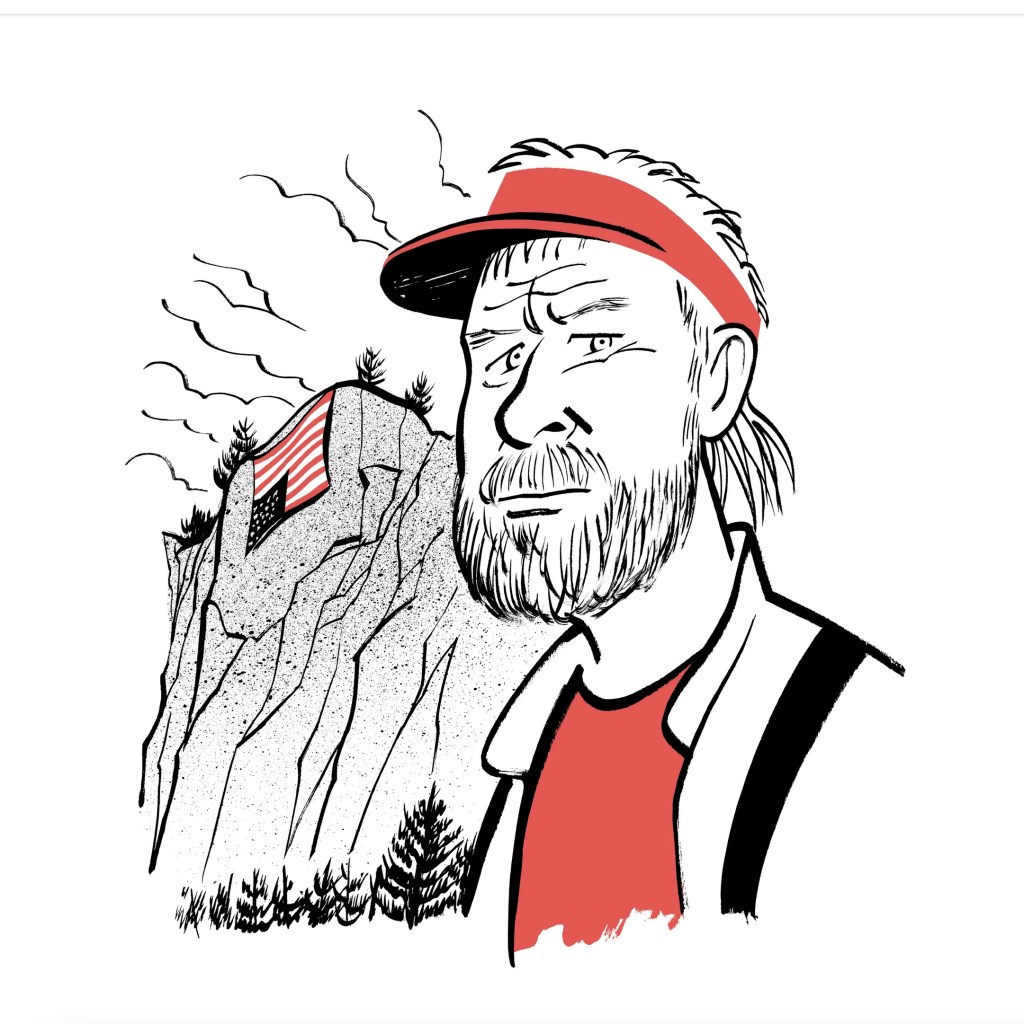



 Kit Stolz