Blogging the Fourth Assessment

From the testimony of Dr. Kevin Trenberth, a leader in the US delegation of scientists to the IPCC, and one of four scientists who just testified before the House Committee on Science and Technology. (For a webcast or more testimony, see the well-designed House website.)

But enough of acronyms and official titles. Here’s one little aspect of Trenberth’s prepared statement about our new world:

A key ingredient in changes in character of precipitation is the observed increase in water vapor and thus supply of atmospheric moisture to all storms, increasing the intensity of precipitation events. Indeed, widespread increases in heavy precipitation events and risk of flooding have been observed, even in places where total amounts have decreased. Hence the frequency of heavy rain events has increased in most places but so too has episodic heavy snowfall events that are thus associated with warming.

Upstate New York buried in snow, according to the NYTimes:

One_hundred_inches_in_upstate_ny_david_d

Greed Got Us into This Mess

With Al Gore and others, billionaire Richard Branson will announce today at a press conference in London today a prize of $25 million to the inventor who devises an effective means to reduce the concentration of greenhouse gases in the atmosphere.

Although the participants are under a media embargo, American climatologist James Hansen–who will serve as a judge of potential inventions, along with English scientist James Lovelock and Australian author Tim Flannery–did discuss the topic of geo-engineering a solution to climate change this week in front of a large crowd at UC Santa Barbara as part of a lecture he gave on the dangers of human-caused climate change. For more, please see this on Gristmill.

Below is the inventor’s 2003 drawing for such possible device: a "synthetic tree."

Synthetic_tree_1

Hansen Speaks

This past Monday, James Hansen spoke at UC Santa Barbara. His lecture slides are available on-line; the lecture is not, but let me put down some of his more memorable quotes.

After noting the size of the crowd–over 1,000 people, buzzing with anticipation–he said he was happy to see a large crowd, including many students, but added:

I’ve always been a little puzzled why young people don’t get more disturbed by this issue since you’re getting the short end of the stick.

He said that although estimates are difficult, scientists agree that a "business-as-usual" (BAU) scenario in which little or nothing is done to reduce carbon emissions will lead to what some scientists call a "reduction of biological diversity," which is a "euphemistic way" to describe the loss of species. No one knows exactly how many species will be lost, but in the last big climate change event, the Palocene-Eocene Thermal Event of 55 million years ago, when temperatures rose 5-8 degrees Centrigrate over a few thousands years, an estimated 90% of species died. He added:

We will save the polar bears in zoos, but this may not be considered by the bear to be "saving" –it may be more like jails.

Regarding estimates of the melting of the Greenland Ice Sheet and the West Antarctic Ice Sheet, he was critical of the just-released Fourth Assessment of the IPCC, which estimates only a slight increase in the rate of melt, in the range of a total of a foot or two this century.

I can’t imagine how the West Antarctic and the Greenland ice sheet could survive a Business-As-Usual scenario if they were covered with summer ice melt. We know from earth history that about fourteen thousand years ago [Meltwater Pulse 1A] the sea level rose 20 meters in 400 years. New Orleans is a village compared to what could happen in China, where 250 million people live nearly at sea level.

Regarding our climate in the Western U.S., he said:

Because we expect a decrease in annual rainfall and because temperatures will be going up, it’s going to be hotter and drier. I think we’re beginning to see the first small steps towards this already, as globally averaged temps have climbed about 1 degree in the Western U.S. Super-Droughts will be possible if we follow a Business-as-Usual scenario.

Regarding energy production, he spoke caustically of huge plans to transform tar sands production in the mountain states and British Columbia:

We simply can’t cook the Rocky Mountains and drip oil out of them without producing a completely different planet.

Speaking of the public relations challenge of global waming, he said:

I don’t think we scientists have done a very good job of making clear the threat of producing a different planet under a business-as-usual scenario.

He added, with a touch of asperity, that he was a government employee, and:

My comments are my personal opinions and I am today not representing the government.

The crowd laughed. Nearly everyone knows how little Hansen is liked in the Bush adminstration.

Meltwater_pulse_1a_1

Global Warming Outlook “More Dire” than IPCC Report, Says Wall Street Journal

The Wall Street Journal on Saturday ran an interesting little new story by John Fialka on why the long-term outlook for global warming may be "more dire than suggested" by the IPCC’s just-released Fourth Assessment on Climate Change.

Two reasons: first, as Andrew Dressler already mentioned in a post below, the report doesn’t fully take into account the melting of ice sheets. That’s according to Tom Delmore, a climate modeler with the National Oceanographic and Atmospheric Association.

Second, because of the limits of computing power, the report probably underestimates the amount of warming that will be caused by increasing amounts of water vapor in the atmosphere. That’s according to Jim Butler, also with NOAA.

The story ran under an oddly inane headline, but it’s still very much worth reading

What Should I Ask James Hansen?

I’m going this evening to see the great climatologist James Hansen speak at the University of California at Santa Barbara. I will be just one of hundreds of people there, but with a little luck will be able to ask him a question. What should I ask? Here are three possibilities:

1)        According to documents given recently to "The Guardian" newspaper regarding the IPCC’s just released Fourth Assessment Report, the US government  believes that (and I quote) "Modifying solar radiance may be an important strategy if mitigation of emissions fails for one reason or another. Doing the R & D to estimate the consequences of applying such a strategy is important insurance that shuold be taken out."

Dr. Hansen, you led a major long-term study that reported in 2005 on the energy balance of the earth. Could you please discuss the idea of attempting to reflect or otherwise modify radiation the earth is taking in from the sun?

2)    According to a news story published last week in the Wall Street Journal, US government scientists such as Tom Delmore think that the reality of global warming "may be more dire" than the Fourth Assessment Report states, because the report doesn’t estimate the risk of rising sea levels caused by melting glaciers and snow cover, and because it underestimates the warming caused increasing amounts of water vapor in the atmosphere. Could you please comment?   

3)    Dr. Hansen, you first warned the Congress this country about the threat of global climate change back in l988. Your warnings were largely ignored, and your work was attacked, often by people connected directly or indirectly to fossil fuel interests. Can you talk a little about how it feels to have played the role of Cassandra in this debate?

Earth_energy_balance_hansen_et_al_2005

Enviro Songs of the Year 2006

Is it too late for a 2006 music retrospective? Let’s hope not.

I agree with Matt Singer: in popular music, 2006 was a year of nothing much. Unfortunately so, and unlike 2005, which was spectacular. Nonetheless, last year had its moments.

I will list the three that come to my mind, and move on to the bigger questions.

For Best Cover…Is It Like Today, by Eliza Gilkyson. I can’t give you a sample, because she hasn’t posted one on her site, but this brilliant folkie remakes a song by the keyboards band known as World Party to huge effect (and something of a hit on alt-Internet stations such as Radio Paradise).  If you try it (via iTunes) and don’t like it, I’ll repay you myself. The haunting chorus:

How could it come to his?/I’m really worried about living/How could it come to this?/Yeah, I really want to know about this…

For Best Warning…The Eraser, by Thom Yorke. For more, please see Global Warming: #2 on the Pop Charts.

For Best New Discovery: I See Hawks in L.A. This band has a lot of good songs, but start with the eponymous song that made them semi-famous, in L.A. at least, which blends SoCal country into the apocalypse with rare style. A key stanza:

One more day on the 605/What if this place got buried alive/The biggest quake the world’s ever seen/Let the snakes take over again…

But before we go on to the grand prize winner, we must ask the obvious question. Is there such a thing as environmental music, or nature music? If so, what is its character?

Is it music that echoes the sounds of nature? Is it music that binds us to nature? Or is it music that reminds of the worth of the planet, and warns us of what we have to lose?

All these definitions can apply, and we heard examples of each this past year, especially the warnings (see above). But I will follow Beethoven’s example, in his description of the famous Pastoral Symphony, and say that it is "a matter more of feeling than of painting in sounds."   

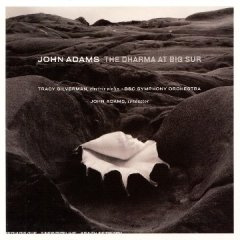
This method describes perfectly the best environmental music of last year, which I think was John Adams’ The Dharma at Big Sur. (Listen to a sample, and read Adams’ notes about it here.)

Although written in 2003, for the inauguration of the Disney Hall in Los Angeles, it was first made available on a recording in the fall of 2006.

More importantly, this is Adams’ hommage to Jack Kerouac and the Beats, and also to their Buddhist love for Big Sur. It’s wordless, driven by an electric violin, and blends a harsh beauty with a great freedom, like a turkey buzzard soaring in an ocean breeze. 

Listen for a moment, and if you’ve been to Big Sur, I think you’ll see what the Beats saw; a nature beyond owning. The wind flowing in over the steep hills, the fog gathering on the ocean’s horizon, the bird in flight. Drift off for a moment, and maybe you’ll be back there, perhaps with a friend or lover, watching the birds’ endless swoop and dive and rise…endless change and perfect stillness in one body…

The_dharma_at_big_sur

More prosaically, it’s also exciting to be able to report that classical music is making a comeback. I think this has to due with the fact that classical composers, blessedly, have turned away from atonality, beginning roughly with Gorecki’s great 3rd Symphony of l976 (which became a big hit, thanks in part to an incandescent recording by Dawn Upshaw with an orchestra led by David Zinman, which went on to sell over a million copies after being released in the early 90’s). The composers of today, including as Adams, Arvo Part,the late Lou Harrison, and Steve Reich, write music which is rewarding, accessible, and exciting. Audiences are beginning to notice–just in the nick of time.

But on to popular music.

The Eraser, by Thom Yorke. For more on this Grammy-alternative hit, please see this post on Global Warming: #2 on the Pop Charts.

Is It Like Today, by Eliza Gilkyson. I can’t give you a sample because she hasn’t put one on her site, unfortunately, but know that this song has become something of a hit on alternative stations such as Radio Paradise, and for good reason. Although this is a cover of a song by a keyboards band called World Party, the gifted folkie Gilkyson makes it her own, and lyrics become haunting:

Oh What a Beautiful Morning, by Ray Charles. If there was any doubt about Charles’ ability to make songs anew, this record dispells it. Lyrics I never heard before:

All the sounds of the earth are like music..


Jaw-Dropper of the Week: Dr. Richard Lindzen, Climate Change Denier

Dr. Richard Lindzen, a professor at MIT, and one of the handful of halfway-reputable deniers still around, gives Larry King "his read" on Al Gore’s An Inconvenient Truth and the issue of climate change:

I think it’s mainly just like little kids locking themselves in dark closets to see how much they can scare each other and themselves.

Now who exactly has locked himself into a dark closet? Refused to see the light?

Thanks to Erica McDonald, of Dr. Heidi Cullen’s show on the Weather Channel, for the catch.

Global Warming and Yellowstone Grizzly Bears

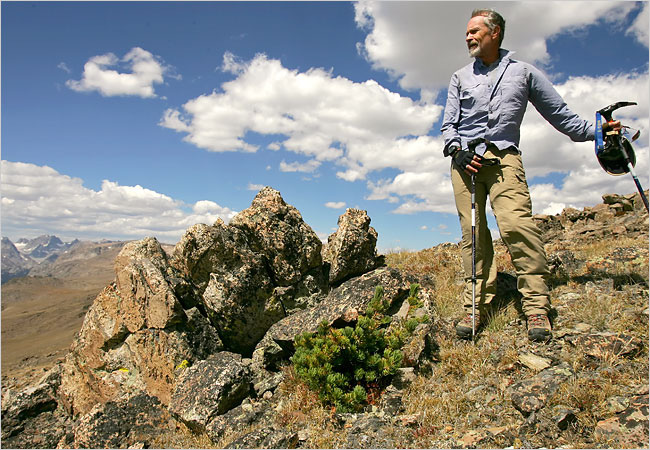
So much climate change news this week and last. It takes a team of people, as at Gristmill, just to take note. But here’s a great story in The New York Times about the Yellowstone Grizzly Bear, and why global warming may take away its winter dinner, and what one grizzly bear fan is trying to do about it. Take it away, Jesse Logan and Charles Petit!

In 2001, Dr. Logan set up an observing station at a broad stand of whitebark pines at the timberline at Railroad Ridge in the White Cloud Mountains of Idaho. He expected a beetle infestation, but not for a while, and planned to collect data before the insects showed.

Almost immediately, in 2002 and 2003, telltale patches of “red top” trees appeared. Today virtually all the mature whitebarks there are dead. “It was the most magnificent whitebark ecosystem I’d seen,” Dr. Logan said. “It broke my heart.”

New computer projections done by Dr. Logan and Jacques Régnière of the Canadian Forest Service based on recent climate and other data for the mountain West show most whitebark pine forests being wiped out as warming continues. But the Wind River Range is projected to stay cold until 2100 or so, which, if the model is right, means they could be a refuge for grizzlies forced out of areas where the trees die.

Jesse_logan_by_tony_perry

The Fox and the Butterfly Return: Good News Friday

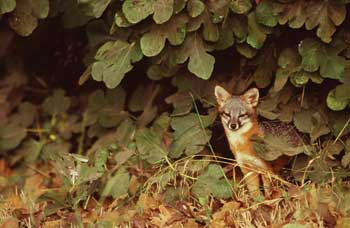
For a while the "good news Friday" concept got away from me, but this week the VCReporter gives us two great examples of folks caring for nature around here, and finding ways to bring back species drifting towards extinction. On the cover is a  lovely and personal story from Chuck Graham, with his photographs, about the return of the kit fox to the Channel Islands, and a story about the effort at Moorpark College to bring back the nearly extinct Palos Verde blue butterfly, by Matthew Singer.

Island_kit_fox