Did avoiding fats make our obesity problem worse?

Could the misunderstanding about fat have made the American problem with obesity worse?

That’s the understated implication — or an implication — of the latest version of the medical consensus on fats in the bloodstream, as defined by Frank Hu, head of Harvard’s School of Public Health, in a story by Jane Brody in the NYTimes with a clunky headline.

To quote::

Experts now realize that efforts to correct past dietary sins that made heart disease and stroke runaway killers have caused the pendulum to swing too far in the wrong direction.

“The mistake made in earlier dietary guidelines was an emphasis on low-fat without emphasizing the quality of carbohydrates, creating the impression that all fats are bad and all carbs are good,” Dr. [Frank] Hu, a professor of nutrition and epidemiology [at Harvard’s School of Public Health], said. “It’s really important to distinguish between healthy fats and bad fats, healthy carbs and bad carbs.”

But half-buried in this thoughtful framing of a complex question remains a fundamental truth. Saturated fat — butter, meat, and cheese — is dangerous to your health. .

To quote Hu — who has led huge studies of this issue — again:

He explained that saturated fat, found in fatty animal foods like meats and dairy products, raises blood levels of cholesterol and is not healthy,

What follows is a discussion of alternatives, and the alternatives are worthy and great in fact, but having written a contrarian story about another misunderstanding of medical research into fats a year ago , may I say I feel vindicated in listening to and focusing on the work of researchers such as Hu and David Katz, of Yale and the journal Childhood Obesity, who continue to warn that saturated fat is not your friend.

Butter curl
Butter curl

.

No matter how pretty.

Internet erodes the interview: Chuck Klosterman

Fascinating insight on the 21st century and the interview in reporting and writing from a Q & A with Chuck Klosterman:

ChuckKlostermanI feel like in general that the art of the interview has been eroded by the rise of the Internet. It’s taken away the necessity of [doing them] but it still seems to me like interviews are the central part of the investigation of anything. The key is asking questions that you actually want to know the answer to, as opposed to asking the questions that you think you are supposed to as a reporter. The person you’re interviewing can tell if you’re actually interested in the question. If the person is asking stupid, predictable questions, you know that the piece is going to be predictably structured. It’s almost like you’re doing a paint by number.

Neil Young keeps on rocking — past the curfew

Missed Neil as he passed through SoCal this past week, and regret it — Rolling Stone says this is his best tour in “decades,” and for good measure throws in a video of an epic 17-minute version of what some consider his greatest song Cortez the Killer.

But my fave review I’ve seen from this tour comes from the Independent in Santa Barbara. It’s long, but the opening and closing are too strong (and too unique) to go unnoticed:

Let’s be real. There’s a good chance human civilization has about half a century left until we render the world inhospitable. It’s almost impossible to imagine a way in which we could disentangle ourselves from the gridlock of our unsustainable ways in time to meet the needs of unborn billions, or in time to put the brakes on a rapidly accelerating climate shift. Certainly not, at least, when so much power seems to rest in the hands of a greedy few, or in the hands of a populace too afraid or too numbed to disturb the peace.

[edit]

“Look at mother nature on the run in the twenty-first century,” Young sang at the show’s opening. Who knows if this kind of protest rock really moves mountains, or just makes us feel like we can; but it is heartening to know that there is someone bearing witness at the very least, should we look upon these times and see missed opportunities in our policies and lifestyles. Young, in his undying rock spirit, asks us to be more, to give our children the promise of something more real and something more free, and that night, he gave us a very real hope that we still can.

Thanks, Richie DeMaria. (Who points out Young will pay a fine for exceeding the curfew at the Santa Barbara Bowl.) And here’s another of his classics, a much shorter song, from this tour. For some reason this version — despite the handheld quality — gives me chills.

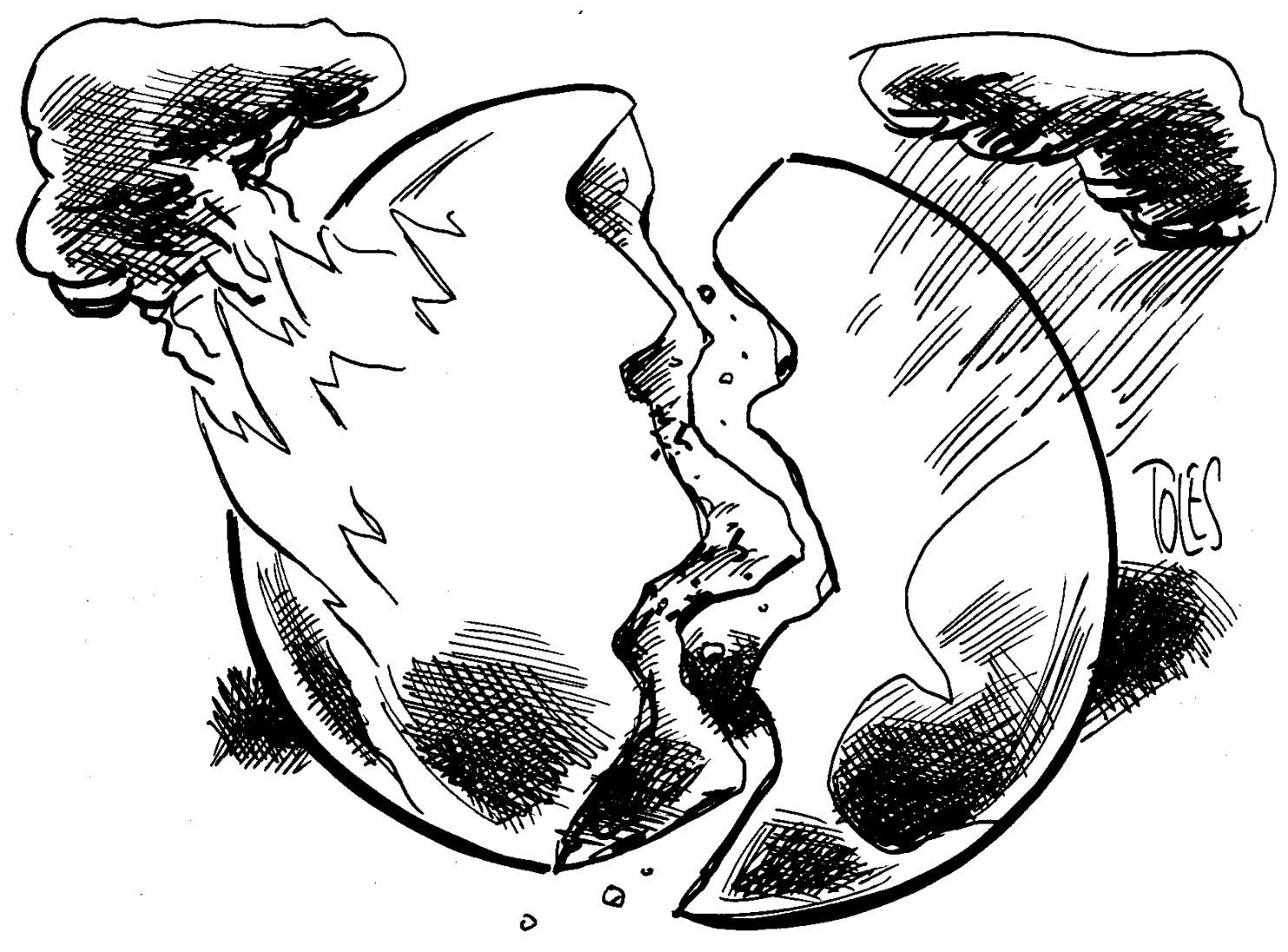
Not climate change: Climate Rupture

As Tom Toles says in a column today:

First it was called the Greenhouse Effect, then Global Warming, then Climate Change. Each accurate enough, as far as that goes, but all woefully inadequate at conveying the catastrophe we’ve been creating.

The short column eloquently describes the extreme weather that scientists have warned us to expect with climate change, but best of all Toles proposes a new phrase/image to dramatize the disconnect that is characteristic of climage change.

Climate Rupture:


ClimateruptureToles

NYC writer meets nature: The Great Surrender

A young writer lays out what it is to fall into a relationship with nature — reluctantly.

…if you had told me a decade earlier, when I was living in New York City working as a magazine editor, that I would someday move to Montana—and for a man—I would have scoffed: “What a hilarious idea.” If you had told me that by taking this leap of faith, which could have gone wrong in any number of ways, large or small, I would develop one of the most significant and sustaining, though at times frustrating, relationships of my life—with nature —I would have laughed: “Are you sure you’ve got the right girl?”

It’s nature writing for the impatient 21st century, with great pics. Via Good.

Morgan-Phillips-Photography_4

Pope Francis: The universe is calling to us

Francis, the Pope, has made headlines by visiting Washington and calling for action on climate change, on poverty, on immigration, and for religious freedom. But that’s nothing! In his startling Laudato Si he actually lays out an even more ambitious agenda.

How could it be more ambitious than solving the problems of climate change, poverty, and immigration?

In a word, he calls us to a spiritual awakening, a new openness to God. In Canto 233, he writes:

“…there is a mystical meaning to be found in a leaf, in a mountain trail, in a dewdrop, in a poor person’s face.”

A footnote leads us to the work of a Sufi mystic named Ali al-Khawas, who in the 16th century wrote a passage that evidently struck Francis, for he quotes it in full:

“Prejudice should not have us criticize those who seek ecstasy in music or poetry. There is a subtle mystery in each of the movements and sounds of this world. The initiate will capture what is being said when the wind blows, the trees sway, water flows, doors creak, birds sing, or in the sound of strings or flutes, the sighs of the sick, the groans of the afflicted…”

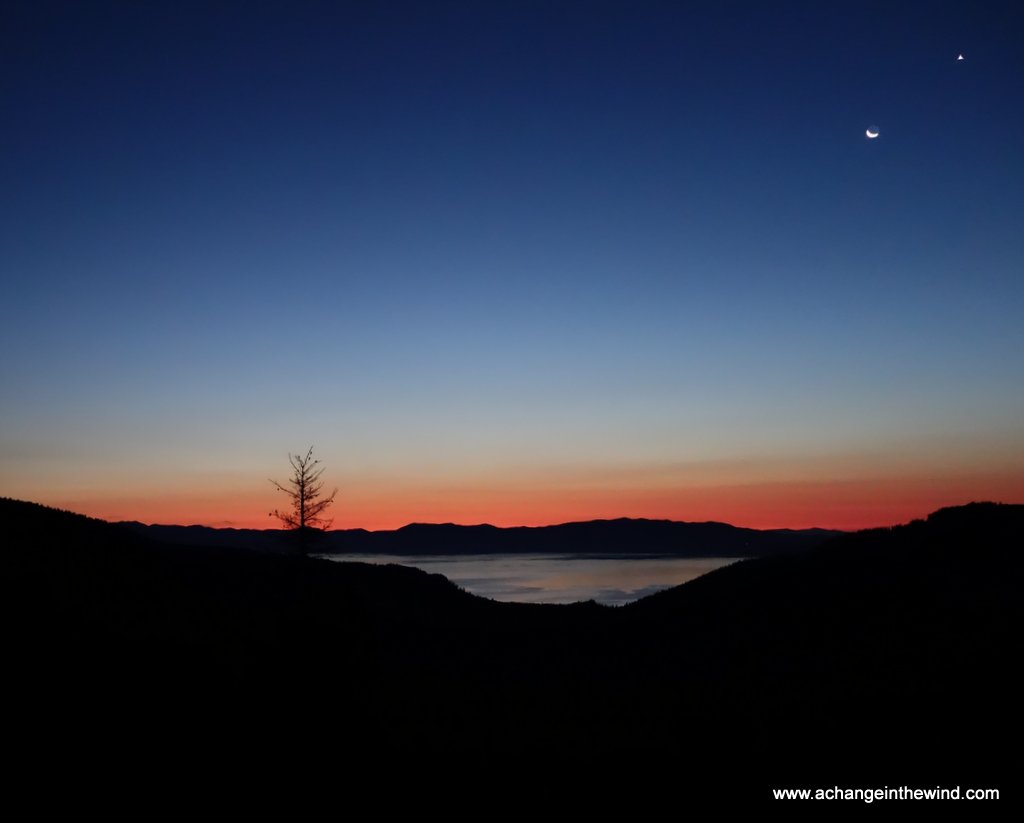
dawn over Lake Tahoe

We are to become “initiates” in the universe.

People of the PCT: Chop Stakes

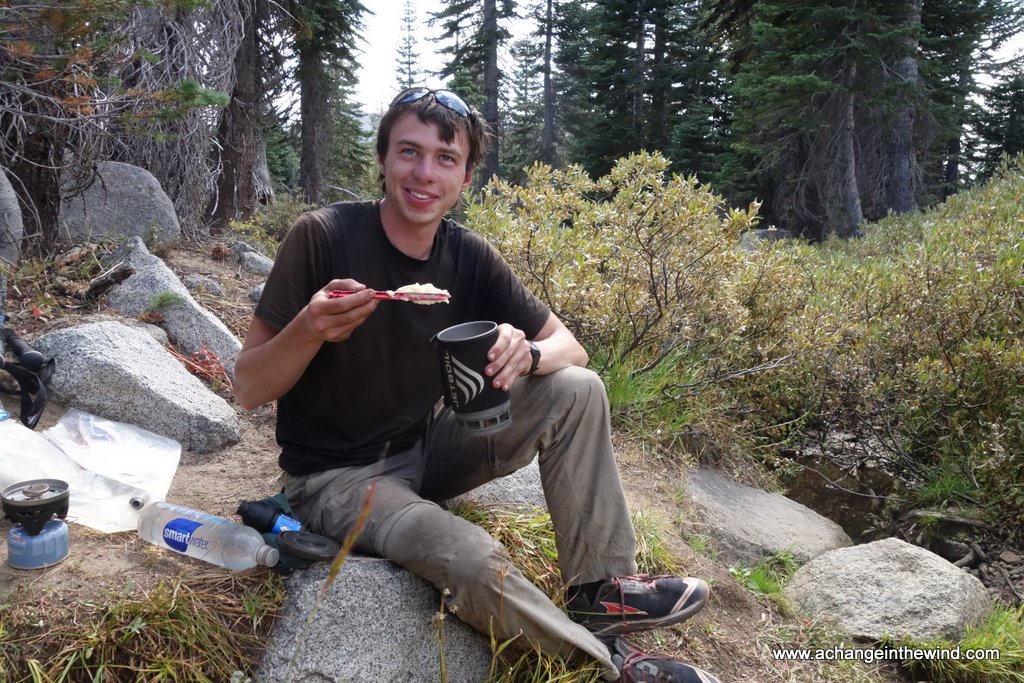
In section J of the Pacific Crest Trail, at mile 1140 on Halfmile’s great maps, I met a thru hiker on his way south. A young man, alone, completely comfortable with the trail, and making steady if slow progress. He said he’d just been cheered by passing the 1500-mile mark — that meant he was clearly more than half done, he knew he would finish. And, he stressed in a modest way, he was having a good time. He liked California. He was from Minnesota.

“You flew all the way out here to walk the PCT?”

“Yeah I did,” he said. He sat at ease, eating the classic modern hiker meal, the instant mashed potatoes with whatever, just enjoying it. He was having his dinner by a great water source, a strong spring, a spring that actually turns out to be the headwaters of a great (if often dammed) river, the American River.

Chop Stakes at the headwaters of the American River on the Pacific Crest Trail

We got to talking and I asked him his name and he told me and gestured with his utensils. Chop sticks is what I heard in my mind, but I am told by a reliable source — Hike Alone — that what he actually said was Chop stakes.

Which of course they are. A wit!

(I was a little too dense to get it at that moment, but note that I did get permission to take Mr. Stakes’ picture, and told him where to come find it some day.)

Why does the park service make wilderness visitors lie about camping next to water?

If you wish to obtain a permit to visit the Yosemite Wilderness, to hike perhaps on the PCT, one goes to the Wilderness Permit office labeled as such, off the main road (not the stone building near the campgrounds) and stands in line and picks up one’s reserved permit, or hopes that someone else does not, and a permit becomes available. I was told this year that fights have broke out in the line to get permits.

If one reaches the desk, one speaks to a polite but stern young park ranger, who asks a number of good questions. Do you have a bear canister, and if so, what type? (Not all bear canisters have been approved for use by the park service.) Where will you camp the first night? (PCT hikers heading north from Tuolumne Meadows will likely be commanded to stay at the Glen Aulin High Sierra Camp, a very beautiful but crowded place for backpackers.)

And will you promise not to camp within 100 feet of water?

The park service forces people who want a permit to walk out ride in these areas to swear not to camp next to water. To tick off a box pledging such and sign.

Even though most camps and most fire rings — which are implicitly sanctioned by the park service, and destroyed if they are too numerous or scarring — are found within fifty feet of water in this section of the trail.

Perhaps the park service has found this method of dealing with the public is most effective, but to this hiker it’s unfair and frustrating. It’s a brutal refusal to see the way people live in nature, and have always lived in nature. It’s like telling lovers they mustn’t kiss, for similar and similarly misguided reasons — fear of diseases.

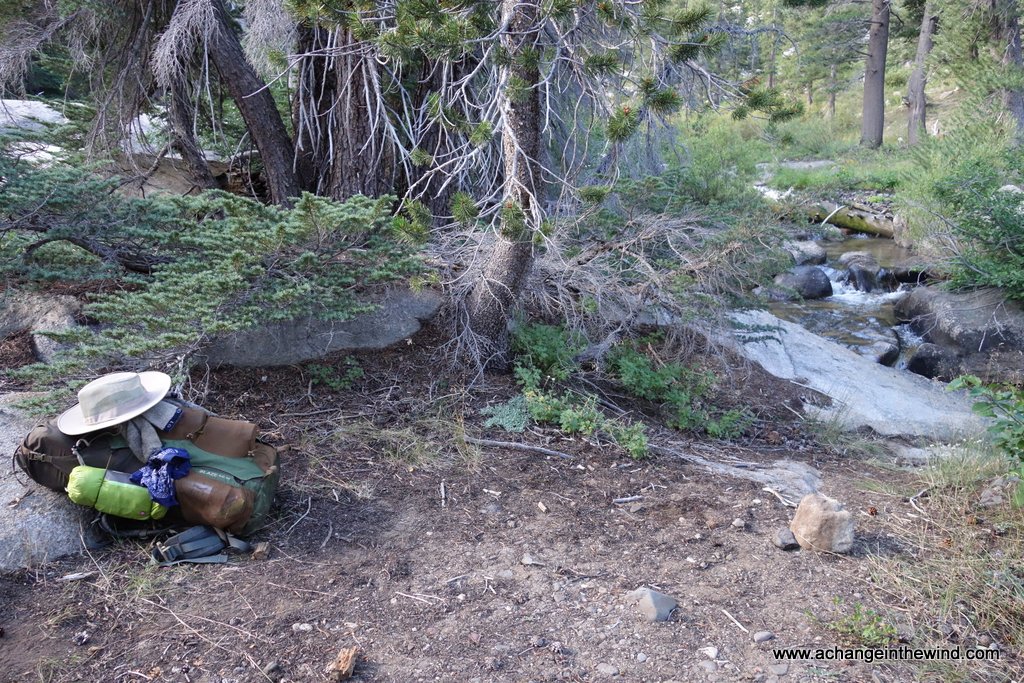
For example: What hiker/camper could not be drawn to this perfect camp at the aforementioned mile 1024?

No one else is around. It’s not crowded, not polluted, and you will not harm this water in any way, shape, or form with your existence. Further, you have a right to be in this water, to drink it (safely, in my experience) and bathe in it, and live with it.

Now tell me: Who would not camp here?

1-DSC04006

But wait! There’s more. The vast majority of campsites and fire rings on this trail are like this: right next to water.

Continue reading “Why does the park service make wilderness visitors lie about camping next to water?”

The president as a man in the world: JFK

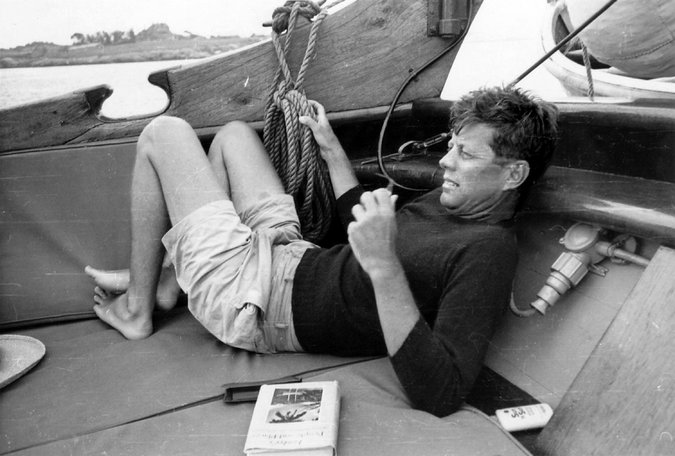
Love love love this picture, taken by a friend of JFK’s, who allowed its publication for the first time last week in, natch, the NYTimes.

jfksailing

This speaks to me and, I suspect, many Americans because it embodies a big part of what made JFK special. Although (as the article eloquently reveals) he is not the first American president who appealed to the public by projecting an image of himself as a sailor, we see in this frame the informality, the at-homeness in an athletic pursuit, the almost Californian nature of the future White House resident — he’s barefoot for Christ’s sake!