Is Pombo a “Close Associate?”

Republican Congressman Richard Pombo, who has taken well over $100,000 from Big Oil in the last three years, was no doubt disappointed by the failure of the GOP to push through a measure to drill in the Arctic National Wildlife Refuge yesterday.

But Pombo, a far-right anti-environmentalist whose measure to gut the Endangered Species Act has already passed the House, might have bigger problems. He’s said to be close to indicted lobbyist Jack Abramoff; in fact, according to statistics compiled by the Washington Post, he’s has taken over $36,000 from Abramoff, 17th on the list of dozens. Abramoff, two of whose lieutenants have already "flipped" and promised to testify against him, is looking at a long prison sentence. He’s planning to talk to the Feds himself next week, and, according to this story in the NYTimes, will testify against his "close associates."

A watchdog group called Citizens for Responsibility and Ethics in Washington has named Pombo one of the thirteen most corrupt members of Congress. On that list are two of Abramoff’s close associates already looking at the possibility of prison time; Randy Cunningham, who has resigned after being caught taking millions of dollars in bribes, and will go to prison, and Bob Ney, who is facing indictment in Ohio. Could Pombo be another one of Abramoff’s "close associates?"

Here’s hoping.

Here’s what the San Jose Mercury-News said about Pombo last month in an editorial:

At the end of September, the House voted 229-193 to approve a Pombo rewrite of the Endangered Species Act, which he has campaigned to eviscerate since he was elected to Congress 13 years ago.

Pombo claims that the act is ineffective, despite studies that show it has arrested the decline of half the species protected under it.

What Pombo really wants the act to protect is his excessive notion of property-owner rights. The rewritten act would require the government to compensate property owners who say an endangered species thwarts their development plans. It’s an open invitation to dream up developments and get bought out of them at exorbitant prices by taxpayers.

Last week, Pombo persuaded the House Resources Committee to approve language for the budget act that erodes the national moratorium on offshore oil and gas leasing in federal waters by offering states who agree to drilling a bigger share of the royalties.

The budget language also would revive a dormant practice of selling public lands to companies that have mining permits on them. And — this can hardly be a surprise — it endorses drilling in the Arctic National Wildlife Refuge.

This environmental destruction is written into the budget act as a way — a shortsighted way — of raising revenues.

Environmental blindness is a Pombo specialty. He’s pushing for a highway from the Central Valley over Mount Hamilton into East San Jose.

There’s only one reason to build it. A river of concrete through an unspoiled landscape would be a symbol of the swath of destruction Pombo is cutting through environmental protections.

“Breathtaking Inanity”

As I predicted a month and a half ago, based on the common-sense reaction of local voters, the Federal judge in charge of the "Intelligent Design" judge has ruled that this religious ideology is not science and thus, should not be taught in public school high school biology classes.

The judge, a lifelong Republican (reg. required) appointed to the bench in 2002, said that some would probably consider his ruling the work of an activist judge, but he nonetheless wrote that the Dover, Pennsylvania school board members and religious ideologues who dragged the community through this controversy exhibited "breathtaking inanity." In his ruling he pointed out that they claimed on the one hand that "Intelligent Design" was good science, and that they had no interest in injecting religion into the teaching of biology, while on the other hand they "staunchly and proudly touted their religious convictions in public."

Isn’t that known as hypocrisy?

He concluded:      

The overwhelming evidence at trial established that ID is a religious view, a mere re-labeling of creationism, and not a scientific theory.

Perhaps this will serve as the epitaph for this particular form of science abuse. But the real question now is, what will Pat Robertson say? The religious fanatic has already threatened the town with the wrath of God for ousting the school board members who subjected the community to this "breathtaking inanity." Robertson said on November 9th on his "700 Club" broadcast:

"I’d like to say to the good citizens of Dover: If there is a disaster in your area, don’t turn to God. You just rejected him from your city."

Will he now threaten the judge?

Dancing with Ghosts

Strong language from Dennis Kucinich on the passage of a bill in the House to allow drilling in the Arctic National Wildlife Refuge.

We must not only search for alternative energy.  We must search for an alternative way to live.  We must escape this cycle of destruction.  We must reconcile with nature.  We must find a path to peace, with our native brothers and sisters and with ourselves.

Read the whole piece, via Robert Scheer’s Truthdig.

“Dishonest, Sneaky, and Unnecessary”

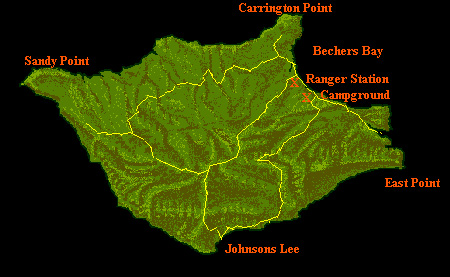
So opines the conservative Ventura Star on the proposal by Duncan Hunter, a Republican Congressman, to turn Santa Rosa Island over to the military as a hunting preserve. According to the Star’s flinty editorial, this is the second time that Hunter–the powerful chairman of the House Armed Services Committee–has proposed making this large national park a private playground; they call it "dishonest, sneaky, and unnecessary," and note that Hunter made the same proposal back in May, but dropped it after protests.

"Unnecessary" because members of the military, like all members of the public, already have a right to enjoy this large, wild island. "Sneaky," because like so many other Republican land-grabs before the Congress this Christmas season, the proposal is not a bill, but a tiny provision tucked into a massive defense appropriations bill, and thus difficult to debate and discuss–far less defeat–by critics. (Who, as the LATimes times notes, are crying "foul!") And "dishonest," because the real point of the measure is not to reward the military, but to reward the operators who run the hunting concession. The island was purchased by the government in l986; under the original agreement, hunting will be allowed for another six years, and then the island will become a natural preserve, like other national parks.

The best writing on this topic seen by this observer so far comes from Kurt Repanshek, an author who has written a number of books on the national parks, and posts the wonderfully witty National Parks Traveler. His lede opens:

If you believe the folks at Multiple Use Managers, Incorporated, some of the best hunting for Roosevelt elk and mule deer in the West can be found just off California’s Pacific Coast on Santa Rosa Island.
   

So good is the hunting, believes Representative Duncan Hunter of California, that the island, which just happens to be part of Channel Islands National Park, should be turned over to the Defense Department and transformed into a posh hunting preserve for the military.

To check out this contention, I talked to our Congressman’s office. Republican Elton Gallegly represents this portion of California (although technically Santa Rosa is not part of his district). I spoke to his local representative Brian Miller. Miller was unsure about this measure’s chances. He said it is coming up afor a vote as part of the defense appropriations bill this week, but he said that when he talked to military representatives, they wanted nothing to do with supplying, maintaining, and overseeing an island of nearly 60,000 acres, on which live a number of endangered species.

As one enviro activist suggested to me last week, Republicans in Congress may be pushing these measures now, sensing the tides turning and the real possibility of the loss of a Republican majority in 2006.

But isn’t it interesting that the alleged beneficiaries of this measure don’t even want the island?

Leave it a national park, I say, as beautiful (and almost as untouched) as it was a century ago:

Santarosaisland

Don’t Let Your Children See This

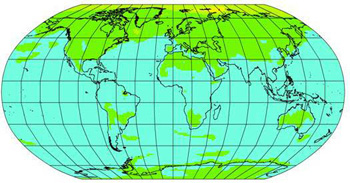
Via Jim Hoggan’s elegant DeSmogBlog.com in Canada comes this link to a series of charts from the National Center for Atmospheric Research projecting global temperatures in the 21st-century, using atmospheric CO2 as of the year 2000 as the base.

Note that California is projected to warm by the year 2025 somewhat less than 3C…right around the 2C projected in the Preparing for a Changing Climate report issued by the California division of the US Global Change Research Program in September 2002. (This report thoughtfully compiled research for our state that had been funded by the Federal government.)  When I mentioned this to a forecaster in Ventura County, while researching a 2003 cover story on the issue, he was a little stunned. "2C?" he asked, knowing how big a deal that is. (Keep in mind that the globe as a whole has only warmed .6C to date.) But 2C for California is what the projections say.

Tempchangesyear2025

If John Lennon Were Still Here…

Believe it or not, earlier this week there were quite a few signs of hope from the United Nations-sponsored climate change conference in Montreal, despite U.S. foot-dragging. One of the most encouraging signs was a group of young people who came and camped out and demonstrated at the conference, promising a generational commitment towards a solution to the problem.

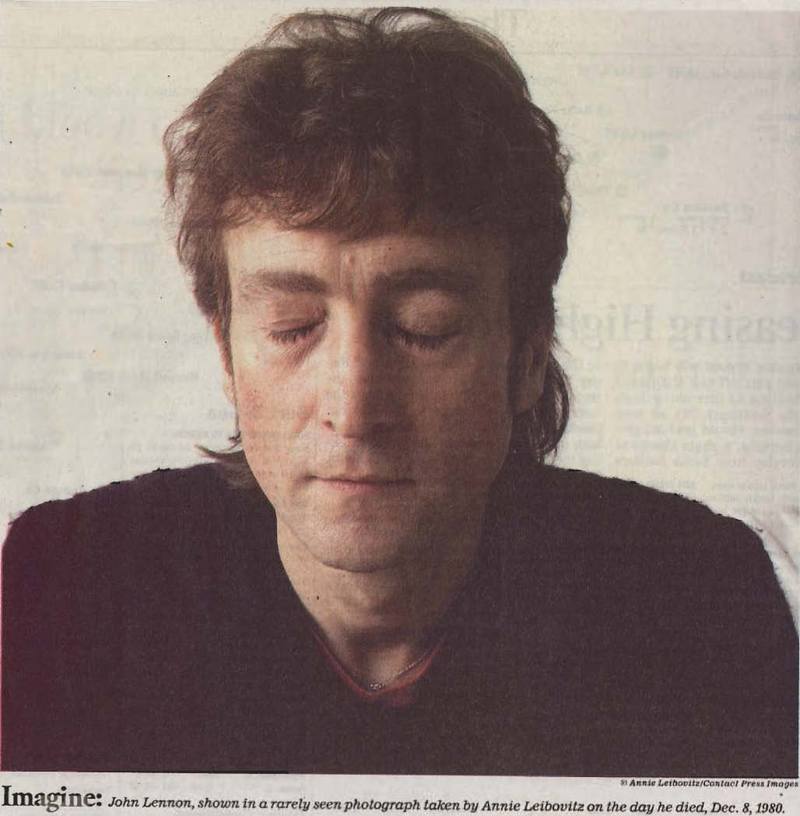
Re-awakening the call of a dreamer: if John Lennon were still here, he’d be here in Montreal.

So write Michelle Petrisor and Rosa Kouri, blogging for itsgettinghotinhere, a website built for the climate change conference in Montreal. On the date of his assassination, December 8th, they wrote that:

In his memory, youth at the United Nations Climate Negotiations staged a “bed-in” for the climate. Two blocks away from the original site of John’s protest, we briefly recreated the message of peace and compassion. Surrounded by flashing cameras, recorders, and reporters, flanked by escalators and men and women in business suits, we begin to sing John’s simple words. Youth two dozen strong, we laid white blankets and pillows on the floor. Delegates passing by began to sing along to “Give youth a chance” and “Imagine”…

Simon Retallack for The Guardian reported that:

The mood improved still further with news that Bill Clinton would be gracing the summit, rock star-like, with a surprise appearance later today at the invitation of Canada’s prime minister, Paul Martin. There was even a report that a group of US students had moved members of the US negotiating team here in Montreal to tears following a plea for them to act on climate change. If that could happen, surely anything was possible. People even began contemplating an early exit home.

The Guardian added that Margaret Beckett, the UK environmental secretary, expressed confidence that an agreement would be reached among all industrialized nations to move to phase two of the Kyoto Protocol. Still, although the UK and other industrialized nations were willing to drop virtually all conditions to get the U.S. on board–reported the BBC radio–the US delegation continued to resist being drawn into negotiations. Finally, the BBC said, US lead negotiator Harlan Watson declared that "if it looks like a duck, walks like a duck, and quacks like a duck, it’s a duck," and led a walk-out. That account was confirmed today in the Washington Post, although they soft-pedaled the fact that fact the U.S. walked out abruptly, shortly after midnight. But they did mention the bafflement of the other delegates, one of whom remarked:

"I don’t understand your reference to a duck. What about this document is like a duck?"

The delegates, focused on solving the problem, don’t understand–or claim not to understand–what happened. It’s a fact that the U.S. is at the conference, was part of the original Kyoto Protocol negotiations, and has spent over $5 billion researching climate change. And, after all, the President has always claimed to be a problem-solver, and the delegates are eager to talk about how to solve this problem. Surely the  U.S. would want to be part of that discussion.

The problem is, the Bush administration refuses to be drawn into any discussion that includes emissions limits, no matter how vaguely stated.

Which is to say that despite all the diplomatic palaver, the Bush administration has no interest in solving the problem or even in confronting the problem; only in pretending to do so.

This is why I think the kids are right to say that Lennon would stand with them on this issue, though I think the man himself might shock them a little. In the wake of the hideous injustice of his death, we tend to forget the darker side of Lennon; a man who could be as cynical, as despairing, and as bitter as anyone. (He was no saint, and probably would the first–maybe after Paul–to say so.)

But this much we know: He was a believer in confrontation. This comes out undeniably in the most trustworthy of his biographies (by Ray Coleman, who reported on the Beatles’ early in their career, and came to know the group quite well). Coleman reports that in school, Lennon had a way of confronting every new kid and new teacher and new administrator who showed up. He’d give new kids a long penetrating stare, and ask a few sharp questions. He wasn’t hostile, and usually asked in a teasing sort of way, but he had a purpose. He wanted to know every new person for himself.

I saw this myself once for myself (speaking of believe it or don’t). It was the fall of l980, shortly after the release of Lennon and Yoko Ono’s "Double Fantasy." I was going to see a Clash concert at the Hollywood Paladium, and had made plans to meet a screenwriting friend who had an office on Hollwyood Boulevard. But the door to the street was locked, so I had to find someplace to go and call him, and tell him to come down and let me in. I walked down the street to a Howard Johnson’s at Hollywood and Vine, which–back in those pre-cellphone days–had a small bank of pay phones right by the door. I sat at the counter and had some coffee and read the paper and went over every few minutes to call my friend. Suddenly in a big rush someone came through the door; I looked up, and saw a man well-dressed in a subtle way, with suede shoes and a new haircut, and recognized him instantly, though he wasn’t wearing his glasses. He went straight to a phone. That’s John Lennon, I thought. I sat frozen, stupidly, and no one else noticed, but I stared at him so intently as he talked on the phone that he turned his back. He had a long talk and then hung up. He went for the door, but before he went out, he whirled to stare directly into my eyes, long and hard, as if to say–yes, it’s me–before he spun around on his heels and hurried out.

This is why I think the kids are right. Lennon could not stand to see this threat to the planet pass unnoticed. He would come by to join their bed-in; probably have a wonderful time joking with everyone, and–who knows–perhaps make up another anthem on the spot, as he did with the original "Give Peace a Chance." We look back to Lennon not so much for hippie-ish "peace and flowers" as for hope, sheer unadulterated hope for the future, for love, for the possibilities around us. In person he was a notorious loudmouth, a jokester, a cynic, and often completely uncontrollable, but in public he became open, funny, and joyous. (An excellent recent essay in Reason by Charles Paul Freund takes us back to the roots of the Beatles’ popularity in this country and shows that although we think of them as a rock band, they owed at least as much to pop as to rock.)

We love the lightness of Lennon. We think of "Imagine," a plea in song for belief, and forget about his endless screed of disbelief in "God," of all the things he didn’t believe in, including the Bible, Kennedy, Buddha, mantra, kings, Presley…all things in which at one time he had believed totally.

But that’s as it should be. As much as he loved confrontation, Lennon couldn’t stand despair for long, and always–inevitably–came back to the sheer power of the human imagination. "There are no problems; only solutions," he liked to say, when he wasn’t demanding the truth.

My daughter once admitted that she likes to think that if Lennon hadn’t been gunned down, that the whole pro-money, anti-environment nightmare of the last twenty-five years might not have happened. That’s wishful thinking, we all know, but as Wilco reminds us: Where would we be without wishful thinking? Also known as dreaming?

We miss you, John…

Lennon

The Bush Plan: Futurgen

As readers of this blog probably know, nations of the world are currently meeting in Montreal to discuss climate change, the Kyoto Protocol, and what to do about the global problem when the largest emitter in the world, the U.S., refuses to act.

"You are watching 163 nations do an elaborate dance to try to make progress when the United States is sitting in the middle of the road trying to obstruct," said Alden Meyer to the NYTimes.

"It’s getting to be like Charlie Brown with Lucy holding that football," he said. "Every time, at the last minute, the U.S. pulls it away."

The story by Andrew Revkin mentions that the Bush administration choose this moment to announce a deal with coal companies that has been in the works for two years. The plan is to build a plant called Futurgen that will, it is hoped, produce power by burning coal, with zero emissions. The trial plant will require a billion dollars and ten years. Perhaps it will work, but–as The Onion points out–it’s not going to make a difference for us. They quote the Prez:

"Our mission is clear," Bush said in a speech delivered at Fort Bragg in North Carolina. "We must free ourselves from dependence on fossil fuels within 85 generations. A cleaner, safer America is my vision. And it is our great, great—great-times-80 grandchildren who will realize that vision."