Contra Janet Malcolm, not all journalists are betrayers
The great New Yorker/New York Review of Books writer/author Janet Malcolm threw down like a rapper on journalism in one of her most famous works, The Journalist and the Murderer.
This post will grapples a bit with this contention, but simply as a writer, one has to respect the ferocity of her lede.

“Morally indefensible?” “Treachery?”
I understand that Malcolm gestures grandly to make a point to one and all. I know too that the people I write about are not murderers or politicians running for president, and the stakes are correspondingly lower, and perhaps, the people less in need of betraying. But still, with all due respect to Ms. Malcolm, journalism can be defended and actually commendable. Or so I am told. Alasdair Coyne is one of the reasons Ojai isn’t like every other place — and numerous neighbors have thanked me for writing about him. In this case, journalism is a way of paying attention to heroism. I feel someone should make this boring but necessary and truthful point on line.
Fire weather and climate change
In Ventura County this week, the local National Weather Service station in Oxnard has issued the following warnings:
On Sunday, a Red Flag Warning (for high heats and offshore winds)
For the week, a Critical Fire Weather warning (for high heat, low humidity)
for the last three days, an Excessive Heat Warning
Do these “fire weather”warnings seem increasingly common? That’s because they are, in fact, more common — about twice as common as in the previous climatology of the 80’s. Here’s the story on the subject I published this week in the Ventura County Reporter:
As new wildfires in Shasta, Napa and Sonoma counties in Northern California exploded in flames this past weekend, forcing evacuations and destroying vineyards and homes, a “Red Flag warning” was issued on Sunday for the mountains of Ventura and Los Angeles County. The National Weather Service warned of winds gusting up to 40 miles per hour, relative humidity falling into the single digits, and temperatures expected up to 105 degrees. A “critical fire weather” warning for Ventura County was extended through this week due to “an extended period of hot, dry conditions, along with offshore breezes and plume dominated fire potential.”

Screenshot of National Weather Service front page for Ventura County area, Sept. 28, 2020: www.weather.gov/lox/
This is to be expected across California in fall now, scientists say. “Fire weather” conditions have become far more common in the 21st century, according a study released in late August, in which a team of climate scientists from Stanford, UCLA, Columbia and other research institutions showed that the sort of conditions that foster massive wildfires have doubled since the 1980s.
Were the warnings this week in Ventura County an example of the underlying change in California climate?
Yes, according to Daniel Swain, a climatologist with UCLA and the National Center for Atmospheric Research and one of the authors of the study.
“The upcoming weather pattern is indeed exactly the kind of fire weather pattern we find is occurring more frequently due to climate change: unusually warm and dry conditions co-occurring with an offshore wind event in the context of already record or near-record dry vegetation,” he said. “The main climate signal comes through the ever-increasing dryness of vegetation, which is itself mainly a production of warming temperatures.”
Ventura County vegetation levels in early September fell to “critical” danger levels of 60 percent or less, according to a statement from the Ventura County Fire Department. The Ojai area already stands below 60 percent, in contrast to this time last year, when vegetation moisture levels were at about 71 percent.

National Weather Service alert. Sept. 30, 2020.
The study, “Climate Change is Increasing the Likelihood of Extreme Autumn Wildfire Conditions,” shows that 1950-79, the South Coast region that includes Ventura County recorded five to six days a year in which the Fire Weather Index was at an outlying extreme, with hotter, drier, and windier conditions than 95 percent of the days recorded. From 2006 to 2020, with projections extending to 2035, the South Coast region registers about 10 days of these extreme fire weather conditions a year. In years to come, that trend will intensify, bringing a total of at least two weeks of extreme fire weather a year to our region, depending to some extent on whether greenhouse gas emissions continue at the current rate, or decline with hoped-for reductions in the burning of fossil fuels.
Swain said that one of the motivations for the study was to test a claim that Southern California — which has fewer forest environments, and more chaparral — might be less vulnerable to climate change than forested regions in Northern California. But the research found that climate change is bringing the same dangerous “fire weather” conditions to the entire state.
“It was a bit surprising to us that historical warming and drying has already produced such a large increase in extreme fire weather days, but that’s what the data shows!” Swain said. “And since the vast majority of major fire ignition and much of the spread of established fires occurs on such days, this has major practical implications.”
This year has seen five of the six largest wildfires in California history, totaling over 3.6 million acres burned, 7,630 structures destroyed, and 26 people killed, according to CalFire.
Bob and Neil in 2020
Two of the leading lights of folk-rock in the 1960’s and 70’s — and still, arguably, its lead singers — were Bob Dylan and Neil Young.
Each in his own way has stepped forward to sing to this calamitous moment in American history.
Dylan released a month ago a record of blues, dirges, and — arguably — a sort of spoken word history/rap of the 60’s, in Murder Most Foul. It’s about the assassination of JFK, and the point is the murder, so it bathes the reader unapologetically in the blood of a president. Yet it’s as much a litany as a song, a cornucopia of nostalgic references, many of them musical. Perhaps Dylan is unpacking that moment in his life in the culture?
Air Force One coming in through the gate
Johnson sworn in at two thirty-eight
Let me know when you decide to throw in the towel
It is what it is and it’s murder most foul
I think Dylan, America’s leading poet, hears the anodyne phrase “it is what it is” and recognizes it as an evasion, a way to pass off an unpleasant reality, the lie in other words, that it is. So when Trump declares in interviews, re: the death of hundreds of thousands of Americans, that “it is what it is,” well, Dylan heard that one coming from years away. “It is what it is/and it’s murder most foul.” Yes.
And for his part, Neil Young last week released a single on the Internet, Lookin’ for a Leader, that speaks directly to this moment, and eloquently. It’s worth recalling that Young wrote “Ohio” in May of 1970 after seeing a magazine story reporting on the shooting of four students at Kent State: Crosby, Stills, Nash and Young released it as a single within weeks, and it became an instant hit. This will not have that one’s impact, but I dare hope it finds an audience — that possibility is alive for me.
You can see Neil play the song solo, the central offering of an excellent set of his political classics, released for July 4th, on his vast Neil Young Archives site, which contains the body of his music and work, and at this time is free. See him play it here (for a time at least).

The lyrics don’t have Dylan’s depth or range — whose do? — but I think they depict this political moment inspiringly well.

Congressman Covid
The coronavirus has provided an extraordinary new image for cartoonists around the world to work into their satirical art. Here’s an example I think really clicks, from John Arlington of the US, discovered on the international — and great — Cartoon Movement, of the Texas Republican Louie Gohmert.
Gohmert has been waging a brazen culture war against masks. He refuses to wear them, and mocks others for taking precautions. He was only diagnosed with COVID-19 because he intended to fly with the President, and was given a test, and failed.

“Congressman Covid,” Minority Speaker Kevin McCarthy mistakenly — but accurately — called him.
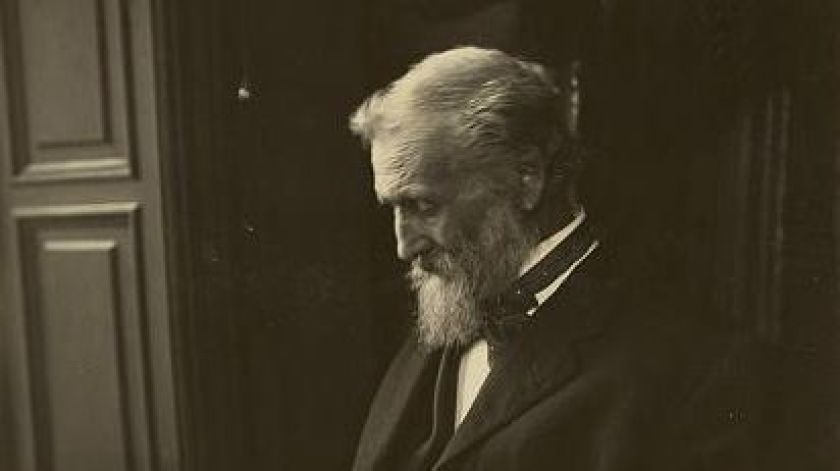
John Muir taken down from the pedestal by Sierra Club
Two days ago the Sierra Club made the front page of the Los Angeles Times when the 122-year-old environmental organization took down the monument in esteem that was its hero, John Muir, the co-founder of the organization, from his emeritus leadership position in the great beyond.
Joseph LeConte, his friend and co-founder was outright disowned, for explicitly advocating white supremacy.
In the words of long-time director Michael Brune on July 22, in a piece entitled Pulling Down Our Monuments:
The most monumental figure in the Sierra Club’s past is John Muir. Beloved by many of our members, his writings taught generations of people to see the sacredness of nature. But Muir maintained friendships with people like Henry Fairfield Osborn, who worked for both the conservation of nature and the conservation of the white race. Head of the New York Zoological Society and the board of trustees of the American Museum of Natural History, Osborn also helped found the American Eugenics Society in the years after Muir’s death.
And Muir was not immune to the racism peddled by many in the early conservation movement. He made derogatory comments about Black people and Indigenous peoples that drew on deeply harmful racist stereotypes, though his views evolved later in his life. As the most iconic figure in Sierra Club history, Muir’s words and actions carry an especially heavy weight. They continue to hurt and alienate Indigenous people and people of color who come into contact with the Sierra Club.
To me it’s noteworthy that the first charge brought against Muir is his friendship with white supremacists such as Henry Fairfield Osborn and Joseph LeConte. Muir’s personal views take on a darker tone when you see that his preaching of the “untouched by man” beauty of the mountains and glaciers and meadows actually fits all too well into the idea that these mountains and lands were not for the Miwok and Paiute and others who had lived there long before the Spanish and then the Americans came on to the scene.
Though the Sierra Club’s announcement didn’t go into detail, it’s known that Muir supported ejecting Native Americans from their lands to make way for people-free open spaces. He described the Miwok people, most of whom had been killed or driven from Yosemite by the time he arrived in 1868, in the ugliest of terms, writing that they were “dirty,” “altogether hideous” and “seem to have no right place in the landscape.”
This land may have been made for you and me, but to Muir and other early conservationists, “you and me” meant the class of white gentlemen who made occasional forays to what Muir saw as the untouched beauty of wilderness.
This brings to mind the Wilderness Act, once considered a high-water mark in environmental action and land conservation, now perhaps due for a reckoning. The LATimes’ sly reference to Woody Guthrie and “This Land is Your Land” is aptly drawn: the famous language of the l964 bill has no room it seems for people.
A wilderness, in contrast with those areas where man and his works dominate the landscape, is hereby recognized as an area where the earth and its community of life are untrammeled by man, where man himself is a visitor who does not remain. An area of wilderness is further defined to mean in this Act an area of undeveloped Federal land retaining its primeval character and influence, without permanent improvements or human habitation, which is protected and managed so as to preserve its natural conditions and which (1) generally appears to have been affected primarily by the forces of nature, with the imprint of man’s work substantially unnoticeable; (2) has outstanding opportunities for solitude or a primitive and unconfined type of recreation; (3) has at least five thousand acres of land or is of sufficient size as to make practicable its preservation and use in an unimpaired condition; and (4) may also contain ecological, geological, or other features of scientific, educational, scenic, or historical value.
The LA Times adds an interesting ecological and historical note:
Muir actually misunderstood the “untouched” part as well. The open meadows he admired that afforded broad views of the geological splendors of Yosemite weren’t the hand of nature; they were the result of strategic fires set by the Miwok to prevent undergrowth and catastrophic forest fires. Forty years after the Miwok were gone, so were the meadows.
Perhaps it’s time for a correction. I expect Muir himself would be appalled to discover that he has become a media star, in documentaries, recordings, theater shows, guided tours, historical homes, schools, parks, and on and on. I don’t believe he’ll be disappointed to be consigned once again to the wilderness. That’s where he always went for solace.

Megadrought in the Southwest: LA Times vs NYT
Let me point out how different the same study can look to different reporters in different arenas.
Bettina Boxall, the Pulitzer Prize-winning LA Times reporter, looks at California in her big front-page story a week ago about long-term drought in California and SoCal, and finds little change in rainfall but substantial change in human behavior and technology.
Annual water use by the city of Los Angeles has stabilized at the lowest levels in nearly half a century.
In the early 1970s, when the city’s population was approaching 3 million, Angelenos used an average of 586,000 acre-feet of water a year. Now, as the population hovers around 4 million, the average is 502,000 acre-feet.
Despite including a glancer at a dire report on megadrought in the southwest by Park Williams, in other words, Boxall finds something approaching a happy ending.
In the NYTimes, focusing on the same study, but a Southwest dominated not by the coast but by the Colorado River water basin, Henry Fountain finds a far more dire picture.
“We had a really warm spring,” said Graham Sexstone, a hydrologist with the United States Geological Survey. “Everything this year has melted really fast.”
The Southwest has been mired in drought for most of the past two decades. The heat and dryness, made worse by climate change, have been so persistent that some researchers say the region is now caught up in a megadrought, like those that scientists who study past climate say occurred here occasionally over the past 1,200 years and lasted 40 years or longer.
No happy ending for the southwest in this story. What is a megadrought, btw? Twenty years of drought. Happens all the time.
The Trump Reaper

as the U.S. closes in on 100k Covid deaths
On the lying of the President, by Robert Bly, in 1973
The ministers lie, the professors lie, the television lies,
the priests lie. . . .
These lies mean that the country wants to die.
Lie after lie starts out into the prairie grass,
like enormous caravans of Conestoga wagons. . . .
And a long desire for death flows out, guiding the
enormous caravans from beneath,
stringing together the vague and foolish words.
It is a desire to eat death,
to gobble it down,
to rush on it like a cobra with mouth open
It’s a desire to take death inside,
to feel it burning inside, pushing out velvety hairs,
like a clothes brush in the intestines –
This is the thrill that leads the President on to lie
From Robert Bly’s The Teeth Mother Naked at Last
“Now the Chief Executive enters, the press conference begins” — Robert Bly on Presidential Liars
From Robert Bly‘s The Teeth Mother Naked At Last
Now the Chief Executive enters; the press
conference begins:
First the President lies about the date the Appalachian
Mountains rose.
Then he lies about the population of Chicago, then he lies
about the weight of the adult eagle, then about the
acreage of the Everglades
He lies about the number of fish taken every year in the
Arctic, he has private information about which city is
the capital of Wyoming, he lies about the birthplace of
Attila the Hun.
He lies about the composition of the amniotic fluid, and
he insists that Luther was never a German, and that
only the Protestants sold indulgences,
That Pope Leo X zuanted to reform the church, but the
“liberal elements” prevented him,
that the Peasants’ War was fomented by Italians from
the North.
And the Attorney General lies about the time the
sun sets.
From 1973. Could he have described the tone of presidential address today more accurately? I doubt it.