As Lily Tomlin has pointed out, “No matter how cynical you become, you can’t keep up.” Especially in these days of Donald Trump.
Last week (was it only last week?) a meticulously sourced story in the New York Times by Eric Lipton (Why Has the EPA shifted on Toxic Chemicals? An Industry Insider Calls the Shots) detailed how a smart advocate from the American Chemistry Council, Dr. Nancy Beck, was given broad authority to take over the agency’s regulation of toxic chemicals and personally rewrite the rules. It’s a tremendous story with one particular angle of great importance to Ventura County.
To keep it as succinct as possible…last year, after decades of controversy, a bipartisan bill revising the rules of chemical regulation passed Congress and was signed into law. Lipton’s story frames what happened to that legislation under Scott Pruit, the new EPA administrator appointed by Trump, as a polite but edgy dialogue between a scientist named Wendy Hamnett, who spent her career at the agency, and was contemplating retirement, and Beck, who was given unprecedented rule-making authority by the new administration.
Hamnett wanted to believe the EPA would continue to conscientiously regulate chemical use under the new bill, but was taken aback to discover that one of the most dangerous of chemicals on the market — the pesticide Chlorpyrifos, which had been slated to be banned — would not be regulated.
“It was extremely disturbing to me,” Ms. Hamnett said of the order she received to reverse the proposed pesticide ban. “The industry met with E.P.A. political appointees. And then I was asked to change the agency’s stand.”
The E.P.A. and Dr. Beck declined repeated requests to comment that included detailed lists of questions.
“No matter how much information we give you, you would never write a fair piece,” Liz Bowman, a spokeswoman for the E.P.A., said in an email. “The only thing inappropriate and biased is your continued fixation on writing elitist clickbait trying to attack qualified professionals committed to serving their country.”
That would translate into a rigorous crackdown on the most dangerous chemicals, regardless of the changes [at the agency].
But her confidence in the E.P.A.’s resolve was fragile, and it had been shaken by other actions, including the order Ms. Hamnett received to reverse course on banning the pesticide chlorpyrifos.
The order came before Dr. Beck’s arrival at the agency, but Ms. Hamnett saw the industry’s fingerprints all over it. Mr. Pruitt’s chief of staff, Ryan Jackson, instructed Ms. Hamnett to ignore the recommendation of agency scientists, she said.
Farm workers in a field picking berries. Chlorpyrifos, a pesticide blamed for developmental disabilities in children, is still widely used in agriculture. In March, Mr. Pruitt overrode agency scientists’ recommendation to ban it.CreditJim Wilson/The New York Times
To keep the pesticide on the market, under E.P.A. guidelines, the agency needed to have a “reasonable certainty” that no harm was being caused.
“The science and the law tell us this is the way to go,” Ms. Hamnett said of a ban.
But the reaction from her superiors was not about the science or the law, she said. Instead, they queried her about Dow Chemical, the pesticide’s largest manufacturer, which had been lobbying against a ban.
The clash is recorded in Ms. Hamnett notebook as well as in emails among Mr. Pruitt’s top political aides, which were obtained by The Times.
Mr. Jackson, Ms. Hamnett’s notebook shows, then asked her to come up with alternatives to a ban. He asserted, her notes show, that he did not want to be “forced into a box” by the petition.
Photo
Ms. Hamnett recorded Mr. Jackson’s reaction to a pesticide ban in her notebook.
“I scared them,” Mr. Jackson wrote in an email to a colleague about his demands on Ms. Hamnett and her team.
As a possible compromise, Ms. Hamnett’s team had been talking to Dow about perhaps phasing out the pesticide instead of imposing an immediate ban. But Dow, after Mr. Trump’s election, was suddenly in no mood to compromise, Ms. Hamnett recalled. Dow did not respond to requests for comment.
She now knew, she said, that the effort to ban the pesticide had been lost, something Mr. Jackson’s emails celebrated.
“They know where this is headed,” Mr. Jackson wrote.
A couple of years ago an equally great (and award winning) story by Liza Gross for The Nation detailed the fact that Ventura County is one of the most pesticide drenched lands in the state and the nation. To wit:
Oxnard and surrounding Ventura County grow more than 630 million pounds of strawberries a year, enough to feed 78 million Americans. But that bounty exacts a heavy toll: strawberries rank among California’s most pesticide-intensive crops. The pesticides that growers depend on—a revolving roster of caustic and highly volatile chemicals called fumigants—are among the most toxic used in agriculture. They include sixty-six chemicals that have been identified by the state’s Office of Environmental Health Hazard Assessment as the most likely to drift through the air and cause harm. Studies in laboratory animals and humans have linked many of these chemicals—including the organophosphate chlorpyrifos and fumigants 1,3-Dichloropropene (1,3-D), metam sodium, methyl bromide and chloropicrin, all used in strawberry production—to one or several chronic health conditions, including birth defects, asthma, cancer and multiple neurodevelopmental abnormalities.
Dayane Zuñiga
Use of many of these sixty-six pesticides has fallen statewide since 2007. But a handful of communities saw a dramatic increase. By 2012, the most recent year for which data is available, more than 29 million pounds of these chemicals—more than half the total used in the state—were applied in just 5 percent of California’s 1,769 census ZIP codes, according to an independent investigation by this reporter. In two ZIP codes that Zuñiga knows well—areas that include the Oxnard High neighborhood where she trained and south Oxnard, where she lives—applications of these especially toxic pesticides, which were already among the highest in the state, rose between 61 percent and 84 percent from 2007 t0 2012, records at the California Department of Pesticide Regulation show. Both are among the ten ZIP codes with the most intensive use of these pesticides in California. And both have sizable Latino populations—around 70 percent—thanks, in part, to the large number of farm jobs in the area. The great majority of the people who work in the strawberry fields in Oxnard, which hosts the largest population of farmworkers in Ventura County, come from Mexico.
As so often is the case, the wonky details and the fact that brown people bear the brunt of these chemical impacts means very little discussion of the continued use of Chlorpyrifos has ensued. One notable exception comes from Nicholas Kristof, who at least once a year points to the danger of chemicals in his Sunday Times olumn. This past Sunday Kristof was especially blunt in an interactive column called: Trump’s Legacy: Damaged Brains.
The pesticide, which belongs to a class of chemicals developed as a nerve gas made by Nazi Germany, is now found in food, air and drinking water. Human and animal studies show that it damages the brain and reduces I.Q.s while causing tremors among children. It has also been linked to lung cancer and Parkinson’s disease in adults.
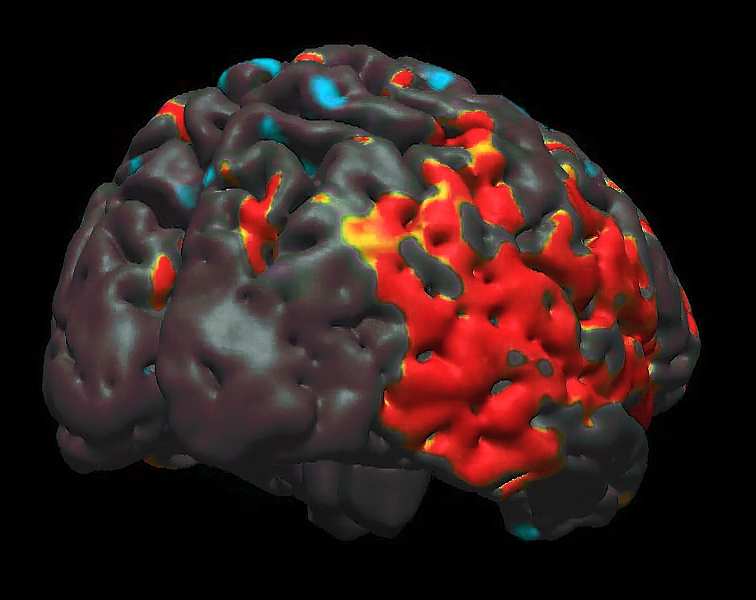
The colored parts of the image above, prepared by Columbia University scientists, indicate where a child’s brain is physically altered after exposure to this pesticide.
And now the Trump administration is embracing it, overturning a planned ban that had been in the works for many years.
What recourse can citizens who care about health — especially the health of people who live near strawberry fields — have except not to eat commercially-grown strawberries? I wish I knew.
Ever stumble across something — even something you’ve not thought much about — and then suddenly see it everywhere around you?
This strange stumbling-into-obsession has caught me in the last couple of weeks with the concept of consciousness. What the hell? What is it? When do we have it? When do we have too much of it, or not enough? All questions I’ve assiduously avoided for god knows how many years.
It all began with a podcast: Sam Harris interviewing genius primatologist/neuroscientist Robert Sapolsky. The Biology of Good and Evil. The conversation can’t be summarized in a sentence or two — it’s too rich — but the quote of the nearly two-hour interview was Sapolsky declaring:
I believe free will is what we call biology we haven’t discovered yet.
If true, of course, this means that we are all fundamentally unconscious. At least in the sense that we do not realize or cannot see how powerfully we are being driven by biology. Driven perhaps even against our own beliefs, or what we think we believe.
How about that? Makes a fellow feel small, and foolish. And maybe that’s why I’ve noticed a few things as of late.
In Hardy’s “The Self-Unseeing,” he visits the remains of his childhood home and recalls where the door was, how the floor felt, how his mother sat “staring into the fire” while her fiddler husband “bowed it higher and higher.” The last two bittersweet lines, “Everything glowed with a gleam/Yet we were looking away” remind him that they couldn’t possibly have been aware of the harmonious moment while living it. We’re always late for consciousness, the neuroscientists say.
Does it follow then that happiness requires a kind of un-consciousness? A life inside our biology?
…for a year or more, says an orchard owner who saw every one of his thousands of his trees killed in a matter of hours.
From the New York Times, well down the front page, far below the latest Twitter tweetstorm:
“Sometimes when there are shortages, the price of plantain goes up from $1 to $1.25. This time, there won’t be any price increase; there won’t be any product,” [grower] Mr. Rivera said. “When I heard the meteorologist say that the two had turned into a three and then a four, I thought, ‘Agriculture in Puerto Rico is over.’ This really is a catastrophe.”
Key Largo has to be the greatest hurricane movie ever, and one of starriest pictures of all time. The cast will knock you out: Beginning with Bogart and Bacall, and including Lionel Barrymore, Claire Trevor and Edgar G. Robinson, for crying out loud, who dominates the picture as a gangster threatened by the power of the storm.
This one frame from Key Largo tells that story:
“You don’t like it, do you Rocco, the storm? Show it your gun, why don’t you? If it doesn’t stop, shoot it.”
Can’t you just hear the harsh grain in Bogart’s voice, as he forces the brazen gangster to face a truth bigger than he can handle? Where are the heroic truth tellers of today? Where have you gone Humphrey Bogart? Our nation turns its lonely eyes to you.
(In fact the inevitable “Shoot at Hurricane Irma” Facebook group formed in Florida in 2017 as Irma churned its way towards Florida — but forget all that, the movie is so much better. And so much better than the filmic Sharknado fare of today, or so it seems with the benefit of eighty years of hindsight.)
The great Tom Toles has been struggling a bit (it seems to me) with the obdurate nature of this White House, but found a way to make a climate point amusingly today…as 1.4 million in Florida face evacuation.
Californians shouldn’t be crowing: Superfloods happen here too.
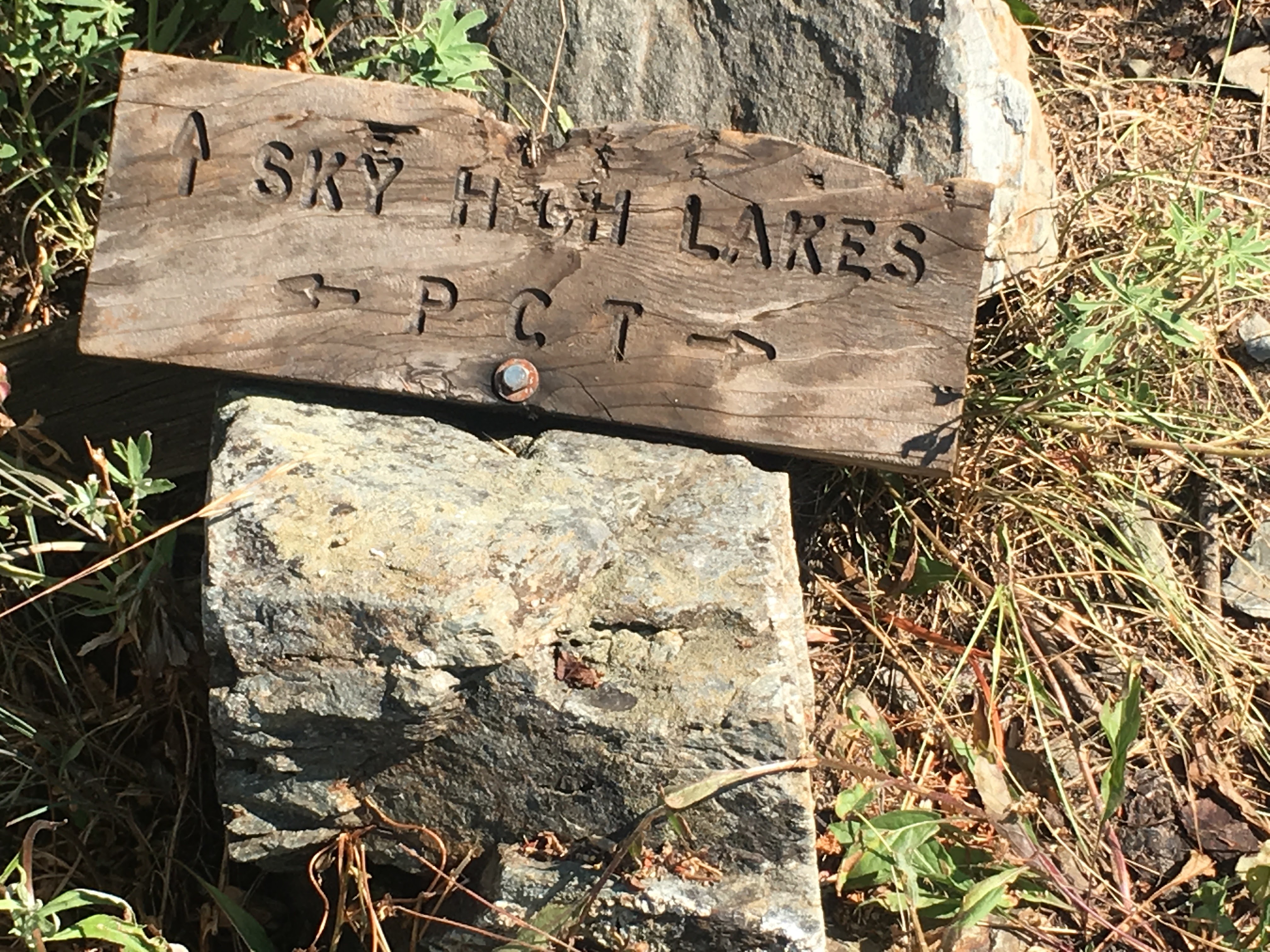
Just have to say that the trail signs in Section Q — the Marble Mountains — in the far north of California were the best (that is, most Zen) that I have seen along the length of California. They deserve remembering in their own right, so here goes:
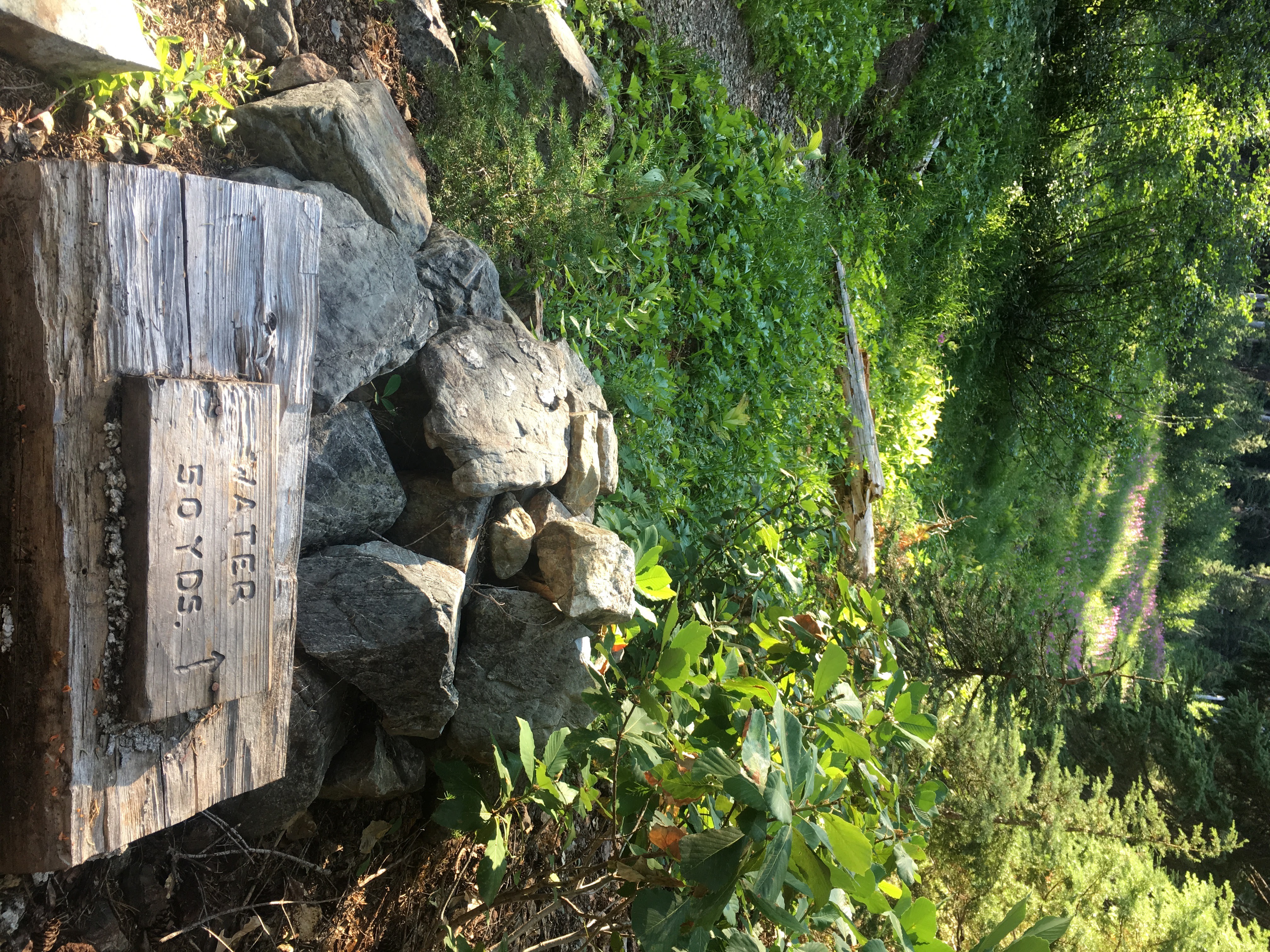
Next day I after about 5 or so miles I came to what turned out to be a superb water source, the sort of place I should have camped near, but oh well. Lovely place for a second breakfast.
It’s a gorgeous area, which the signs hint in their own quiet way. If you look very closely you can see a grasshopper crouched in a nick in the sign above tghe “I.”
This isn’t exactly a sign but it’s emblematic as hell of the area.
Wasn’t all beautiful: substantial burns to walk through at times, and the sky was smoky, from fires burning to the north and west.
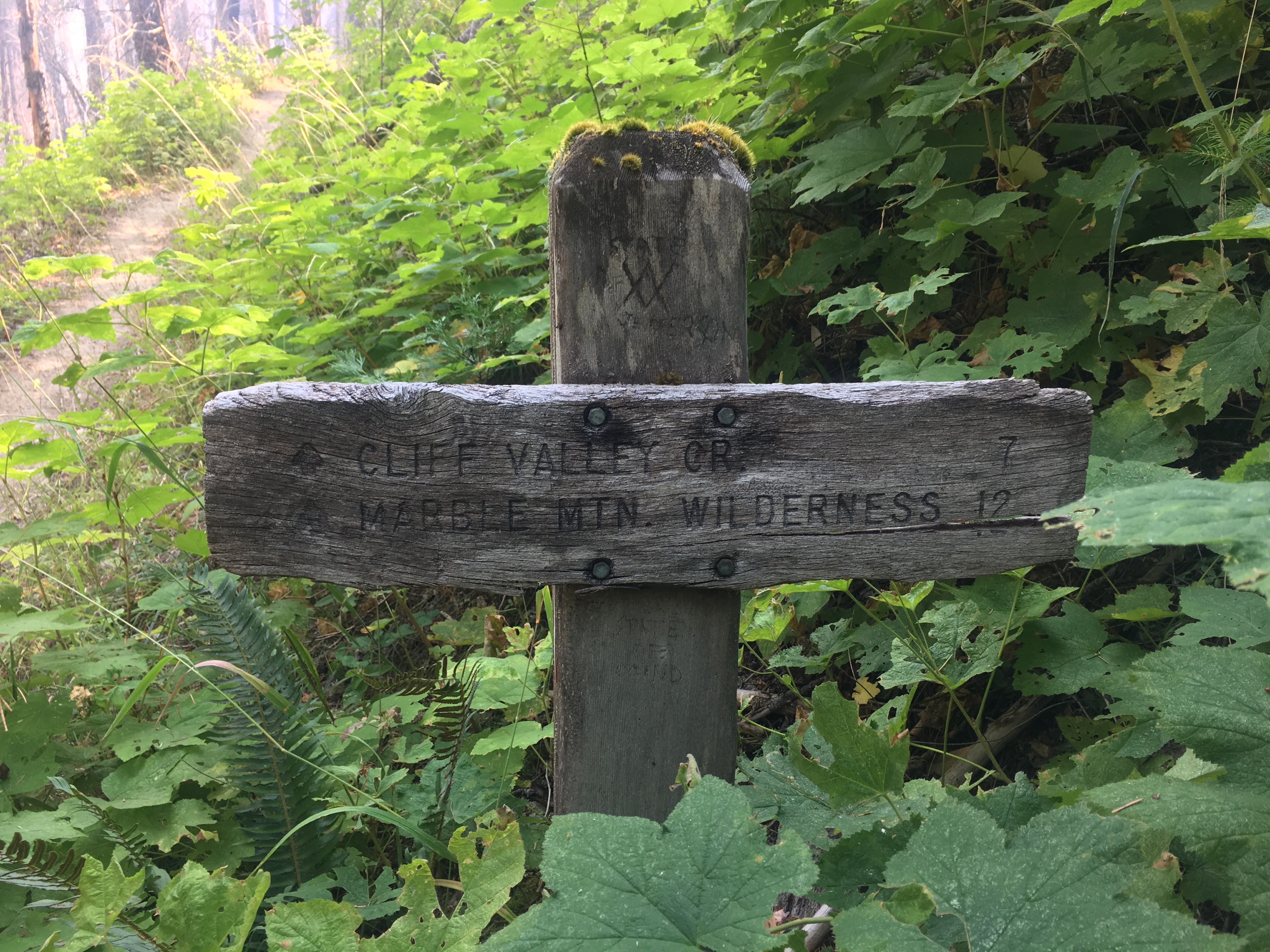
This sign, at the base of the gorgeous trail along Grider Creek; well, if you look closely you will see it has some occult aspects. On the top post is written “State of Jefferson” with its rebel XX symbol, but below the post is written State of Mind. Pretty cool.
Entering the tiny town of Seiad Valley, one sees these “No Monument” signs everywhere…though this one simplified the question impressively.
Even the official signs in this area (Section R now) are most interesting than most.
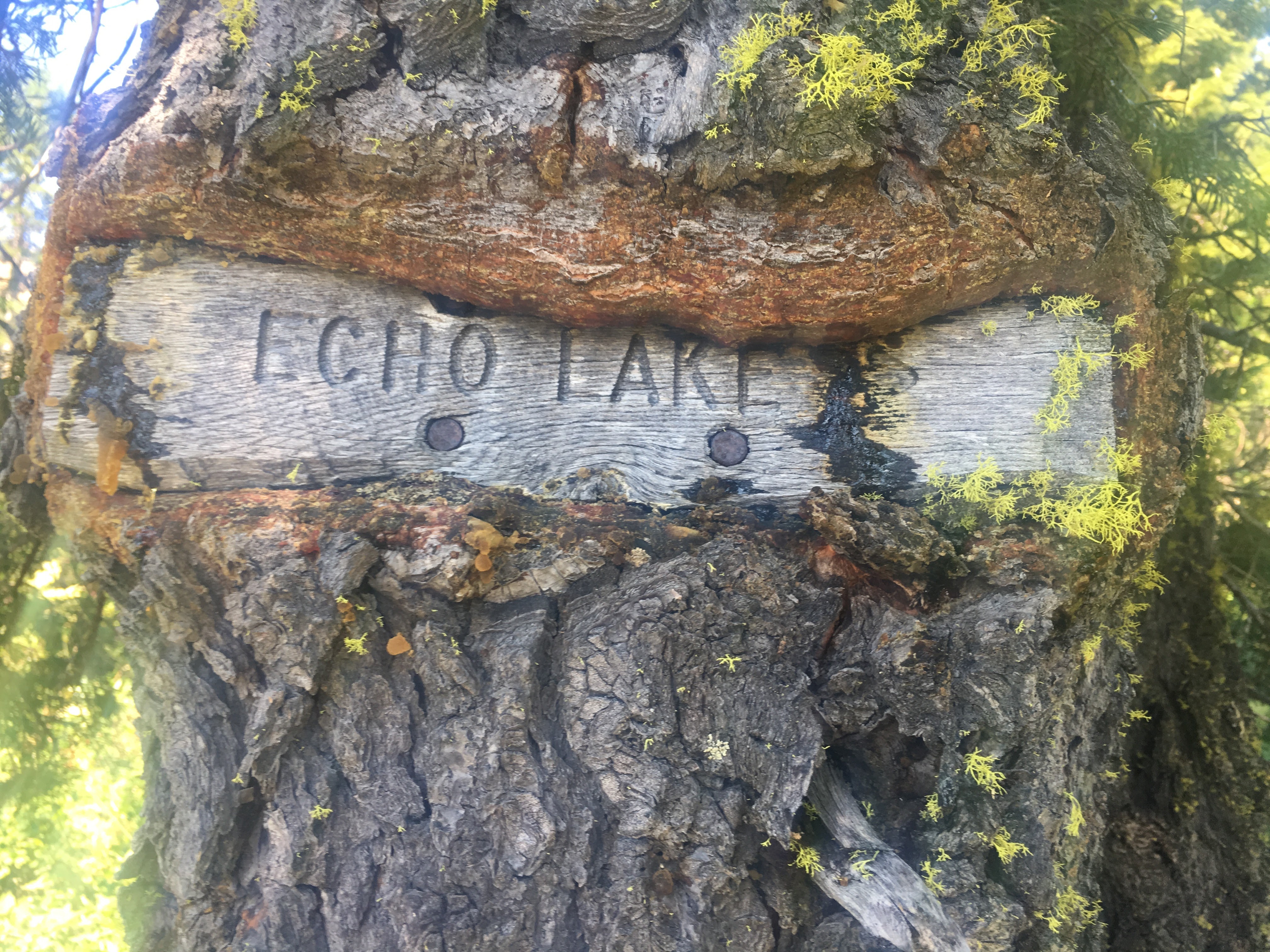
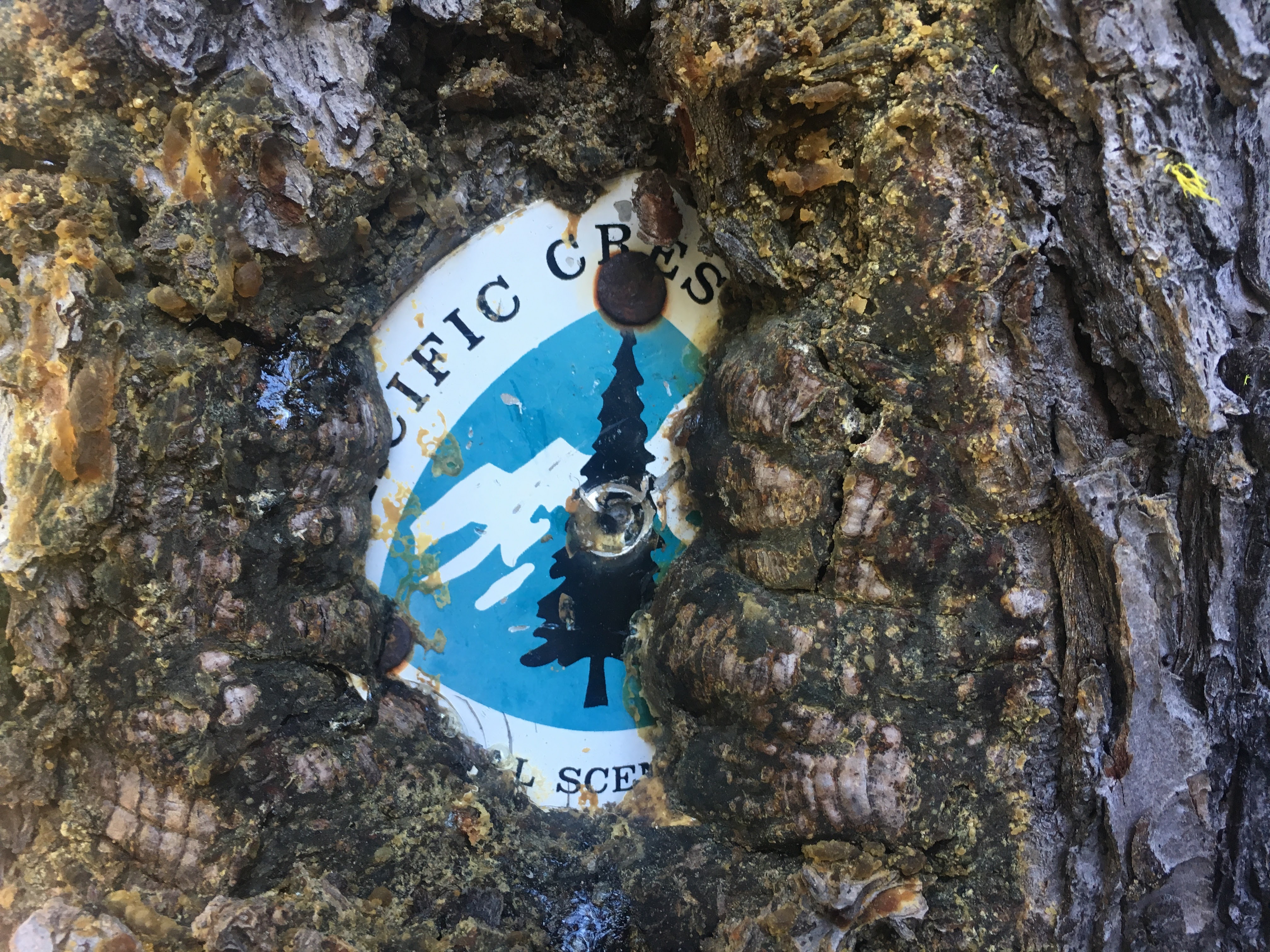
I love the way signs in this section live past their legibility.
I’ve now been hiking the Pacific Crest Trail in sections since 2012, and have reached Oregon. I’ve been sorely remiss in posting of my progress, which I regret, and will in some measure redress. For the sake of beauty at this site if no other.
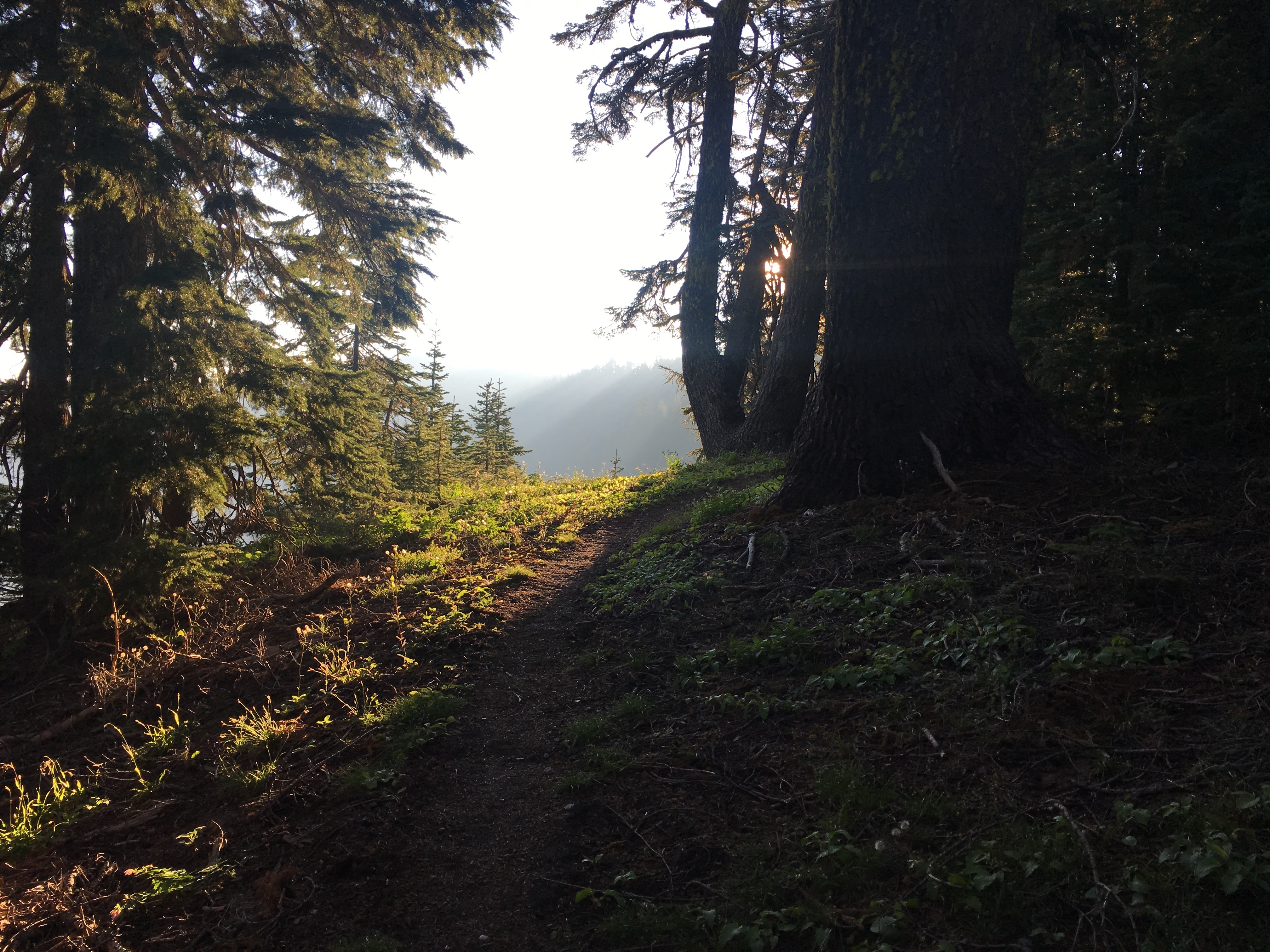
This shot comes from my last morning in California, as the sun rose.
The New York Review of Books posts in its entirety a spectacular essay from Robert Pogue Harrison, this time on Thoreau on his centennial birthday, and en or so books and exhibits about The True American.
Thoreau (to my blinkered view) is that exceedingly rare writer/philosopher capable of seeing afresh the most fundamental elements of our lives, such as the ground on which we walk and the air we breathe. For example:
Paradise exists all around us, in America’s “wildness,” the natural environment of the continent. In the contact between his own body and America’s forests, meadows, lakes, rivers, mountains, and animals, Thoreau discovered what he called “hard matter in its home.” That home was the “hard bottom” or “reality” that we crave. “I stand in awe of my body, this matter to which I am bound,” he wrote in his journal. “Daily to be shown matter, to come in contact with it,—rocks, trees, wind on our cheeks!… Contact! Contact!”
That contact between body and wilderness speaks to me, having spent the last week and half on the PCT, sleeping on the ground (and sleeping well). I’ll try to post a picture to give some idea. But let me conclude this post with another compelling — even alarming — quote from Mr. Thoreau,
If you stand right fronting and face to face to a fact, you will see the sun glimmer on both its surfaces, as if it were a cimeter [scimitar], and feel its sweet edge dividing you through the heart and marrow, and so you will happily conclude your mortal career. Be it life or death, we crave only reality.
If only this were true! But from the world I stand in awe of, with him, here’s a sunset at mile 1600 of the PCT.
One of the most American of us all died yesterday. Sam Shepherd, I miss you today.
In tribute, let me quote a short piece from his countless marvelous writings. This one happens to be about his father. It’s just another of his countless little miracles of writing, another “how did he do that?’ But it’s straight from the heart.
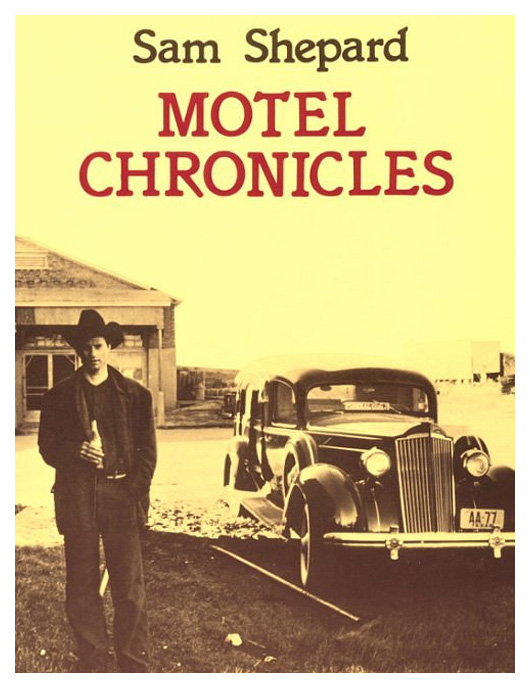
From a daybook of sketches and road thoughts called Motel Chronicles, published 1982 by City Lights.
My Dad keeps a record collection in cardboard boxes lined up along his bedroom wall collecting New Mexican dust. His prize is an original Al Jolson 78 with the jacket taped and even the tape is ripped. Last time I saw him he tried to bribe me into taking it back to L.A. and selling it for a bundle. He’s convinced it’s worth at least a grand. Maybe more, depending on the market. He says he’s lost touch with the market these days.
My Dad has a picture of a Spanish senorita covered in whip cream pinned above the sink to his kitchen wall. My Dad actually does. He walked me over to it and we both stared at it for a while. “She’s supposed to be naked under there, but I’ll bet she’s wearing something,” he said.
He gave me a tour of all his walls. All his walls are covered with pictures. Wall-to-wall magazine clippings. Each picture is a point of view. Like peering out through different windows into intricate landscapes. I stared at the pictures. A waterfall with real rocks glued onto the foreground. Rocks he’d found to fit the picture. A white dog with a green fish in its mouth. Saguaro Cactus in the setting sun ripped from a 1954 Arizona Highways. An orange Orangutang fiddling with its privates. A flight of B-52 Bombers in Wing Formation. A collage of faces splattered with bacon grease.
My Dad has a collection of cigarette butts in a Yuban coffee can. I bought him a carton of Old Golds but he wouldn’t touch them. He kept twisting tobacco out of butts and rolling re-makes over a grocery bag so as not to lose the slightest bit. He sneered at my carton of cigarettes, all red and white and ready-rolled.
He spent all the food money I’d gave him on Bourbon. Filled the ice box with bottles. Had his hair cut short like a World War II fighter pilot. He gleamed every time he ran his hand across the bristles. Said they used to cut it short like so their helmets would fit. Showed me how the shrapnel scars still showed on the nape of his neck.
My Dad lives alone on the desert. He says he doesn’t fit with people.
Love that “on the desert.” So precise. So laconic.
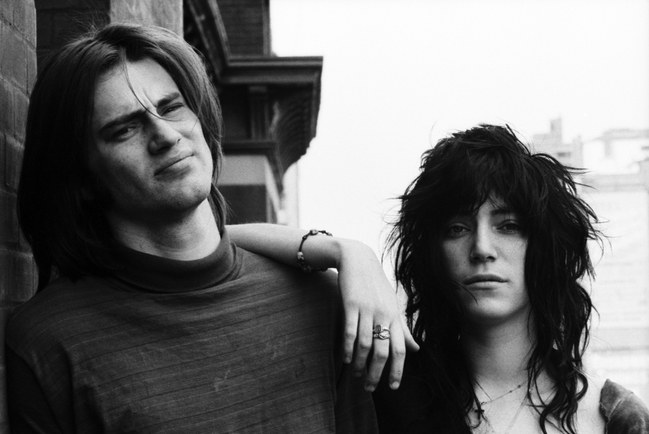
In the book, they have some rough black and white pictures of Sam and his father looking at each other. In some of them, his dad is wearing a cowboy hat, a white cowboy hat. In some of the
In one of the pictures, his dad is wearing a cowboy hat, a white cowboy hat. In another of the pictures Sam is wearing the hat.
From today’s New Yorker, a wondrously lyric remembrance of Shepherd by Patti Smith, his one-time lover and lifetime friend. Just a slice of life here, I promise, nothing of its miraculous whole given away.
He sent a message from the mountains of Bolivia, where Mateo Gil was shooting “Blackthorn.” The air was thin up there in the Andes, but he navigated it fine, outlasting, and surely outriding, the younger fellows, saddling up no fewer than five different horses. He said that he would bring me back a serape, a black one with rust-colored stripes. He sang in those mountains by a bonfire, old songs written by broken men in love with their own vanishing nature. Wrapped in blankets, he slept under the stars, adrift on Magellanic Clouds.
Sam liked being on the move. He’d throw a fishing rod or an old acoustic guitar in the back seat of his truck, maybe take a dog, but for sure a notebook, and a pen, and a pile of books. He liked packing up and leaving just like that, going west. He liked getting a role that would take him somewhere he really didn’t want to be, but where he would wind up taking in its strangeness; lonely fodder for future work.
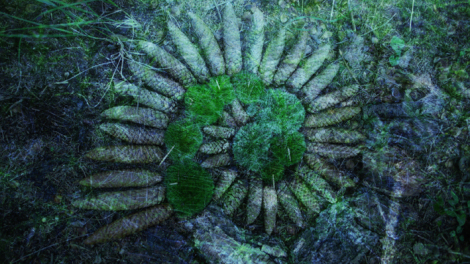
Mesmerized to have stumbled upon a Czech geologist/climatologist/essayist/philosopher of place, via the great Robert MacFarlane, quoted here.
Vaclav Cilek sees the spirit of landscapes, or rather, sees the possibility of seeing the spirit, the true nature, the inner workings of landscapes (an idea with which he’s comfortable, having spent years cataloguing caves in and around Prague). One can’t summarize in a line or two the depth of his thought, one can only quote a bit, to which one wishes to return, as we return to poetry.
The Rule of Slow Approaching The thought that you can arrive by a car, stay for a while and understand is in most places merely an illusion. Some places are shy, other places behave like a director in chief – they accept you, but you will need to wait. I know of one place (I am sure there are many, but I didn’t have enough time for them), where it is necessary to approach for three days. We never arrive to unknown sacred spaces directly, it is much better to walk slowly, to hesitate, to circle the place first and only then to approach. An unknown place is not only one that we do not know, but also one which doesn’t know us. Some places demand a great respect, but sometimes respect is in the way, and we achieve more with a smile.
And perhaps most exciting of all, Cilek although well aware of the changes to come in climate, does not appear to be a catastrophist.
My message is simple: the gods of the earth are awakening, the time of change is here, I say to myself with joy and apprehension.









 Kit Stolz