Mr. Melancholy (Americana edition)

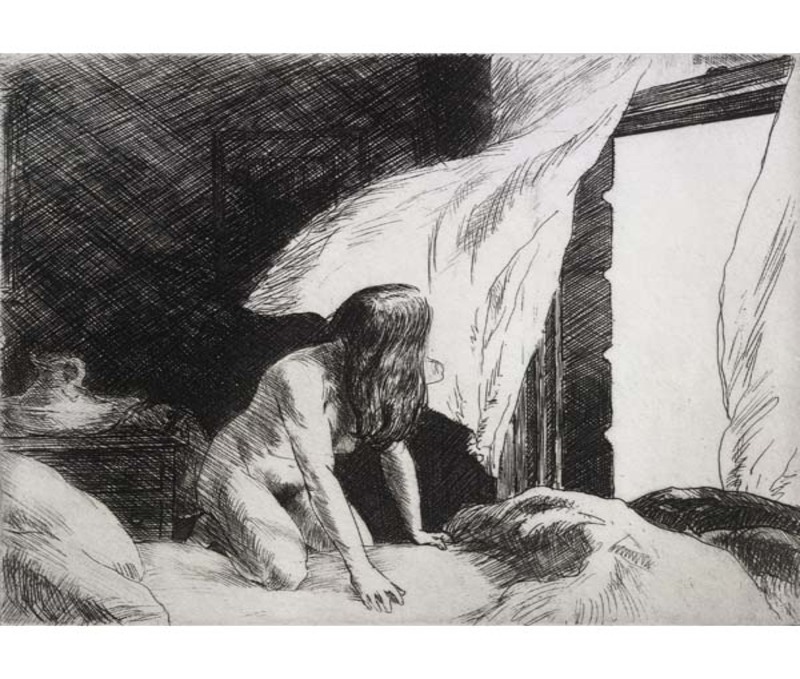
While I’m still struggling with jetlag, excuse me for some more non-wonky less-enviro posts…here’s an etching by perhaps the greatest American artist of melancholy, Edward Hopper.

And here’s what I learned about melancholy while on vacation in Turkey.

For the Turks, melancholy is a collective phenomenon that they call huzun. Orham Pamek, in his great book Istanbul: Memories and the City, discusses how residents share this mood, and the strange group reassurance it offers. We see that in this country, too, sometimes. Surely everyone here knows the great Hopper painting "Nighthawks at the Diner."

But here’s another one, an early work by Hopper before he became a full-blown painter, in which the sweep of the wind and the vulnerability of the central figure, looking out at the city, become something bigger — something more touching. I love this work. Visitors heading to New York can see a small collection of these etchings, I hear, and I envy them the opportunity…this one is called Evening Wind.

Eveningwind_l

The Secret Blogger of the 19th Century (and Emily)

Some people (including James Wolcott) put Ralph Waldo Emerson at the top of the list of America’s greatest writers. Read his journals and you’ll see why: Emerson talking to himself outshines even the greatest of today’s bloggers with apparent ease.

Which is why, on this day, the occasion of my youngest daughter’s 18th birthday, I’m going to cheat and steal from the best.

The whole code of nature’s law may be written on the thumbnail, or the signet of a ring. The whirling bubble on the surface of a brook admits us to the secret of the mechanics of the sky.

Thanks Ralph!

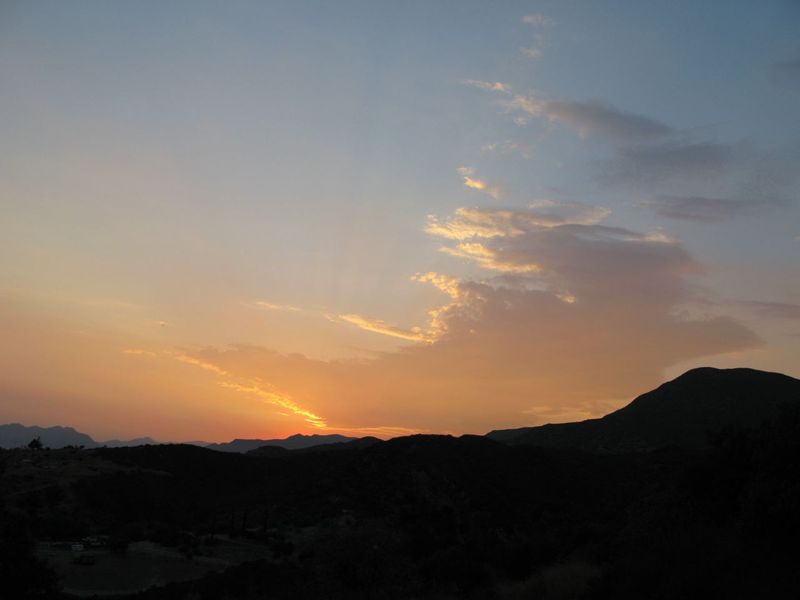
And here’s a picture of Emily on vacation in Turkey, to show the necessity of such cheating.

Img_0169

A Black Swan in White Face (The Great Correction)

Wendell Berry, the conservative poet without a website, has a phrase for the slightly crazed exuberance of American culture in the last few decades. With a caustic shrug, he calls it the "cheap energy mind."

Problem is, our time in this mindset — and its denial — seems to have run out with $4.00 gas.

Of course, it’s not just gas prices that seem to have changed our psychology. Many have noticed, from art critics to jeremiahs to Western writers to movie-makers. Images of the end of our way of life occur to artists in many genres, many of whom have found startling success purveying the bleakest possible examples of despair. Especially noteworthy is The Joker, whom James Howard Kunstler describes vividly:

The Joker is not so much as person as a force of nature, a "black
swan" in clown white. He has no fingerprints, no ID, no labels in his
clothing. All he has is the memory of an evil father who performed a
symbolic sadomasochistic oral rape on him, and so he is now programmed
to go about similarly mutilating folks, blowing things up, and wrecking
everyone’s hopes and dreams because he has nothing better to do. He
represents himself simply as an agent of "chaos." Taken at face value,
he would seem to symbolize the deadly forces of entropy that now
threatens to unravel real American life in the real world — a
combination of our foolish over- investments in complexity and the
frightening capriciousness of both nature and history, which do not
reveal their motivations to us.

By the way, forget about God here or anything that even remotely
smacks of an oppositional notion to evil. All that’s back on the cutting
room floor somewhere (if it even got that far). And I say this as a
non-religious person.

But in its cruel way, The Dark Knight was compelling. The museum-worthy art that comes from this perception that we have reached an end in our culture is more frightening yet. The incomparable Peter Schlejedahl explains in the fewest possible words, in a column called Feeling Blue.

The critic opens with an eloquent description of the power of Cormac McCarthy”s The Road, which confronts us with "the remains of our own civilization after its extinction."

He then moves on to describe the broader mood.

Something is happening in artists’ studios: a shift of emphasis, from
surface to depth, and a shift of mood, from mania to melancholy,
shrugging off the allures of the money-hypnotized market and the
spectacle-bedizened biennials circuit.

Unable to go to travel to see the exhibit at New Museum, I’ll have to take his word for it. But here’s my point. Lots of artists in various fields are recognizing this, but the one who has named it best is singer Eliza Gilkyson. Because she comes from Texas, I think, she’s too often ignored by New Yorkers.

They’re missing something great. Just as E.O. Wilson, one of our greatest living scientists and "environmentalists," has talked of the importance of passing through "the bottleneck" in the way we live, Gilkyson changes the rhetoric slightly…to a metaphor we’ve heard before.


it’s the bitter end we’ve come down to
the eye of the needle that we gotta get through
but the end could be the start of something new
when the great correction comes

As my significant other pointed out this evening, there’s something actually optimistic about this idea: that we will return to the right path, and move on.

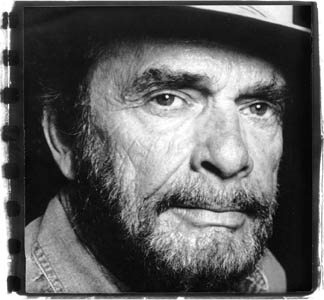
But for now, we simply need to open our eyes. The image below is not the one of The Joker that haunts me most from the movie — that’s the one of him walking away from the hospital, in the nurse’s uniform.

But this’ll give you an idea, if you haven’t seen the movie…and here, if I can link correctly, is Eliza Gilkyson’s wonderful song, from her 2008 album, Beautiful World.

Download 04_the_great_correction.mp3

Joker_nurse

http://mediaplayer.yahoo.com/js

The Burden of Freedom

"Unless a man has the taqlents to make something of himself, freedom is an irksome burden. Of what avail is freedom to choose if the self be ineffectual? We join a mass movement to escape individual responsibility, or, in the words of the ardent young Nazi, "to be free of freedom."

Eric Hoffer — The True Believer, chapter five

I can’t help but think of Limbaugh’s promise to the dittoheads: "You don’t have to read the papers. I’ll read the papers for you. You don’t have to think, I’ll think for you…"

Woody Guthrie l945

Found not too long ago in the Federal archives, a clip of Woody Guthrie performing "Ranger Command" on the road:

Lyrics, via a commentator named Texas Jim, who has a great story of his own…

"I met a fair maiden
her name I don’t know
I asked her to the roundup
with me would she go.
She said she’d go with me
to that old round up
and drink that hard liquor
from a cold bitter cup."

The final closing lines of this song are:

"she rose from her warm bed
with a gun in each hand
said come all of you cowboys
and fight for your land
come all of you cowboys
and don’t ever run
as long as there’s bullets
in both of your guns."

I
used to sing it to myself on guard duty in the 101st Airborne all the
time. I love this song. May have been the last some guys heard.

Black Kaweah

While I’m on vacation, I thought I’d leave you with vacation-y posts. Here’s one from the Southern Sierra.

If you haven’t walked over the Great Western Divide or the Whitney Crest, you may not realize that between these two rather intimidating mountain ranges, in the middle of an enormous valley at roughly 9,000 feet, lies yet a third mountain range, that is in some respects the most awesome of all. This is the Kaweah (pronounced "Ka-weer" for some reason). It’s a knife-edge of a range, with numerous peaks over 13,000. Not as high as Whitney, but much more difficult to climb. I tried to go cross this range at a 12,800 saddle that allegedly would not require ropes, pitons, etc., and simply found it impossible. On top of the most intimidating of its peaks, Black Kaweah, is a register, where numerous legendary mountain climbers left their names. These registers, sadly, have been disappearing, so a writer and climber set out to retrieve it. Here’s his story, via Sierra magazine and YouTube. He doesn’t take you right up to the top, unfortunately, but even his introduction gives you an idea of the challenge…

McCain: At Least He’s Capable of Embarrassment

In the liberal New Republic, Jonathan Chait confesses that despite John McCain’s "nauseating" attempts to deny his bipartisan past, he can’t get too upset about the possibility that McCain might win. Chait writes:

Liberals tend to view the press’s love affair
with McCain as a wildly unfair act of bias. They have a point. On the
other hand, they should take some heart in the fact that McCain
obviously cherishes the approval of the mainstream (and even liberal)
media. His accessibility to the press and public is something small-d
democrats should cheer. McCain has conducted interviews with very
liberal publications like Grist.
He’s promised to undertake an American version of "Prime Minister’s
Questions," whereby members of Congress could spar with him.

Does
McCain spin and dissemble? Of course. But the current administration’s
practices go far beyond mere spin. In Bush’s Washington, critics are
enemies to be dismissed rather than engaged. A McCain presidency would
promise to dismantle the whole Rovian method that has torn open such a
deep wound in the national psyche.

Beneath
his wildly fluctuating ideological positions, McCain is an
establishmentarian Republican. Unlike Bush, he cares about elite
opinion. He is comfortable sharing power in the traditional postwar
style rather than monopolizing it. He might not be another Teddy
Roosevelt, but right now another Gerald Ford doesn’t look so bad.

The
idea that McCain could establish a reputation as a maverick by standing
up to his party on numerous issues, win back his party’s support by
abandoning nearly all his heterodoxies, then prevail by portraying
himself as an unwavering man of principle is nauseating. Yet somehow
the idea of a McCain presidency itself doesn’t terrify me. What can I
say? Bush has lowered my standards.

It’s that "would promise" that worries me. [Photo by Ted Soquoi, via Flickr]

Johnmccain

How Barack Can Reach Out to Disaffected White Males

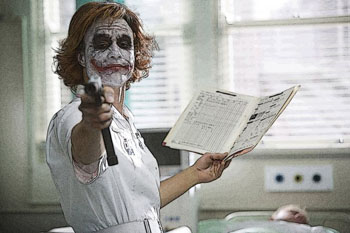
Simple: Talk to Merle Haggard. Charm the SOB, just a little. He’s waiting to be asked.

Back when Barack was duking it out with Hillary for the Democratic nomination, Joe Klein for Time interviewed the country music legend (here). Klein argues, with justification, that Haggard has his "guitar hardwired to the gutbucket pulse of Middle America."

Haggard dropped jaws nationwide by revealing that he had turned against the Republicans.

"I supported George W. I’m not exactly a liberal. But I know how that
Texas thing works, who those oil folks are and what they wanted in
Iraq… I’m a born-again Christian too, but the longer I live, the more
afraid I get of some of these religious groups that have so much
influence on the Republicans and want to tell us how to live our lives."

But he gets tougher!

"The thing that gets under my skin most about George W. is his
intention to install fear in people. This is America. We’re
proud. We’re not afraid of a bunch of terrorists. But this government
is all about terror alerts and scaring us at airports. We’re changing
the Constitution out of fear. We spend all our time looking up each
other’s dresses. Fear’s the only issue the Republican Party has. Vote
for them, or the terrorists will win. That’s not what Reagan was about.
I hate to think about our soldiers over in Iraq fighting for a country
that’s slipping away."

Listen to that and you have to think he’s not going to vote for the GOP. Barack, do yourself a favor — reach out to this guy. See if you can get him to like you, just a little. Could be worth a million votes from hard-bitten underemployed Okies all over the country.

Don ‘t believe me? Check out this song, called "What Happened."

Download 03_what_happened_.mp3

http://mediaplayer.yahoo.com/js
Haggard0110