Visiting winter in the Topa Topas after the fire

Though it’s been three months since the Thomas Fire, those of us in the burn zone can still see the blackness on the burned hillsides all around Ojai, all the way up to the ridge of our local mountains, the Topa Topas.

Every winter for twenty-five years I have gone up to our mountains after a snow in search of the physical manifestation of winter, a rare and precious substance in Southern California. This past week it snowed on Tuesday and a little bit more on Thursday. You could see it from town.  Because this was a cold system from the Arctic, the snow lingered, or so I hoped, and so on Saturday I went up to the ridge at about 5700 feet, to try and touch the whiteness for myself, and reassure myself winter still existed.

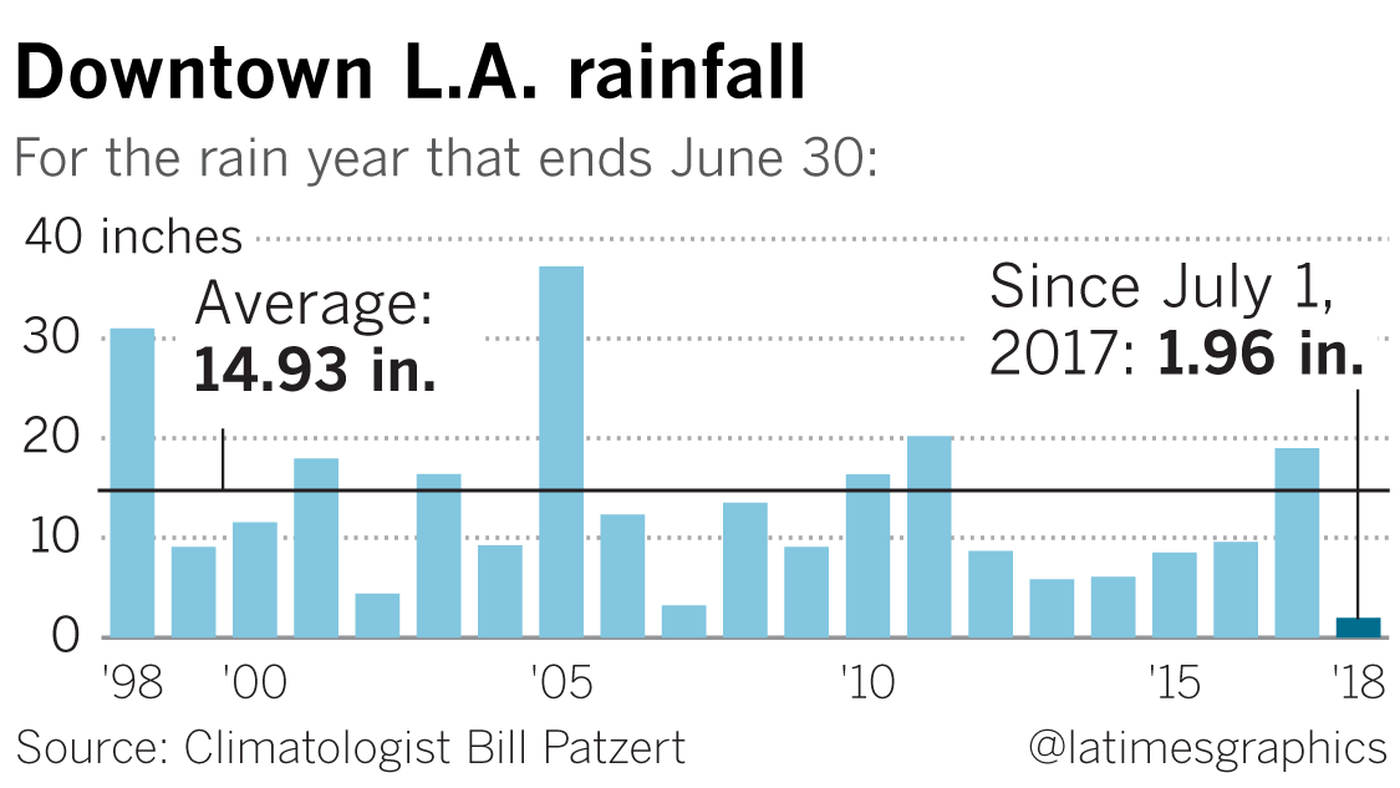
This year, as this graphic from climatologist Bill Patzert and the LA Times shows, we have had virtually nothing in the way of precipitation this winter in Southern California.

I”Last winter was a temporary respite,” climatologist Patzert said to the LA Times. “People are too quick to call an end to the drought. Droughts don’t come and go in one year…When you call an end to the drought after one wet year, that’s false hope.”

RainfallinLAPatzert

In fact, according to Judah Cohen, a climatologist with MIT who specializes in polar weather and its influence, only the rare split of the polar vortex this month, leading to the so-called “Beast of the East” in Europe, and a surprising snow in the Sierras, which “to some extent saved the winter” in the West.

The walk up to the bluffs at about 6000 feet showed a lot of bleak vistas, and at the top, there was a little storm, of what I would describe as miniature hail. Tiny stones, about the size of pinheads, falling in a blustery wind. Look closely at this picture from Saturday and you can see them. This is winter 2018 in Southern California.

YuccaonTopaTopaWinter2018

The deep resilience of the redwood

A friend sent along an amazing and heartening story from the Washington Post, called Decoding the Redwoods. In short, to better understand the long-lived coast redwood, scientists in two different labs have been working to decode the species’ genome, which — astonishingly — is vastly larger than ours.

The redwood genome project began in April 2017, when a sample was taken from an old-growth redwood in Butano State Park, about an hour’s drive north in San Mateo County. The tree’s exact location is kept secret to prevent overzealous tourism.

Two labs — one at the University of California at Davis, the other at Johns Hopkins University in Baltimore — began work on identifying the tree’s genetic makeup. The science is complex and time-consuming. A human has 3 billion “base pairs” of DNA on its chromosomes; a redwood has 38 billion.

More DNA is not necessarily better in genomics — for one, more can go wrong. Scientists don’t yet understand why the redwood has not paid a price for the vastness of its genome.

Mostly this research, funded by Save the Redwoods, aims to better understand these extraordinary trees, and how best to encourage their survival. But according to Steven Salzberg of John Hopkins, there are other possibilities — compelling ones.

“On a pretty routine basis, we learn about our own biology by studying the genetics of others,” he said. “I’m not saying we will in this case, but redwoods do live a fantastically long life, and it would be fascinating to discover why.”

The colossally large genome also hints at the astonishing resilence of these ancient trees. In my own back yard, after the Thomas Fire completely torched several redwood trees, including one that looks entirely black from burn, I found this yesterday.

redwoodlife


Home versus the Mountain

One of the acknowledged great non-fiction pieces of our time is John McPhee’s Los Angeles Against the Mountains, from l988, an uncanny and alarming foreshadowing of the disaster in Montecito this month.

It’s one of those astonishingly thorough and appalling pieces of writing, almost beyond journalismn, and to my mind can hardly be overpraised (but here, let me try!). Here’s a description of a debris flow from a survivor.

As the young Genofiles and their mother glimpsed it in the all but total darkness, the scene was suddenly illuminated by a blue electrical flash. In the blue light they saw a massive blackness, moving. It was not a landslide, not a mudslide, not a rock avalanche; nor by any means was it the front of a conventional flood. In Jackie’s words, “It was just one big black thing coming at us, rolling, rolling with a lot of water in front of it, pushing the water, this big black thing. It was just one big black hill coming toward us.”

If you read on, it turns into a scene out of Titanic, except thank god the ship doesn’t sink. But there’s one passage from this piece that haunts me especially. On this creek-side property we have been warned to evacuate in case of any downpour. This is why:

Mystically, unnervingly, the heaviest downpours always occur on the watersheds most recently burned. Why this is so is a question that has not been answered. Meteorologists and hydrologists speculate about ash-particle nuclei and heat reflection, but they don’t know.

Jan 9, 2018 - Montecito, Santa Barbara County, California, U.S. - KERRY MANN navigates the large boulders and mudflow that destroyed the home of her friend in Montecito. The woman who lives in the home has not been seen since the early hours of Tuesday. At least 15 people died and thousands fled their homes in Southern California as a powerful rainstorm triggered flash floods and mudslides on slopes where a series of intense wildfires had burned off protective vegetation last month.  (Newscom TagID: zumaamericasnineteen760940.jpg) [Photo via Newscom]
Jan 9, 2018 – Montecito, Santa Barbara County, California, U.S. – KERRY MANN navigates the large boulders and mudflow that destroyed the home of her friend in Montecito. The woman who lives in the home has not been seen since the early hours of Tuesday. At least 15 people died and thousands fled their homes in Southern California as a powerful rainstorm triggered flash floods and mudslides on slopes where a series of intense wildfires had burned off protective vegetation last month. (Newscom TagID: zumaamericasnineteen760940.jpg) [Photo via Newscom]

December 8th in Ojai, CA 2017

Picture from a photographer, Stuart Palley, who in the last couple of years has found a calling in documenting wildfire and the crews that fight it.

Screenshot 2017-12-29 at 1.01.54 PM

The Thomas Fire has been an overwhelming event, plus it ate my office (and musician friend Taylor‘s studio and barn). Did publish a story about the start of the fire in our area in the Santa Barbara Independent, which deserves mention, as does a really excellent Wikipedia compendium about the blaze.

So much to report and say and write! To start here’s a view of the fire looking north into the black.

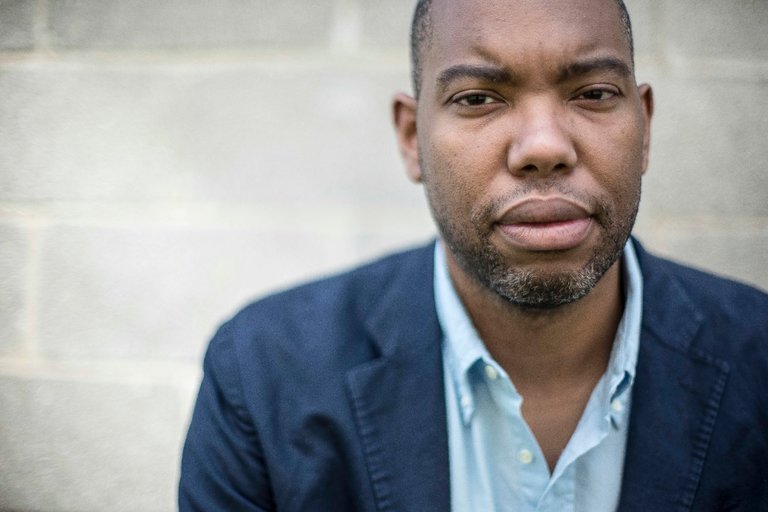
Ta-Nehisi Coates: Not an optimist. Not on Twitter

The writer, journalist, and thinker Ta-Nehisi Coates has been embroiled in controversy for years now. Seemingly his every move attracts controversy, (for reasons mysterious to small-town hick yours truly). Near as I can tell Coates has not been doing anything another prominent and successful writer wouldn’t like to do, such as moving to Paris for a year with his family in 2009, or writing and publishing the great The Case for Reparations in The Atlantic, or for winning the National Book Award, or for attracting a vast following on Twitter, or for purchasing a brownstone in Brooklyn, or for today abruptly pulling the plug on that media.

Wikipedia:

On December 17, 2017, the philosopher and activist Cornel West published an editorial in The Guardian with the title: “Ta-Nehisi Coates is the neoliberal face of the black freedom struggle”.[33] The premise of the article was that Coates “fetishizes white supremacy” and, in West’s view, represents “narrow racial tribalism and myopic political neo-liberalism” by wrongly casting former PresidentBarack Obama as a successor to such figures as Malcolm X as an African-American hero.[33] West believes that Obama (which on a previous occasion he had called a “Rockefeller Republican in blackface“)[34] should never be compared to activists, such as Malcolm X and Martin Luther King, Jr., who in their fight against white supremacy spoke out against systemic biases in predatory capitalism and war; according to West, this is because Obama, while he is of the same racial class, is part of the system that the activists should fight against.[33]

The same day, West shared the article on Twitter, attracting tweets in response from many others, including hundreds of supporters of Coates.[35][36] The next day, West’s tweet was retweeted by the alt-rightwhite supremacistRichard Spencer, who indicated tacit agreement with West’s criticism of Coates.[35][37] Shortly afterwards, Coates, who had enjoyed a following of over 1.25 million other Twitter users, deactivated his Twitter account.[35][38][39]

As Jonathan Chait remarked from bitter personal experience, “neoliberal” has become the Left’s favorite insult, and seems to mean more or less not living up to the legacy of FDR in the Great Depression. In an essay about this insult, Chait includes a pretty great joke from Lyndon Johnson, who although lionized among liberals today for the Great Society and civil rights legislation, in his time was considered a sell-out by the Left:

“What’s the difference between a cannibal and a liberal?” Johnson joked during his presidency. “A cannibal doesn’t eat his friends.”

CoatesNYTimespic


But Coates, as that look indicates, isn’t here to joke around, he’s got something important to say, and frankly, part of what he’s saying is that the news isn’t good. That’s part of his message. To make that point (in an interview lost to memory) he spoke admiringly of Elizabeth (Betsyu) Kolbert, the indefatiguable chronicler of climate change and The Sixth Extinction.

That’s why I was so appalled when Krista Tippett, the usually thoughtful spirit animating the On Being podcast, insisted on asking Coates “the optimism question,”: even after specifically promising him she wouldn’t. It’s kind of incredible and it’s right in the transcript.

Ms. Tippett: And I told you before we walked out here that I’m not gonna ask you to be optimistic.

Mr. Coates: OK, but now you are?

Ms. Tippett: No, I’m not, because I see that everywhere you go, you’re telling this truth, and then white people want you to say, “OK, so where can we find our hope?” And I was watching you on Colbert recently — somebody saw that? He really wanted you to give hope.

Here’s what I find when you write: “Our story is a tragedy. I know it sounds odd, but that belief does not depress me. It focuses me.”

Amazingly, that eloquent defense is not enough. It’s as if Tippett is driven to insist on that most American of demands from a public performance: a happy ending.

Ms. Tippett: You don’t have hope. Or you don’t want to use that word, because that word —

Mr. Coates: No, no, no.

Ms. Tippett: But you are — there’s a focus. There’s an energy…

Mr. Coates: You know what it is? I don’t actually think I’m that singular in this. I don’t know — and I don’t know if there are journalists here, but you have to understand: That’s my training. I was trained as a journalist. Journalists go out and look for things that are wrong in the world, and then they write them. And it is not the case that your editor says, “OK, that’s a cool story, but there’s no hope at the end.”

[laughter]

That’s not a thing editors say to journalists, which is what I am. And so it’s not so much that I even object to hope. It’s just that the thing I do, that’s not a criteria for. You know what I mean?

She actually still doesn’t understand, but finally corners him on one corner of American life which does “give him hope” and inspiration.

Ms. Tippett: Where I find you to be closest to what I think other people are wanting from you, when they want you to be hopeful, is when you write and speak about Malcolm X.

Mr. Coates: Yeah, he gave me hope. He did, he did.

Ms. Tippett: You talk about — he presented, more than anybody else, the possibility of what you call “collective self-creation.”

Mr. Coates: Right. Well, you know what? I would listen to his lectures, and I just felt free. It’s not “hope” like — I think what people want is, “Tell us that we’re going to get past this.”

Ms. Tippett: That it’s going to be OK.

Mr. Coates: “Tell us it’s going to be OK.” So that’s one thing, right?

But there’s a different kind of hope. There are people in the world who accept that their life ends in death, and that’s bad, but that’s what’s gonna happen. And then within that, they find joys and hopes in between: “Oh, I have the ability…”

So for Malcolm — to me, it was: I can speak about the world in a way that is reflective of my life and my community. I can do that. I don’t have to calibrate my speech. I don’t have to calibrate how I look. I don’t have to calibrate how I walk to make other people feel a certain way. I have that right.

And so that was big for me, as a writer. When I started writing, there was a school of writing that says: Given that the audience is obviously — when you reach to any size, is not gonna be majority-black — that you have to hold people’s hands. You have to explain to them. And the Malcolm influence on me said: No, you don’t. Write as you hear it. Write as you hear it.

And in fact, I don’t even think that’s a particular black thing, because if you’re black in this world, and you are gonna become educated on the — what is considered mainstream art in this world, mainstream traditions — nobody slows down for you. Nobody is gonna hold your hand [laughs] and explain The Brady Bunch to you. Nobody’s gonna do that. Catch up.

Yes. “I don’t have to calibrate how I walk to make other people feel a certain way.” Or talk, or write. Facing unpleasant facts, as Orwell said, is a job too — a job for a writer.
The biggest problem in California: Housing

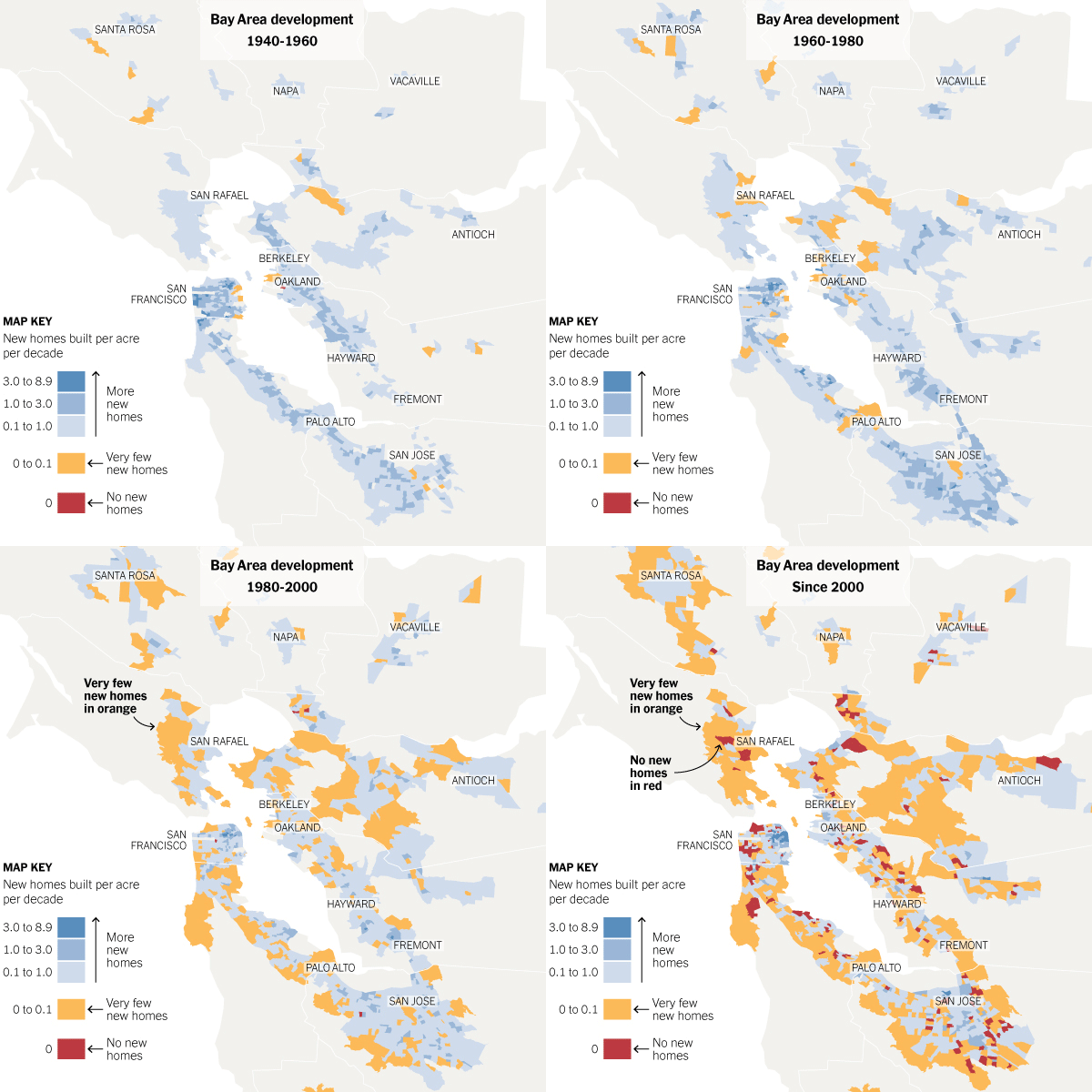
State Senator Hannah Beth-Jackson came to Ojai recently, and visited with the Ojai Valley Green Coalition, where I volunteer, and met with the board of directors. We discussed many topics but ended up on the issue that has been dividing the state: housing — affordable housing — and the lack thereof. The New York Times this weekend had an excellent explainer (with anecdotes from Berkeley) on the issue. Here’s the nut:

The affordable-housing crunch is a nationwide problem, but California is the superlative. The state’s median home price, at just over $500,000, is more than twice the national level and up about 60 percent from five years ago, according to Zillow. It affects the poor, the rich and everyone in between.

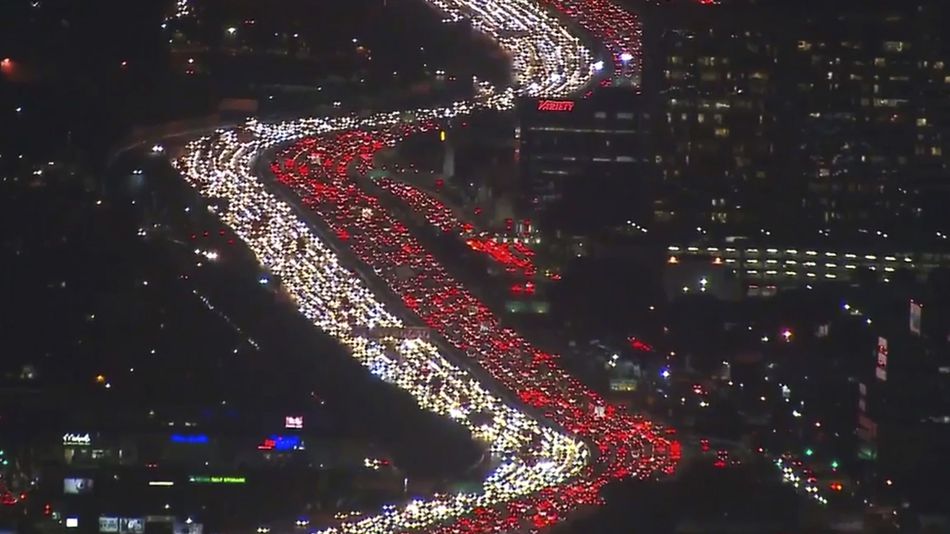
In San Diego, one of the worst hepatitis outbreaks in decades has killed 20 people and was centered on the city’s growing homeless population. Across the state, middle-income workers are being pushed further to the fringes and in some cases enduring three-hour commutes.

Then there is Patterson + Sheridan, a national intellectual property law firm that has its headquarters in Houston and recently bought a private jet to ferry its Texas lawyers to Bay Area clients. The jet was cheaper than paying local lawyers, who expect to make enough to offset the Bay Area’s inflated housing costs. “The young people that we want to hire out there have high expectations that are hard to meet,” said Bruce Patterson, a partner at the firm. “Rent is so high they can’t even afford a car.”

From the windows of a San Francisco skyscraper, the Bay Area looks as if it’s having a housing boom. There are cranes around downtown and rising glass and steel condominiums. In the San Francisco metropolitan area, housing megaprojects — buildings with 50 or more units — account for a quarter of the new housing supply, up from roughly half that level in the previous two decades, according to census data compiled by BuildZoom, a San Francisco company that helps homeowners find contractors.

The problem is that smaller and generally more affordable quarters like duplexes and small apartment buildings, where young families get their start, are being built at a slower rate. Such projects hold vast potential to provide lots of housing — and reduce sprawl — by adding density to the rings of neighborhoods that sit close to job centers but remain dominated by larger lots and single-family homes.

Neighborhoods in which single-family homes make up 90 percent of the housing stock account for a little over half the land mass in both the Bay Area and Los Angeles metropolitan areas, according to Issi Romem, BuildZoom’s chief economist. There are similar or higher percentages in virtually every American city, making these neighborhoods an obvious place to tackle the affordable-housing problem.

“Single-family neighborhoods are where the opportunity is, but building there is taboo,” Mr. Romem said. As long as single-family-homeowners are loath to add more housing on their blocks, he said, the economic logic will always be undone by local politics.

bay_area_housing


Steve Lopez had a typically excellent, human column on the topic this weekend for the LA Times:

Like other transplants I spoke to in Nevada, Herndandez didn’t want to leave California. It’s home. It’s where she went to school and where her parents still live in the house she grew up in. But unless you choose a career that will pay you a small fortune to manage costs driven higher by a stubborn shortage of new housing, California is not a dream, it’s a mirage.

Moving to get a better job or move up the workplace chain is nothing new. But what’s going on here seems different — people leaving not for better jobs or pay, but because housing elsewhere is so much cheaper they can live the middle-class life that eludes them in California.

After college, Hernandez worked as a congressional staffer in Washington, D.C., and then went to Chicago for a few years. But the West drew her back. Not California, but Nevada, where she worked on Hillary Clinton’s presidential campaign in Las Vegas and then joined the staff of a state legislator in the state capital.

“I started looking at the bigger picture in Carson City, where I was able to pay the rent, have a car and a comfortable life and put some money into a 401(k),” Hernandez said. “Would I be able to do that in California? Probably not.”

It’s a generational conflict, essentially, and it’s painful for me to contemplate how poorly once again my generation has prepared for those to come, including the creative young people of the golden state.

“Our reverenced god” — Moloch and The Gun

Four dead in NorCal — at least four. Another deranged gunman, armed for combat, targeting the innocent. This one tried to break into an elementary school and slaughter children but was foiled by a lockdown.

Brian Flint told a group of reporters that a man staying in his house was one of those killed and that some of his neighbors were among those who were shot.

He said that the gunman was a neighbor and said that he had threatened him, and had stabbed another neighbor, a woman, in a dispute earlier this year, and “I believe he was on bond because of that.” The authorities said the woman, whose name has not been released, was among the deceased.

“As far as we know he was, you know, crazy,” Mr. Flint said. “He shoots a lot of gunshots at night, in the morning, like a hundred rounds.”

The word “crazy” is not strong enough. But in an evergreen essay published a few years back, Garry Wills, one of our greatest historians, found language commensurate to this on-going horror. He compared the American faith in the gun to a primitive worship of the cruelest of pagan gods, Moloch, that god that demanded the sacrifice of children.

In the New York Review of Books, Wills poured his molten rage into the forms of scholarship and logic.

He writes:

The fact that the gun is a reverenced god can be seen in its manifold and apparently resistless powers. How do we worship it? Let us count the ways:

1. It has the power to destroy the reasoning process. It forbids making logical connections. We are required to deny that there is any connection between the fact that we have the greatest number of guns in private hands and the greatest number of deaths from them. Denial on this scale always comes from or is protected by religious fundamentalism. Thus do we deny global warming, or evolution, or biblical errancy. Reason is helpless before such abject faith.

2. It has the power to turn all our politicians as a class into invertebrate and mute attendants at the shrine. None dare suggest that Moloch can in any way be reined in without being denounced by the pope of this religion, National Rifle Association CEO Wayne LaPierre, as trying to destroy Moloch, to take away all guns. They whimper and say they never entertained such heresy. Many flourish their guns while campaigning, or boast that they have themselves hunted “varmints.” Better that the children die or their lives be blasted than that a politician should risk an election against the dread sentence of NRA excommunication.

3. It has the power to distort our constitutional thinking. It says that the right to “bear arms,” a military term, gives anyone, anywhere in our country, the power to mow down civilians with military weapons. Even the Supreme Court has been cowed, reversing its own long history of recognizing that the Second Amendment applied to militias. Now the court feels bound to guarantee that any every madman can indulge his “religion” of slaughter. Moloch brooks no dissent, even from the highest court in the land.

He never mentions Allen Ginsberg, but the poet’s bitter Howl of “Moloch! Moloch! Moloch!” haunts this excoriating essay like a ghost. So many of us have had it with the bloody stupidity of American gun worship.

The answer to problems caused by guns is more guns, millions of guns, guns everywhere, carried openly, carried secretly, in bars, in churches, in offices, in government buildings. Only the lack of guns can be a curse, not their beneficent omnipresence.

Bullet emerging from a handgun, on black

TEN EXCELLENT CLIMATE STORIES/LINKS

A New York Times primer on the 17 biggest questions people ask about climate change:

A New York magazine story about climate change and the dangers of extreme heat.

http://nymag.com/daily/intelligencer/2017/07/climate-change-earth-too-hot-for-humans.html

A Vanity Fair article about climate change and the danger of extreme heat.

https://www.vanityfair.com/news/2017/06/extreme-heat-global-warming

A Scientific American story about the great California megaflood.

https://www.scientificamerican.com/article/atmospheric-rivers-california-megaflood-lessons-from-forgotten-catastrophe/

A PBS Newshour primer on climate change and the civil war in Syria.

https://www.pbs.org/newshour/economy/making-sense/a-major-contributor-to-the-syrian-conflict-climate-change

Daniel Swain’s superb and popular blog on California weather: Weather West.

http://weatherwest.com/

Top Eight climate change stories in the Washington Post this year:

https://www.washingtonpost.com/news/energy-environment/wp/2017/04/29/here-are-our-top-8-climate-change-stories-of-2017/?utm_term=.1ff05120d9a0

New Yorker story on why facts on important matters such as climate may not change our minds.

https://www.newyorker.com/magazine/2017/02/27/why-facts-dont-change-our-mind

Stories by Andrew Revkin, of ProPublica and the NYTimes, on climate:

https://www.propublica.org/people/andrew-revkin

And, for a moment of hope, a Mother Jones story on why flying is less damaging for the atmosphere than it once was:

Why Flying Home for the Holidays Might Be Greener Than Driving


Free falling from disgrace: team Trump

The New York Times hired a new right-wing columnist about six months ago, and a couple of weeks of weeks back added a new leftist for the first time in a while, Michelle Goldberg, and what can I say but wow. She throws down almost as well as the recent Newsweek cover:

So here’s where we are. Trump put Manafort, an accused money-launderer and unregistered foreign agent, in charge of his campaign. Under Manafort’s watch, the campaign made at least two attempts to get compromising information about Clinton from Russia. Russia, in turn, provided hacked Democratic emails to WikiLeaks.

Russia also ran a giant disinformation campaign against Clinton on social media and attempted to hack voting systems in at least 21 states. In response to Russia’s election meddling, Barack Obama’s administration imposed sanctions. Upon taking office, Trump reportedly made secret efforts to lift them. He fired the F.B.I. director James Comey to stop his investigation into “this Russia thing,” as he told Lester Holt. The day after the firing, he met with Russia’s foreign minister and its ambassador to America, and told them: “I faced great pressure because of Russia. That’s taken off.”

We’ve had a year of recriminations over the Clinton campaign’s failings, but Trump clawed out his minority victory only with the aid of a foreign intelligence service. On Monday we finally got indictments, but it’s been obvious for a year that this presidency is a crime.

PruittinfallfromTrumpadmindisgrace